• Clinical
      |Clinical
    • Acute Coronary Syndromes
    • Cardiac Surgery
    • Covid-19
    • Heart Failure
    • Heart Health
    • Heart Rhythm
    • Hypertension
    • Interventional Cardiology
    • Mitral Valve
    • Pharmaceutics
    • Structural Heart Disease
    • TAVR
    • Tricuspid Valve
    • Vascular & Endovascular
  • Management
      |Management
    • Chest Pain Guidelines
    • Compensation
    • Economics
    • Education & Training
    • Legal News
    • Patient Care
    • Policy & Regulations
    • Professional Associations
    • Quality
    • Revenue
    • Staffing
  • Technology
      |Technology
    • AI
    • Cardiac Imaging
    • Cath Lab
    • CT
    • CVIS
    • ECG
    • Echo
    • EP Lab
    • Informatics
    • MRI
    • Nuclear Cardiology
    • Remote Monitoring
  • Videos
  • Conferences
      |Conferences
    • ACC
    • AHA
    • ASE
    • ASNC
    • ESC
    • EuroPCR
    • HFSA
    • HRS
    • HRS
    • SCAI
    • SCCT
    • SIIM
    • SNMMI
    • STS
    • TCT
    • VIVA
  • Custom Content
      |Custom Content
    • Experience Stories
    • Webinars & Videos
  • Subscribe
  • Forty Under 40 Award
      |Forty Under 40 Award
    • Class of 2026
    • Class of 2025

Search form

Home

News You Need to Know Today
Electrophysiology & Arrhythmia: Hydroxychloroquine & CV outcomes | Fitbit & AFib detection | Early rhythm control therapy
Tuesday, September 29, 2020
Link to Twitter Link to Facebook Link to Linkedin Link to Vimeo

Editor's Choice: Heart Rhythm

Top Stories

Hydroxychloroquine ‘seems to be safe’ for COVID-19 patients, report researchers focused on arrhythmic safety

The authors did emphasize that they were not ruling on the overall “clinical efficacy” of hydroxychloroquine with this research. 

READ MORE >
heart_rate.png
Share on Twitter Share on Facebook Share on Linkedin

Hydroxychloroquine ‘seems to be safe’ for COVID-19 patients, report researchers focused on arrhythmic safety

Share on Twitter Share on Facebook Share on Linkedin
heart_rate.png
The authors did emphasize that they were not ruling on the overall “clinical efficacy” of hydroxychloroquine with this research. 
READ MORE >

FDA data link hydroxychloroquine and chloroquine to severe cardiovascular side effects

The study's authors urged physicians to use caution when prescribing these medications for "off-label indications." 

READ MORE >
Pills
Share on Twitter Share on Facebook Share on Linkedin

FDA data link hydroxychloroquine and chloroquine to severe cardiovascular side effects

Share on Twitter Share on Facebook Share on Linkedin
Pills
The study's authors urged physicians to use caution when prescribing these medications for "off-label indications." 
READ MORE >

Fitbit gains FDA clearance, CE mark approval for AFib detection app

The app boasts a sensitivity of 98.7% and specificity of 100%.

READ MORE >
Fitbit Afib app wearable
Share on Twitter Share on Facebook Share on Linkedin

Fitbit gains FDA clearance, CE mark approval for AFib detection app

Share on Twitter Share on Facebook Share on Linkedin
Fitbit Afib app wearable
The app boasts a sensitivity of 98.7% and specificity of 100%.
READ MORE >

Transporting cardiac arrest patients to the hospital too early could be a fatal mistake

Survival to hospital discharge and favorable neurological outcomes suffer in instances of intra-arrest patient transport. 

READ MORE >
The AHA Mission: Lifeline Program was designed to reduce STEMI patient transfer times, but response times still often lag, and new protocols may be needed to expedite STAT transfers.
Share on Twitter Share on Facebook Share on Linkedin

Transporting cardiac arrest patients to the hospital too early could be a fatal mistake

Share on Twitter Share on Facebook Share on Linkedin
The AHA Mission: Lifeline Program was designed to reduce STEMI patient transfer times, but response times still often lag, and new protocols may be needed to expedite STAT transfers.
Survival to hospital discharge and favorable neurological outcomes suffer in instances of intra-arrest patient transport. 
READ MORE >

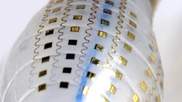
New-look catheter system shows potential to boost cardiac care

The new balloon catheter system provides real-time feedback during minimally invasive surgeries and ablations. 

READ MORE >
electronics catheter
Share on Twitter Share on Facebook Share on Linkedin

New-look catheter system shows potential to boost cardiac care

Share on Twitter Share on Facebook Share on Linkedin
electronics catheter
The new balloon catheter system provides real-time feedback during minimally invasive surgeries and ablations. 
READ MORE >

AFib rates continue to rise, especially among older patients

The study's authors tracked EHR data of more than 500,000 patients from a single health system in Pennsylvania. 

READ MORE >
Share on Twitter Share on Facebook Share on Linkedin

AFib rates continue to rise, especially among older patients

Share on Twitter Share on Facebook Share on Linkedin
The study's authors tracked EHR data of more than 500,000 patients from a single health system in Pennsylvania. 
READ MORE >

Researchers develop new algorithm for predicting CIED infections

Healthcare-associated infections are a massive issue, leading to more than 99,000 patient deaths annually in the United States alone, and recent research suggests they are on the rise.

READ MORE >
Share on Twitter Share on Facebook Share on Linkedin

Researchers develop new algorithm for predicting CIED infections

Share on Twitter Share on Facebook Share on Linkedin
Healthcare-associated infections are a massive issue, leading to more than 99,000 patient deaths annually in the United States alone, and recent research suggests they are on the rise.
READ MORE >

Why early rhythm control therapy is so important for atrial fibrillation patients

The research team's findings were presented at ESC Congress 2020 and published in the New England Journal of Medicine.

READ MORE >
Share on Twitter Share on Facebook Share on Linkedin

Why early rhythm control therapy is so important for atrial fibrillation patients

Share on Twitter Share on Facebook Share on Linkedin
The research team's findings were presented at ESC Congress 2020 and published in the New England Journal of Medicine.
READ MORE >

Innovate Healthcare thanks our partners for supporting our newsletters.
Sponsorship has no influence on editorial content.

Interested in reaching our audiences, contact our team

*|LIST:ADDRESSLINE|*

You received this email because you signed up for newsletters from Innovate Healthcare.
Change your preferences or unsubscribe here

Contact Us  |  Unsubscribe from all  |  Privacy Policy

© Innovate Healthcare, a TriMed Media brand
Innovate Healthcare

Recent Newsletters

TAVR for moderate aortic stenosis | BP drug recalled | Stroke prevention device fails | New Medicare cuts | CCTA-guided PCI
A new way to think about the heart health of women | GLP-1 drugs vs. metformin | Cannabis use may increase risk of CVD, stroke
New Medicare payment cuts | Telemedicine vs. in-person cardiology visits | FDA confirms Class I recall | Startup raises $160M
FDA approves transcatheter treatment for PVL | CCTA-guided PCI | Real-world RDN outcomes | J&J launches new IVL catheter
CCTA vs. IVUS for PCI guidance: Carlos Collet reviews the data | The real-world benefits of RDN | New TAVR tech falls short
TAVR Highlights: New data on treating moderate AS | CMS may expand coverage again | Is surgical backup still necessary?
GLP-1 drugs vs. metformin | BP drug recalled | The health risks of cannabis use | Energy drinks linked to heart issues
Newsletter archive
  • Home
  • News
  • Article Archive
  • Custom Content
  • Webinars
  • Press Releases
  • Content Studio
  • Advertising
  • Submit Press Release
  • Contact Us
  • Terms of Use
  • Privacy Policy
  • Cardiovascular Business
  • HealthExec
  • Radiology Business
  • Press Releases
  • Submit Press Release
© 2026 Innovate Healthcare | All Rights Reserved. | Terms of Use | Privacy Policy
Design by Adaptive Theme