• Clinical
      |Clinical
    • Acute Coronary Syndromes
    • Cardiac Surgery
    • Covid-19
    • Heart Failure
    • Heart Health
    • Heart Rhythm
    • Hypertension
    • Interventional Cardiology
    • Mitral Valve
    • Pharmaceutics
    • Structural Heart Disease
    • TAVR
    • Tricuspid Valve
    • Vascular & Endovascular
  • Management
      |Management
    • Chest Pain Guidelines
    • Compensation
    • Economics
    • Education & Training
    • Legal News
    • Patient Care
    • Policy & Regulations
    • Professional Associations
    • Quality
    • Revenue
    • Staffing
  • Technology
      |Technology
    • AI
    • Cardiac Imaging
    • Cath Lab
    • CT
    • CVIS
    • ECG
    • Echo
    • EP Lab
    • Informatics
    • MRI
    • Nuclear Cardiology
    • Remote Monitoring
  • Videos
  • Conferences
      |Conferences
    • ACC
    • AHA
    • ASE
    • ASNC
    • ESC
    • EuroPCR
    • HFSA
    • HRS
    • SCAI
    • SCCT
    • SIIM
    • SNMMI
    • STS
    • TCT
    • VIVA
  • Custom Content
      |Custom Content
    • Experience Stories
    • Webinars & Videos
  • Subscribe
  • Forty Under 40 Award
      |Forty Under 40 Award
    • Class of 2026
    • Class of 2025

Search form

Home

FDA's warning about atherectomy devices | New ASE guidelines | AI boosts stroke care | Heart patient's family settles lawsuit

News You Need to Know Today
FDA's warning about atherectomy devices | New ASE guidelines | AI boosts stroke care | Heart patient's family settles lawsuit
Monday, February 10, 2025
Link to Twitter Link to Facebook Link to Linkedin Link to Vimeo

Today's News and Trends

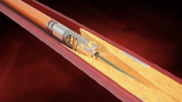
FDA warns that atherectomy devices are breaking during use—30 serious injuries, 4 deaths reported

More than 100 incidents have been reported so far. The FDA is still evaluating this issue, but the agency wanted to raise awareness as quickly as possible.

READ MORE >
The U.S. Food and Drug Administration (FDA) has shared a new warning about ongoing safety issues with atherectomy devices sold and distributed by Bard Peripheral Vascular, an Arizona-based subsidiary of Becton, Dickinson and Company (BD). The warning includes multiple models of Bard Peripheral Vascular’s Rotarex Atherectomy System, which is designed to target high-risk plaques and blood clots in the peripheral arteries by rotating at a high speed.
Share on Twitter Share on Facebook Share on Linkedin

FDA warns that atherectomy devices are breaking during use—30 serious injuries, 4 deaths reported

Share on Twitter Share on Facebook Share on Linkedin
The U.S. Food and Drug Administration (FDA) has shared a new warning about ongoing safety issues with atherectomy devices sold and distributed by Bard Peripheral Vascular, an Arizona-based subsidiary of Becton, Dickinson and Company (BD). The warning includes multiple models of Bard Peripheral Vascular’s Rotarex Atherectomy System, which is designed to target high-risk plaques and blood clots in the peripheral arteries by rotating at a high speed.
More than 100 incidents have been reported so far. The FDA is still evaluating this issue, but the agency wanted to raise awareness as quickly as possible.
READ MORE >

ASE shares new guidelines for ultrasound-guided vascular access

The American Society of Echocardiography included descriptions, diagrams and ultrasound images in the new document to make it as helpful as possible. 

READ MORE >
Figure from the new ASE guideline for ultrasound guided vascular access, showing vessel and probe orientation on the transverse plane short axis (SAX) view perpendicular to the vessels, or in longitudinal long axis plane (LAX) coaxial to the vessels. Image courtesy of ASE
Share on Twitter Share on Facebook Share on Linkedin

ASE shares new guidelines for ultrasound-guided vascular access

Share on Twitter Share on Facebook Share on Linkedin
Figure from the new ASE guideline for ultrasound guided vascular access, showing vessel and probe orientation on the transverse plane short axis (SAX) view perpendicular to the vessels, or in longitudinal long axis plane (LAX) coaxial to the vessels. Image courtesy of ASE
The American Society of Echocardiography included descriptions, diagrams and ultrasound images in the new document to make it as helpful as possible. 
READ MORE >

AI brings cardiology, neurology teams together to boost care for stroke patients

A new post-stroke care pathway from Viz.ai and Medtronic is associated with significant benefits, including higher patient and clinician satisfaction.

READ MORE >
artificial intelligence consultation
Share on Twitter Share on Facebook Share on Linkedin

AI brings cardiology, neurology teams together to boost care for stroke patients

Share on Twitter Share on Facebook Share on Linkedin
artificial intelligence consultation
A new post-stroke care pathway from Viz.ai and Medtronic is associated with significant benefits, including higher patient and clinician satisfaction.
READ MORE >

Family of heart patient who died after missing medications in jail settles lawsuit

A 54-year-old heart transplant recipient was unable to take doctor-prescribed medications during his brief stay at a local jail. He died a few days after being released. 

READ MORE >
heart drugs with stethoscope
Share on Twitter Share on Facebook Share on Linkedin

Family of heart patient who died after missing medications in jail settles lawsuit

Share on Twitter Share on Facebook Share on Linkedin
heart drugs with stethoscope
A 54-year-old heart transplant recipient was unable to take doctor-prescribed medications during his brief stay at a local jail. He died a few days after being released. 
READ MORE >

Featured Articles

COVID-19 linked to accelerated plaque growth, long-term risk of heart attack or stroke

These risks appear to be present regardless of a person's age or health at the time of infection.

READ MORE >
A heart attack is caused when one of the coronary arteries becomes blocked with a clot.
Share on Twitter Share on Facebook Share on Linkedin

COVID-19 linked to accelerated plaque growth, long-term risk of heart attack or stroke

Share on Twitter Share on Facebook Share on Linkedin
A heart attack is caused when one of the coronary arteries becomes blocked with a clot.
These risks appear to be present regardless of a person's age or health at the time of infection.
READ MORE >

Post-stroke follow-up care considerably worse for women than men

Female stroke survivors are less likely to receive a cardiology referral or undergo cardiac monitoring than their male counterparts.

READ MORE >
older female patient and doctor
Share on Twitter Share on Facebook Share on Linkedin

Post-stroke follow-up care considerably worse for women than men

Share on Twitter Share on Facebook Share on Linkedin
older female patient and doctor
Female stroke survivors are less likely to receive a cardiology referral or undergo cardiac monitoring than their male counterparts.
READ MORE >

THT 2025: Late-breaking clinical trials announced for CRF’s heart failure conference

The annual conference is now in its fourth year. Attendees are encouraged to leave their ties, jackets and skirts at home and embrace a more casual dress code.

READ MORE >
women doctors
Share on Twitter Share on Facebook Share on Linkedin

THT 2025: Late-breaking clinical trials announced for CRF’s heart failure conference

Share on Twitter Share on Facebook Share on Linkedin
women doctors
The annual conference is now in its fourth year. Attendees are encouraged to leave their ties, jackets and skirts at home and embrace a more casual dress code.
READ MORE >

In Case You Missed It

Young SAVR patients live longer with mechanical valves—should surgeons, cardiologists rethink current practice?

Bioprosthetic valves are being used more and more for aortic valve replacement, but mechanical valves appear to provide better long-term outcomes for patients 60 and younger. The new study, based on data from nearly 110,000 patients, was presented at STS 2025 and published in the Journal of the American College of Cardiology.

READ MORE >
Newsweek ranked the 50 best heart hospitals in the world
Share on Twitter Share on Facebook Share on Linkedin

Young SAVR patients live longer with mechanical valves—should surgeons, cardiologists rethink current practice?

Share on Twitter Share on Facebook Share on Linkedin
Newsweek ranked the 50 best heart hospitals in the world
Bioprosthetic valves are being used more and more for aortic valve replacement, but mechanical valves appear to provide better long-term outcomes for patients 60 and younger. The new study, based on data from nearly 110,000 patients, was presented at STS 2025 and published in the Journal of the American College of Cardiology.
READ MORE >

Yes, physicians warn, cannabis is bad for the heart

Cannabis use is on the rise throughout the United States, but it is not as harmless as some people may believe. An in-depth analysis out of Stanford explored the many cardiovascular risks associated with regular cannabis use. 

READ MORE >
cannabis use disorder marijuana joint weed smoking
Share on Twitter Share on Facebook Share on Linkedin

Yes, physicians warn, cannabis is bad for the heart

Share on Twitter Share on Facebook Share on Linkedin
cannabis use disorder marijuana joint weed smoking
Cannabis use is on the rise throughout the United States, but it is not as harmless as some people may believe. An in-depth analysis out of Stanford explored the many cardiovascular risks associated with regular cannabis use. 
READ MORE >

Veteran heart surgeon elected STS president

Cardiac surgeon Joseph F. Sabik III, MD, is an established clinical researcher and has held several committee positions with STS over the years.

READ MORE >
The Society of Thoracic Surgeons (STS) has elected Joseph F. Sabik III, MD, a veteran cardiac surgeon with the University Hospitals (UH) Harrington Heart & Vascular Institute, to be its new president. Sabik officially began his one-year term Sunday, Jan. 26, during STS 2025, the group’s annual meeting.
Share on Twitter Share on Facebook Share on Linkedin

Veteran heart surgeon elected STS president

Share on Twitter Share on Facebook Share on Linkedin
The Society of Thoracic Surgeons (STS) has elected Joseph F. Sabik III, MD, a veteran cardiac surgeon with the University Hospitals (UH) Harrington Heart & Vascular Institute, to be its new president. Sabik officially began his one-year term Sunday, Jan. 26, during STS 2025, the group’s annual meeting.
Cardiac surgeon Joseph F. Sabik III, MD, is an established clinical researcher and has held several committee positions with STS over the years.
READ MORE >

In Other News

Healthcare systems are proceeding apace with GenAI—and learning as they go

Last summer more than 40% of 121 hospital executives surveyed said their organization had already realized a decent ROI in generative AI. However, a C-suite slice of nearly the same size said it was too soon to know for sure. 

READ MORE >
healthcare executives
Share on Twitter Share on Facebook Share on Linkedin

Healthcare systems are proceeding apace with GenAI—and learning as they go

Share on Twitter Share on Facebook Share on Linkedin
healthcare executives
Last summer more than 40% of 121 hospital executives surveyed said their organization had already realized a decent ROI in generative AI. However, a C-suite slice of nearly the same size said it was too soon to know for sure. 
READ MORE >

Experts say one radiotracer outperforms all others when it comes to detecting prostate cancer

There are numerous radiotracers specifically designed to identify prostate cancer, but experts say one may be superior to the others at both the patient and lesion level. 

READ MORE >
Prostate Cancer
Share on Twitter Share on Facebook Share on Linkedin

Experts say one radiotracer outperforms all others when it comes to detecting prostate cancer

Share on Twitter Share on Facebook Share on Linkedin
Prostate Cancer
There are numerous radiotracers specifically designed to identify prostate cancer, but experts say one may be superior to the others at both the patient and lesion level. 
READ MORE >

Innovate Healthcare thanks our partners for supporting our newsletters.
Sponsorship has no influence on editorial content.

Interested in reaching our audiences, contact our team

*|LIST:ADDRESSLINE|*

You received this email because you signed up for newsletters from Innovate Healthcare.
Change your preferences or unsubscribe here

Contact Us  |  Unsubscribe from all  |  Privacy Policy

© Innovate Healthcare, a TriMed Media brand
Innovate Healthcare

Recent Newsletters

TV star's family awarded $13M in malpractice case | Helping patients with ‘broken hearts’ | Cardiac amyloidosis in the spotlight
CMS proposes major TAVR changes | The real impact of RVU cuts in electrophysiology | Girl’s heart valve implanted upside down
News Alert: CMS proposes major TAVR changes
Cath lab kits recalled | Looking ahead to the future of FFR-CT | Medtronic completes major acquisition
FDA sees potential in heart failure software | SCCT & SCAI take on CT-derived FFR | Predicting long-term stroke risk
Abbott recalls heart monitoring tech | Redo TAVR with balloon-expandable valves | FDA clears new clot-removing device
Week in Review: Star Trek star's family awarded $13M | AI for cardiac amyloidosis | TAVR concerns | New CKM syndrome guidelines

Pagination

    • Current page 1
    • Page 2
    • Page 3
    • Page 4
    • Page 5
    • Page 6
    • Page 7
    • Page 8
    • Page 9 …
    • Next page ››
    • Last page Last »
  • Home
  • News
  • Article Archive
  • Custom Content
  • Webinars
  • Press Releases
  • Content Studio
  • Advertising
  • Submit Press Release
  • Contact Us
  • Terms of Use
  • Privacy Policy
  • Cardiovascular Business
  • HealthExec
  • Radiology Business
 
© 2026 Innovate Healthcare | All Rights Reserved. | Terms of Use | Privacy Policy
 
Design by Adaptive Theme
Trimed Popup