• Clinical
      |Clinical
    • Acute Coronary Syndromes
    • Cardiac Surgery
    • Covid-19
    • Heart Failure
    • Heart Health
    • Heart Rhythm
    • Hypertension
    • Interventional Cardiology
    • Mitral Valve
    • Pharmaceutics
    • Structural Heart Disease
    • TAVR
    • Tricuspid Valve
    • Vascular & Endovascular
  • Management
      |Management
    • Chest Pain Guidelines
    • Compensation
    • Economics
    • Education & Training
    • Legal News
    • Patient Care
    • Policy & Regulations
    • Professional Associations
    • Quality
    • Revenue
    • Staffing
  • Technology
      |Technology
    • AI
    • Cardiac Imaging
    • Cath Lab
    • CT
    • CVIS
    • ECG
    • Echo
    • EP Lab
    • Informatics
    • MRI
    • Nuclear Cardiology
    • Remote Monitoring
  • Videos
  • Conferences
      |Conferences
    • ACC
    • AHA
    • ASE
    • ASNC
    • ESC
    • EuroPCR
    • HFSA
    • HRS
    • HRS
    • SCAI
    • SCCT
    • SIIM
    • SNMMI
    • STS
    • TCT
    • VIVA
  • Custom Content
      |Custom Content
    • Experience Stories
    • Webinars & Videos
  • Subscribe
  • Forty Under 40 Award
      |Forty Under 40 Award
    • Class of 2026
    • Class of 2025

Search form

Home

News You Need to Know Today
Robotic imaging system used for first time | CCTA shows colchicine's impact | Imaging for chest pain | CT-guided PCI
Monday, June 2, 2025
Link to Twitter Link to Facebook Link to Linkedin Link to Vimeo

Editor's Choice: Cardiac Imaging

Cardiologists make history, use new robotic imaging system for first time

Researchers believe a new robotic TEE system could improve the long-term health of interventional echocardiographers in addition to several other key benefits.

READ MORE >
ROB’E Robotic transesophageal echocardiography (TEE). ROB’E, a German startup, has developed a new remote-controlled robotic (RCR) system with these challenges in mind. Users are able to remotely manipulate TEE probes, performing precise movements and even saving specific positions so they can be duplicated as needed.
Share on Twitter Share on Facebook Share on Linkedin

Cardiologists make history, use new robotic imaging system for first time

Share on Twitter Share on Facebook Share on Linkedin
ROB’E Robotic transesophageal echocardiography (TEE). ROB’E, a German startup, has developed a new remote-controlled robotic (RCR) system with these challenges in mind. Users are able to remotely manipulate TEE probes, performing precise movements and even saving specific positions so they can be duplicated as needed.
Researchers believe a new robotic TEE system could improve the long-term health of interventional echocardiographers in addition to several other key benefits.
READ MORE >

CCTA shows colchicine's impact on atherosclerosis progression

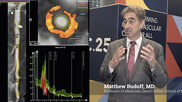
Matthew Budoff, MD, detailed new data highlighting CCTA's value when it comes to tracking the progression of coronary atherosclerosis.

READ MORE >
Matthew Budoff explains use of CCTA to track coronary disease plaque progression
Share on Twitter Share on Facebook Share on Linkedin

CCTA shows colchicine's impact on atherosclerosis progression

Share on Twitter Share on Facebook Share on Linkedin
Matthew Budoff explains use of CCTA to track coronary disease plaque progression
Matthew Budoff, MD, detailed new data highlighting CCTA's value when it comes to tracking the progression of coronary atherosclerosis.
READ MORE >

Imaging for chest pain: CT- and ICA-first strategies linked to similar long-term health status

These findings present additional evidence that invasive imaging tests are not necessarily more effective when it comes to evaluating patients for chest pain.

READ MORE >
Man Heart Attack
Share on Twitter Share on Facebook Share on Linkedin

Imaging for chest pain: CT- and ICA-first strategies linked to similar long-term health status

Share on Twitter Share on Facebook Share on Linkedin
Man Heart Attack
These findings present additional evidence that invasive imaging tests are not necessarily more effective when it comes to evaluating patients for chest pain.
READ MORE >

FDA approves popular ultrasound enhancing agent for pediatric patients

Unlike other UEA options, GE HealthCare's Optison does not contain polyethylene glycol. The FDA approved its use for adult patients back in 1997.

READ MORE >
GE HealthCare Optison ultrasound enhancing agent used to enhance otherwise suboptimal echocardiograms and better show the borders of the chambers of the heart.
Share on Twitter Share on Facebook Share on Linkedin

FDA approves popular ultrasound enhancing agent for pediatric patients

Share on Twitter Share on Facebook Share on Linkedin
GE HealthCare Optison ultrasound enhancing agent used to enhance otherwise suboptimal echocardiograms and better show the borders of the chambers of the heart.
Unlike other UEA options, GE HealthCare's Optison does not contain polyethylene glycol. The FDA approved its use for adult patients back in 1997.
READ MORE >

‘A defining moment’: How cardiologists can get the most out of CT-guided PCI

SCAI and SCCT have collaborated on a new document designed to get more interventional cardiologists to embrace CT-guided PCI going forward. 

READ MORE >
Carlos Collet, MD, PhD, (center) and colleagues perform CT-guided PCI. Image courtesy of CoreAalst.
Share on Twitter Share on Facebook Share on Linkedin

‘A defining moment’: How cardiologists can get the most out of CT-guided PCI

Share on Twitter Share on Facebook Share on Linkedin
Carlos Collet, MD, PhD, (center) and colleagues perform CT-guided PCI. Image courtesy of CoreAalst.
SCAI and SCCT have collaborated on a new document designed to get more interventional cardiologists to embrace CT-guided PCI going forward. 
READ MORE >

AI-enabled CCTA evaluations reduce use of invasive imaging exams

This two-year analysis of the FISH&CHIPS study found that using advanced AI from Heartflow to evaluate cardiac CT is safe, effective and limits the use of unnecessary follow-up tests.

READ MORE >
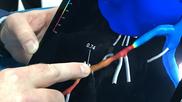
An example of HeartFlow's FFR-CT technology, which takes the cardiac CT dataset and uses computational fluid dynamics to create virtual fraction flow reserve values. The FFR measurement can help determine if a coronary lesion is significant enough to require revascularization, or if the patient should be treated with medication. FFR-CT was included as a recommendation in select patients in the 2021 Chest Pain Guidelines.
Share on Twitter Share on Facebook Share on Linkedin

AI-enabled CCTA evaluations reduce use of invasive imaging exams

Share on Twitter Share on Facebook Share on Linkedin
An example of HeartFlow's FFR-CT technology, which takes the cardiac CT dataset and uses computational fluid dynamics to create virtual fraction flow reserve values. The FFR measurement can help determine if a coronary lesion is significant enough to require revascularization, or if the patient should be treated with medication. FFR-CT was included as a recommendation in select patients in the 2021 Chest Pain Guidelines.
This two-year analysis of the FISH&CHIPS study found that using advanced AI from Heartflow to evaluate cardiac CT is safe, effective and limits the use of unnecessary follow-up tests.
READ MORE >

GE HealthCare debuts new wide-bore MRI scanner built with cardiology, oncology in mind

The new 1.5T MRI scanner includes a wide bore and key AI features designed to boost the patient experience.

READ MORE >
GE HealthCare SIGNA Sprint MRI
Share on Twitter Share on Facebook Share on Linkedin

GE HealthCare debuts new wide-bore MRI scanner built with cardiology, oncology in mind

Share on Twitter Share on Facebook Share on Linkedin
GE HealthCare SIGNA Sprint MRI
The new 1.5T MRI scanner includes a wide bore and key AI features designed to boost the patient experience.
READ MORE >

Johnson & Johnson MedTech launches new 2D ICE catheter

The company says the new device was designed to improve image quality, provide additional maneuverability and simplify ablation workflows for electrophysiologists. 

READ MORE >
 SoundStar Crystal Ultrasound Catheter Johnson & Johnson MedTech
Share on Twitter Share on Facebook Share on Linkedin

Johnson & Johnson MedTech launches new 2D ICE catheter

Share on Twitter Share on Facebook Share on Linkedin
 SoundStar Crystal Ultrasound Catheter Johnson & Johnson MedTech
The company says the new device was designed to improve image quality, provide additional maneuverability and simplify ablation workflows for electrophysiologists. 
READ MORE >

Innovate Healthcare thanks our partners for supporting our newsletters.
Sponsorship has no influence on editorial content.

Interested in reaching our audiences, contact our team

*|LIST:ADDRESSLINE|*

You received this email because you signed up for newsletters from Innovate Healthcare.
Change your preferences or unsubscribe here

Contact Us  |  Unsubscribe from all  |  Privacy Policy

© Innovate Healthcare, a TriMed Media brand
Innovate Healthcare

Recent Newsletters

AI is gaining ground, but clinicians run the show | Siemens Healthineers doubles down | Electrophysiologist compensation
News Alert: FDA shares warning about heart valve tech after patient death
Cardiologist pay & productivity are up | FDA clears PE thrombectomy devices | Cardiology tech in spotlight | Gore's new approval
Cardiology salaries on the rise | The climbing costs of care | M&A trends | Siemens Healthineers, J&J make big business moves
Major MRI trends | Blood thinner recalled | When to perform PCI before TAVR | How to build a CCTA program | Steroids & the heart
CMS boosts coverage for heart failure tech | FDA approves CardioMEMS updates | LVADs linked to strokes, other risks
M&A activity in cardiology: Exploring key trends | Cardiac PET vs. SPECT | Doctors support Medicare covering TAVR for AR
Newsletter archive
  • Home
  • News
  • Article Archive
  • Custom Content
  • Webinars
  • Press Releases
  • Content Studio
  • Advertising
  • Submit Press Release
  • Contact Us
  • Terms of Use
  • Privacy Policy
  • Cardiovascular Business
  • HealthExec
  • Radiology Business
  • Press Releases
  • Submit Press Release
© 2026 Innovate Healthcare | All Rights Reserved. | Terms of Use | Privacy Policy
Design by Adaptive Theme
Trimed Popup