• Clinical
      |Clinical
    • Acute Coronary Syndromes
    • Cardiac Surgery
    • Covid-19
    • Heart Failure
    • Heart Health
    • Heart Rhythm
    • Hypertension
    • Interventional Cardiology
    • Mitral Valve
    • Pharmaceutics
    • Structural Heart Disease
    • TAVR
    • Tricuspid Valve
    • Vascular & Endovascular
  • Management
      |Management
    • Chest Pain Guidelines
    • Compensation
    • Economics
    • Education & Training
    • Legal News
    • Patient Care
    • Policy & Regulations
    • Professional Associations
    • Quality
    • Revenue
    • Staffing
  • Technology
      |Technology
    • AI
    • Cardiac Imaging
    • Cath Lab
    • CT
    • CVIS
    • ECG
    • Echo
    • EP Lab
    • Informatics
    • MRI
    • Nuclear Cardiology
    • Remote Monitoring
  • Videos
  • Conferences
      |Conferences
    • ACC
    • AHA
    • ASE
    • ASNC
    • ESC
    • EuroPCR
    • HFSA
    • HRS
    • HRS
    • SCAI
    • SCCT
    • SIIM
    • SNMMI
    • STS
    • TCT
    • VIVA
  • Custom Content
      |Custom Content
    • Experience Stories
    • Webinars & Videos
  • Subscribe
  • Forty Under 40 Award
      |Forty Under 40 Award
    • Class of 2026
    • Class of 2025

Search form

Home

News You Need to Know Today
GLP-1 drugs vs. metformin | BP drug recalled | The health risks of cannabis use | Energy drinks linked to heart issues
Wednesday, November 4, 2026
Link to Twitter Link to Facebook Link to Linkedin Link to Vimeo

Today's News and Trends

GLP-1 drugs outperform metformin in patients with prediabetes

Metformin is typically the therapy of choice for patients with prediabetes, but GLP-1 drugs appear to offer several benefits.

READ MORE >
Semaglutide (Wegovy) injector pen. Photo by Dave Fornell
Share on Twitter Share on Facebook Share on Linkedin

GLP-1 drugs outperform metformin in patients with prediabetes

Share on Twitter Share on Facebook Share on Linkedin
Semaglutide (Wegovy) injector pen. Photo by Dave Fornell
Metformin is typically the therapy of choice for patients with prediabetes, but GLP-1 drugs appear to offer several benefits.
READ MORE >

Combination blood pressure drug recalled after failed quality test

Two lots of a generic blood pressure medication were recalled because the drugs may be ineffective. The FDA ruled this as a Class II recall. 

READ MORE >
Based on this evidence, its is recommended using monotherapy with ticagrelor or prasugrel after one to three months of DAPT after PCI for acute coronary syndrome (ACS), but not using monotherapy of aspirin or clopidogrel unless the patient has a high bleeding risk.
Share on Twitter Share on Facebook Share on Linkedin

Combination blood pressure drug recalled after failed quality test

Share on Twitter Share on Facebook Share on Linkedin
Based on this evidence, its is recommended using monotherapy with ticagrelor or prasugrel after one to three months of DAPT after PCI for acute coronary syndrome (ACS), but not using monotherapy of aspirin or clopidogrel unless the patient has a high bleeding risk.
Two lots of a generic blood pressure medication were recalled because the drugs may be ineffective. The FDA ruled this as a Class II recall. 
READ MORE >

Cannabis use may increase risk of CVD, stroke—even for those who only occasionally partake

“We expected that the chances of heart disease would gradually rise as people used cannabis more often, but that wasn’t the case," one researcher said. "Both low-use and heavy-use groups had higher odds of developing heart disease."

READ MORE >
cannabis use disorder marijuana joint weed smoking
Share on Twitter Share on Facebook Share on Linkedin

Cannabis use may increase risk of CVD, stroke—even for those who only occasionally partake

Share on Twitter Share on Facebook Share on Linkedin
cannabis use disorder marijuana joint weed smoking
“We expected that the chances of heart disease would gradually rise as people used cannabis more often, but that wasn’t the case," one researcher said. "Both low-use and heavy-use groups had higher odds of developing heart disease."
READ MORE >

Energy drinks and stimulant supplements linked to several serious heart risks

Researchers reviewed an FDA safety database, finding that these products were commonly involved in reports related to cardiac arrest, heart attacks, ventricular arrhythmias, heart palpitations, chest pain and fainting.

READ MORE >
energy drink
Share on Twitter Share on Facebook Share on Linkedin

Energy drinks and stimulant supplements linked to several serious heart risks

Share on Twitter Share on Facebook Share on Linkedin
energy drink
Researchers reviewed an FDA safety database, finding that these products were commonly involved in reports related to cardiac arrest, heart attacks, ventricular arrhythmias, heart palpitations, chest pain and fainting.
READ MORE >

Featured Articles

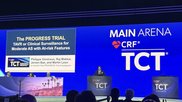
TAVR linked to key benefits for select heart patients with moderate aortic stenosis

TAVR may be a safe, effective treatment strategy for patients with moderate aortic stenosis and at least one other warning sign of heart disease. That was the key takeaway from a highly anticipated late-breaking study presented by Philippe Généreux, MD, at TCT 2026 in San Diego. 

READ MORE >
Philippe Généreux, MD, director of the Structural Heart Program at Atlantic Health Morristown Medical Center, presented the highly anticipated PROGRESS data in front of a packed TCT audience on Monday, Nov. 2.
Share on Twitter Share on Facebook Share on Linkedin

TAVR linked to key benefits for select heart patients with moderate aortic stenosis

Share on Twitter Share on Facebook Share on Linkedin
Philippe Généreux, MD, director of the Structural Heart Program at Atlantic Health Morristown Medical Center, presented the highly anticipated PROGRESS data in front of a packed TCT audience on Monday, Nov. 2.
TAVR may be a safe, effective treatment strategy for patients with moderate aortic stenosis and at least one other warning sign of heart disease. That was the key takeaway from a highly anticipated late-breaking study presented by Philippe Généreux, MD, at TCT 2026 in San Diego. 
READ MORE >

How to integrate AI into cardiac imaging workflows

Implementing advanced AI models into daily practice takes much more than simply installing software. It requires a clinical champion and multiple stakeholders to coordinate the effort.

READ MORE >
Ron Blankstein, FACC, FASNC, FSCCT, FASPC, director of cardiac computed tomography, Brigham and Women's Hospital, and professor of medicine, radiology, at Harvard Medical School, explains how cardiac imaging departments need to plan for the involved process of integrating artificial intelligence (AI) algorithms into clinical practice. #SCCT #YesCCT
Share on Twitter Share on Facebook Share on Linkedin

How to integrate AI into cardiac imaging workflows

Share on Twitter Share on Facebook Share on Linkedin
Ron Blankstein, FACC, FASNC, FSCCT, FASPC, director of cardiac computed tomography, Brigham and Women's Hospital, and professor of medicine, radiology, at Harvard Medical School, explains how cardiac imaging departments need to plan for the involved process of integrating artificial intelligence (AI) algorithms into clinical practice. #SCCT #YesCCT
Implementing advanced AI models into daily practice takes much more than simply installing software. It requires a clinical champion and multiple stakeholders to coordinate the effort.
READ MORE >

Degenerative mitral valve disease: Key takeaways from the largest study of its kind

Men are much more likely to have degenerative mitral valve disease than men, according to a new global analysis presented at TCT 2026 in San Diego. However, women are more likely to die from it. 

READ MORE >
TCT 2026 in San Diego
Share on Twitter Share on Facebook Share on Linkedin

Degenerative mitral valve disease: Key takeaways from the largest study of its kind

Share on Twitter Share on Facebook Share on Linkedin
TCT 2026 in San Diego
Men are much more likely to have degenerative mitral valve disease than men, according to a new global analysis presented at TCT 2026 in San Diego. However, women are more likely to die from it. 
READ MORE >

EARLY TAVR update: New data highlight economic benefits of treating asymptomatic aortic stenosis

The upfront costs may be higher, but new data presented at TCT 2026 showed that treating asymptomatic patients with TAVR instead of clinical surveillance was a highly cost-effective intervention. 

READ MORE >
Neel Butala, MD (left), and Benjamin Galper, MD, discuss new EARLY TAVR findings at TCT 2026.
Share on Twitter Share on Facebook Share on Linkedin

EARLY TAVR update: New data highlight economic benefits of treating asymptomatic aortic stenosis

Share on Twitter Share on Facebook Share on Linkedin
Neel Butala, MD (left), and Benjamin Galper, MD, discuss new EARLY TAVR findings at TCT 2026.
The upfront costs may be higher, but new data presented at TCT 2026 showed that treating asymptomatic patients with TAVR instead of clinical surveillance was a highly cost-effective intervention. 
READ MORE >

In Case You Missed It

What private practices, hospitals and investors should know about the M&A market in cardiology

William Holding, a veteran healthcare consultant, spoke to Cardiovascular Business about the ever-changing cardiology industry. Should private practices seek a deal or stay independent? How has private equity impacted the market? He answered those questions and many more. 

READ MORE >
business people
Share on Twitter Share on Facebook Share on Linkedin

What private practices, hospitals and investors should know about the M&A market in cardiology

Share on Twitter Share on Facebook Share on Linkedin
business people
William Holding, a veteran healthcare consultant, spoke to Cardiovascular Business about the ever-changing cardiology industry. Should private practices seek a deal or stay independent? How has private equity impacted the market? He answered those questions and many more. 
READ MORE >

Safer, faster, more effective: Why cardiac PET should be the primary nuclear modality

Rick Snyder, MD, president of the Cardiac PET Alliance, says PET offers better images than SPECT and is associated with much less radiation.

READ MORE >
Rick Snyder, MD, FACC, president of the Cardiac PET Alliance, president of HeartPlace and chief physician executive at U.S. Heart and Vascular, spoke with Cardiovascular Business in the above video interview. He said the organization is working with lawmakers and healthcare systems to expand access to cardiac PET. The effort also aims to educate government and commercial payers about the technology's potential to improve patient care while reducing overall healthcare costs.
Share on Twitter Share on Facebook Share on Linkedin

Safer, faster, more effective: Why cardiac PET should be the primary nuclear modality

Share on Twitter Share on Facebook Share on Linkedin
Rick Snyder, MD, FACC, president of the Cardiac PET Alliance, president of HeartPlace and chief physician executive at U.S. Heart and Vascular, spoke with Cardiovascular Business in the above video interview. He said the organization is working with lawmakers and healthcare systems to expand access to cardiac PET. The effort also aims to educate government and commercial payers about the technology's potential to improve patient care while reducing overall healthcare costs.
Rick Snyder, MD, president of the Cardiac PET Alliance, says PET offers better images than SPECT and is associated with much less radiation.
READ MORE >

Physicians support Medicare coverage for TAVR in patients with aortic regurgitation

The ACC, SCAI and STS have shared early support for expanding Medicare coverage to include TAVR in patients with native AR. The groups emphasized that CED requirements and multidisciplinary heart team meetings are necessary to ensure patients receive the best possible care going forward.

READ MORE >
A majority of medical devices involved in Class I recalls were never required by the U.S. Food and Drug Administration (FDA) to undergo premarket or postmarket clinical testing, according to new research published in Annals of Internal Medicine.[1]
Share on Twitter Share on Facebook Share on Linkedin

Physicians support Medicare coverage for TAVR in patients with aortic regurgitation

Share on Twitter Share on Facebook Share on Linkedin
A majority of medical devices involved in Class I recalls were never required by the U.S. Food and Drug Administration (FDA) to undergo premarket or postmarket clinical testing, according to new research published in Annals of Internal Medicine.[1]
The ACC, SCAI and STS have shared early support for expanding Medicare coverage to include TAVR in patients with native AR. The groups emphasized that CED requirements and multidisciplinary heart team meetings are necessary to ensure patients receive the best possible care going forward.
READ MORE >

In Other News

Shielding system linked to lower operator radiation exposure during IR procedures

A lead-free, ceiling-mounted shielding system could significantly reduce occupational radiation exposure among physicians performing fluoroscopy-guided procedures, according to a study presented at TCT 2026. 

READ MORE >
Cath Lab X-ray radiation warning sign above the door at Wellstar Kennestone Hospital. Photo by Dave Fornell
Share on Twitter Share on Facebook Share on Linkedin

Shielding system linked to lower operator radiation exposure during IR procedures

Share on Twitter Share on Facebook Share on Linkedin
Cath Lab X-ray radiation warning sign above the door at Wellstar Kennestone Hospital. Photo by Dave Fornell
A lead-free, ceiling-mounted shielding system could significantly reduce occupational radiation exposure among physicians performing fluoroscopy-guided procedures, according to a study presented at TCT 2026. 
READ MORE >

Healthcare groups ask for delay of new Medicare payment model, citing technical difficulties

In an open letter, the American Hospital Association and American Medical Association, among others, are asking regulators to delay the rollout of the Ambulatory Specialty Model, a value-based reimbursement structure for patients with heart failure and lower back pain.

READ MORE >
back_pain.jpg
Share on Twitter Share on Facebook Share on Linkedin

Healthcare groups ask for delay of new Medicare payment model, citing technical difficulties

Share on Twitter Share on Facebook Share on Linkedin
back_pain.jpg
In an open letter, the American Hospital Association and American Medical Association, among others, are asking regulators to delay the rollout of the Ambulatory Specialty Model, a value-based reimbursement structure for patients with heart failure and lower back pain.
READ MORE >

Innovate Healthcare thanks our partners for supporting our newsletters.
Sponsorship has no influence on editorial content.

Interested in reaching our audiences, contact our team

*|LIST:ADDRESSLINE|*

You received this email because you signed up for newsletters from Innovate Healthcare.
Change your preferences or unsubscribe here

Contact Us  |  Unsubscribe from all  |  Privacy Policy

© Innovate Healthcare, a TriMed Media brand
Innovate Healthcare

Recent Newsletters

TAVR for moderate aortic stenosis | BP drug recalled | Stroke prevention device fails | New Medicare cuts | CCTA-guided PCI
A new way to think about the heart health of women | GLP-1 drugs vs. metformin | Cannabis use may increase risk of CVD, stroke
New Medicare payment cuts | Telemedicine vs. in-person cardiology visits | FDA confirms Class I recall | Startup raises $160M
FDA approves transcatheter treatment for PVL | CCTA-guided PCI | Real-world RDN outcomes | J&J launches new IVL catheter
CCTA vs. IVUS for PCI guidance: Carlos Collet reviews the data | The real-world benefits of RDN | New TAVR tech falls short
TAVR Highlights: New data on treating moderate AS | CMS may expand coverage again | Is surgical backup still necessary?
GLP-1 drugs vs. metformin | BP drug recalled | The health risks of cannabis use | Energy drinks linked to heart issues
Newsletter archive
  • Home
  • News
  • Article Archive
  • Custom Content
  • Webinars
  • Press Releases
  • Content Studio
  • Advertising
  • Submit Press Release
  • Contact Us
  • Terms of Use
  • Privacy Policy
  • Cardiovascular Business
  • HealthExec
  • Radiology Business
  • Press Releases
  • Submit Press Release
© 2026 Innovate Healthcare | All Rights Reserved. | Terms of Use | Privacy Policy
Design by Adaptive Theme
Trimed Popup