• Clinical
      |Clinical
    • Acute Coronary Syndromes
    • Cardiac Surgery
    • Covid-19
    • Heart Failure
    • Heart Health
    • Heart Rhythm
    • Hypertension
    • Interventional Cardiology
    • Mitral Valve
    • Pharmaceutics
    • Structural Heart Disease
    • TAVR
    • Tricuspid Valve
    • Vascular & Endovascular
  • Management
      |Management
    • Chest Pain Guidelines
    • Compensation
    • Economics
    • Education & Training
    • Legal News
    • Patient Care
    • Policy & Regulations
    • Professional Associations
    • Quality
    • Revenue
    • Staffing
  • Technology
      |Technology
    • AI
    • Cardiac Imaging
    • Cath Lab
    • CT
    • CVIS
    • ECG
    • Echo
    • EP Lab
    • Informatics
    • MRI
    • Nuclear Cardiology
    • Remote Monitoring
  • Videos
  • Conferences
      |Conferences
    • ACC
    • AHA
    • ASE
    • ASNC
    • ESC
    • EuroPCR
    • HFSA
    • HRS
    • HRS
    • SCAI
    • SCCT
    • SIIM
    • SNMMI
    • STS
    • TCT
    • VIVA
  • Custom Content
      |Custom Content
    • Experience Stories
    • Webinars & Videos
  • Subscribe
  • Forty Under 40 Award
      |Forty Under 40 Award
    • Class of 2026
    • Class of 2025

Search form

Home

News You Need to Know Today
TAVR outcomes for women with a small aortic annulus | Support catheters gain FDA clearance for coronary use
Friday, April 22, 2022
Link to Twitter Link to Facebook Link to Linkedin Link to Vimeo

Today's News and Trends

TAVR outcomes unaffected when women require a smaller valve prosthesis

Women with severe aortic stenosis and a small aortic annulus have been known to face worse outcomes after SAVR. After TAVR, however, that does not appear to be the case. 

READ MORE >
Patient
Share on Twitter Share on Facebook Share on Linkedin

TAVR outcomes unaffected when women require a smaller valve prosthesis

Share on Twitter Share on Facebook Share on Linkedin
Patient
Women with severe aortic stenosis and a small aortic annulus have been known to face worse outcomes after SAVR. After TAVR, however, that does not appear to be the case. 
READ MORE >

VIDEO: ACC Guidance on the cardiovascular impact of COVID-19

Ty Gluckman, MD, explains the main points of the American College of Cardiology (ACC) expert consensus on the cardiovascular consequences stemming from a COVID-19 infection.

READ MORE >
COVID-19 can have a serious impact effecting the heart during and after infection. The ACC released expert consensus decision pathway for the evaluation and management for the cardiovascular consequences of COVID infection and long-COVID, also known by its official clinical designation as post-acute sequelae of SARS-CoV-2 infection (PASC).
Share on Twitter Share on Facebook Share on Linkedin

VIDEO: ACC Guidance on the cardiovascular impact of COVID-19

Share on Twitter Share on Facebook Share on Linkedin
COVID-19 can have a serious impact effecting the heart during and after infection. The ACC released expert consensus decision pathway for the evaluation and management for the cardiovascular consequences of COVID infection and long-COVID, also known by its official clinical designation as post-acute sequelae of SARS-CoV-2 infection (PASC).
Ty Gluckman, MD, explains the main points of the American College of Cardiology (ACC) expert consensus on the cardiovascular consequences stemming from a COVID-19 infection.
READ MORE >

Mental illness strongly linked with higher CVD mortality

The associations between schizophrenia or bipolar disorder and cardiovascular mortality have grown in recent decades.

READ MORE >
sad crying man
Share on Twitter Share on Facebook Share on Linkedin

Mental illness strongly linked with higher CVD mortality

Share on Twitter Share on Facebook Share on Linkedin
sad crying man
The associations between schizophrenia or bipolar disorder and cardiovascular mortality have grown in recent decades.
READ MORE >

4 support catheters receive FDA clearance for coronary use

The catheters were developed to be used during percutaneous coronary intervention procedures for coronary artery disease. 

READ MORE >
Share on Twitter Share on Facebook Share on Linkedin

4 support catheters receive FDA clearance for coronary use

Share on Twitter Share on Facebook Share on Linkedin
The catheters were developed to be used during percutaneous coronary intervention procedures for coronary artery disease. 
READ MORE >

Featured Articles

Cardiologist’s legal fight against fraud conviction may be heard by Supreme Court

Kentucky cardiologist Richard Paulus was first found guilty back in October 2016, but he was granted a new trial in 2021. 

READ MORE >
The long legal saga of Richard Paulus, a Kentucky cardiologist accused of performing unnecessary cardiac procedures, appears to still be going strong in 2022 and might be reviewed by the Supreme Court. The New York state radiologist is facing 36 misdemeanor counts for secret sexual recording without consent, according to a story in the Boston Herald.
Share on Twitter Share on Facebook Share on Linkedin

Cardiologist’s legal fight against fraud conviction may be heard by Supreme Court

Share on Twitter Share on Facebook Share on Linkedin
The long legal saga of Richard Paulus, a Kentucky cardiologist accused of performing unnecessary cardiac procedures, appears to still be going strong in 2022 and might be reviewed by the Supreme Court. The New York state radiologist is facing 36 misdemeanor counts for secret sexual recording without consent, according to a story in the Boston Herald.
Kentucky cardiologist Richard Paulus was first found guilty back in October 2016, but he was granted a new trial in 2021. 
READ MORE >

Why cardiologists and radiologists are choosing cardiac CT over invasive angiography for suspected CAD

"A CT-first strategy allows physicians to provide relevant findings without the need for an invasive procedure," one radiologist explained. 

READ MORE >
Cardiac computed tomography (CCT) is an accurate, noninvasive imaging test that should be a first-line tool when treating patients with obstructive coronary artery disease (CAD), rather than cath lab angiography angiograms, according to new findings published in the New England Journal of Medicine.[1]
Share on Twitter Share on Facebook Share on Linkedin

Why cardiologists and radiologists are choosing cardiac CT over invasive angiography for suspected CAD

Share on Twitter Share on Facebook Share on Linkedin
Cardiac computed tomography (CCT) is an accurate, noninvasive imaging test that should be a first-line tool when treating patients with obstructive coronary artery disease (CAD), rather than cath lab angiography angiograms, according to new findings published in the New England Journal of Medicine.[1]
"A CT-first strategy allows physicians to provide relevant findings without the need for an invasive procedure," one radiologist explained. 
READ MORE >

Asthma, other allergies linked to a higher risk of high blood pressure, coronary heart disease

The research was presented in South Korea at a two-day event hosted by the American College of Cardiology and Korean Society of Cardiology.

READ MORE >
asthma adult.png
Share on Twitter Share on Facebook Share on Linkedin

Asthma, other allergies linked to a higher risk of high blood pressure, coronary heart disease

Share on Twitter Share on Facebook Share on Linkedin
asthma adult.png
The research was presented in South Korea at a two-day event hosted by the American College of Cardiology and Korean Society of Cardiology.
READ MORE >

In Other News

New multi-society recommendations highlight role of non-invasive imaging in evaluating coronary artery disease

A new, multi-society document, "Non-Invasive Imaging in Coronary Syndromes," focuses on how multiple imaging techniques can evaluate different aspects of coronary artery disease (CAD), all without the need for invasive angiograms.

READ MORE >
A figure from the 2022 CAD non-invasive imaging guidelines showing a comparison of computed tomography angiography (CTA) and a SPECT-CT vs. an invasive angiogram from the cath lab showing the same blockage in a coronary artery.
Share on Twitter Share on Facebook Share on Linkedin

New multi-society recommendations highlight role of non-invasive imaging in evaluating coronary artery disease

Share on Twitter Share on Facebook Share on Linkedin
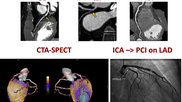
A figure from the 2022 CAD non-invasive imaging guidelines showing a comparison of computed tomography angiography (CTA) and a SPECT-CT vs. an invasive angiogram from the cath lab showing the same blockage in a coronary artery.
A new, multi-society document, "Non-Invasive Imaging in Coronary Syndromes," focuses on how multiple imaging techniques can evaluate different aspects of coronary artery disease (CAD), all without the need for invasive angiograms.
READ MORE >

NASA beams doctor virtually into space

Telemedicine boomed in popularity during the COVID-19 pandemic, but remote healthcare isn’t just for homebound patients––it’s also now available to astronauts.

READ MORE >
NASA holoportation
Share on Twitter Share on Facebook Share on Linkedin

NASA beams doctor virtually into space

Share on Twitter Share on Facebook Share on Linkedin
NASA holoportation
Telemedicine boomed in popularity during the COVID-19 pandemic, but remote healthcare isn’t just for homebound patients––it’s also now available to astronauts.
READ MORE >

Innovate Healthcare thanks our partners for supporting our newsletters.
Sponsorship has no influence on editorial content.

Interested in reaching our audiences, contact our team

*|LIST:ADDRESSLINE|*

You received this email because you signed up for newsletters from Innovate Healthcare.
Change your preferences or unsubscribe here

Contact Us  |  Unsubscribe from all  |  Privacy Policy

© Innovate Healthcare, a TriMed Media brand
Innovate Healthcare

Recent Newsletters

FDA shares warning due to safety risk | New Siemens Healthineers software | Positive data for self-expanding TAVR valves
FDA wants drug off market | The first CCTA program of its kind | CAC screening for all? | New warnings for GLP-1 drugs
News Alert: Boston Scientific updates catheter instructions to minimize risk
SAVR vs. TAVR in low-risk patients | Heart surgery performed on stage during conference | PCI & CABG for stable heart disease
NY attorney general gets involved in cardiac staffing dispute | New tricuspid valve performs well in pivotal trial
FDA approves first-in-class drug | New stroke prevention device for TAVR falls short | The health risks of cannabis use
GLP-1 will have a lower Medicare price | ACC president says delays for aortic stenosis diagnosis and treatment too long
Newsletter archive
  • Home
  • News
  • Article Archive
  • Custom Content
  • Webinars
  • Press Releases
  • Content Studio
  • Advertising
  • Submit Press Release
  • Contact Us
  • Terms of Use
  • Privacy Policy
  • Cardiovascular Business
  • HealthExec
  • Radiology Business
  • Press Releases
  • Submit Press Release
© 2026 Innovate Healthcare | All Rights Reserved. | Terms of Use | Privacy Policy
Design by Adaptive Theme