• Clinical
      |Clinical
    • Acute Coronary Syndromes
    • Cardiac Surgery
    • Covid-19
    • Heart Failure
    • Heart Health
    • Heart Rhythm
    • Hypertension
    • Interventional Cardiology
    • Mitral Valve
    • Pharmaceutics
    • Structural Heart Disease
    • TAVR
    • Tricuspid Valve
    • Vascular & Endovascular
  • Management
      |Management
    • Chest Pain Guidelines
    • Compensation
    • Economics
    • Education & Training
    • Legal News
    • Patient Care
    • Policy & Regulations
    • Professional Associations
    • Quality
    • Revenue
    • Staffing
  • Technology
      |Technology
    • AI
    • Cardiac Imaging
    • Cath Lab
    • CT
    • CVIS
    • ECG
    • Echo
    • EP Lab
    • Informatics
    • MRI
    • Nuclear Cardiology
    • Remote Monitoring
  • Videos
  • Conferences
      |Conferences
    • ACC
    • AHA
    • ASE
    • ASNC
    • ESC
    • EuroPCR
    • HFSA
    • HRS
    • HRS
    • SCAI
    • SCCT
    • SIIM
    • SNMMI
    • STS
    • TCT
    • VIVA
  • Custom Content
      |Custom Content
    • Experience Stories
    • Webinars & Videos
  • Subscribe
  • Forty Under 40 Award
      |Forty Under 40 Award
    • Class of 2026
    • Class of 2025

Search form

Home

News You Need to Know Today
Care Delivery: How did the pig heart transplant patient die? | Taking BP medications with NSAIDs may damage kidneys
Friday, May 13, 2022
Link to Twitter Link to Facebook Link to Linkedin Link to Vimeo

Editor's Choice: Care Delivery

Why cardiologists and radiologists are choosing cardiac CT over invasive angiography for suspected CAD

"A CT-first strategy allows physicians to provide relevant findings without the need for an invasive procedure," one radiologist explained. 

READ MORE >
Cardiac computed tomography (CCT) is an accurate, noninvasive imaging test that should be a first-line tool when treating patients with obstructive coronary artery disease (CAD), rather than cath lab angiography angiograms, according to new findings published in the New England Journal of Medicine.[1]
Share on Twitter Share on Facebook Share on Linkedin

Why cardiologists and radiologists are choosing cardiac CT over invasive angiography for suspected CAD

Share on Twitter Share on Facebook Share on Linkedin
Cardiac computed tomography (CCT) is an accurate, noninvasive imaging test that should be a first-line tool when treating patients with obstructive coronary artery disease (CAD), rather than cath lab angiography angiograms, according to new findings published in the New England Journal of Medicine.[1]
"A CT-first strategy allows physicians to provide relevant findings without the need for an invasive procedure," one radiologist explained. 
READ MORE >

How did the pig heart transplant patient die? A preventable infection may be to blame

The genetically modified pig heart appears to have been infected with a porcine virus, according to the surgeon who performed the initial transplant. 

READ MORE >
David Bennett
Share on Twitter Share on Facebook Share on Linkedin

How did the pig heart transplant patient die? A preventable infection may be to blame

Share on Twitter Share on Facebook Share on Linkedin
David Bennett
The genetically modified pig heart appears to have been infected with a porcine virus, according to the surgeon who performed the initial transplant. 
READ MORE >

Cardiologists and surgeons perform first TAVR using CT imaging guidance on HF patient with blood clot

“We believe this case is potentially groundbreaking," one interventional cardiologist said. 

READ MORE >
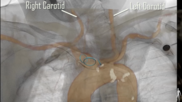
transcatheter aortic valve replacement (TAVR) procedure guided by CT fusion imaging on a patient with heart failure and a blood clot. CT fusion imaging-guided deployment of the Sentinel Cerebral Protection System during a TAVR procedure. Image courtesy of Vasudev et al.
Share on Twitter Share on Facebook Share on Linkedin

Cardiologists and surgeons perform first TAVR using CT imaging guidance on HF patient with blood clot

Share on Twitter Share on Facebook Share on Linkedin
transcatheter aortic valve replacement (TAVR) procedure guided by CT fusion imaging on a patient with heart failure and a blood clot. CT fusion imaging-guided deployment of the Sentinel Cerebral Protection System during a TAVR procedure. Image courtesy of Vasudev et al.
“We believe this case is potentially groundbreaking," one interventional cardiologist said. 
READ MORE >

Cardiologist charged with 4 additional counts of sexual assault after more patients come forward

The 66-year-old cardiologist was first charged with sexual assault in 2022 after a patient accused him of touching her inappropriately. Now, more patients have stepped forward with similar stories. 

READ MORE >
A gavel and a stethoscope
Share on Twitter Share on Facebook Share on Linkedin

Cardiologist charged with 4 additional counts of sexual assault after more patients come forward

Share on Twitter Share on Facebook Share on Linkedin
A gavel and a stethoscope
The 66-year-old cardiologist was first charged with sexual assault in 2022 after a patient accused him of touching her inappropriately. Now, more patients have stepped forward with similar stories. 
READ MORE >

Combining certain BP medications with NSAIDs linked to kidney damage—acetaminophen seen as a safer option

A team of researchers used computer science and mathematics to study the "triple whammy" of diuretics, RAS inhibitors and NSAIDs.

READ MORE >
Based on this evidence, its is recommended using monotherapy with ticagrelor or prasugrel after one to three months of DAPT after PCI for acute coronary syndrome (ACS), but not using monotherapy of aspirin or clopidogrel unless the patient has a high bleeding risk.
Share on Twitter Share on Facebook Share on Linkedin

Combining certain BP medications with NSAIDs linked to kidney damage—acetaminophen seen as a safer option

Share on Twitter Share on Facebook Share on Linkedin
Based on this evidence, its is recommended using monotherapy with ticagrelor or prasugrel after one to three months of DAPT after PCI for acute coronary syndrome (ACS), but not using monotherapy of aspirin or clopidogrel unless the patient has a high bleeding risk.
A team of researchers used computer science and mathematics to study the "triple whammy" of diuretics, RAS inhibitors and NSAIDs.
READ MORE >

CT-FFR before TAVR improves detection of coronary artery disease, limits invasive imaging exams

CT-FFR, which recently got a boost from the 2021 AHA/ACC chest pain guidelines, could play a key role for clinicians hoping to screen TAVR patients for coronary heart disease. 

READ MORE >
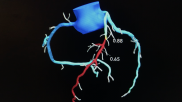
Performing CT-derived fractional flow reserve (CT-FFR) before transcatheter aortic valve replacement (TAVR) improves the accuracy of coronary CT angiography (CCTA) and helps limit unneeded invasive coronary angiography (ICA), according to a new study published in JACC: Cardiovascular Interventions. Heartflow
Share on Twitter Share on Facebook Share on Linkedin

CT-FFR before TAVR improves detection of coronary artery disease, limits invasive imaging exams

Share on Twitter Share on Facebook Share on Linkedin
Performing CT-derived fractional flow reserve (CT-FFR) before transcatheter aortic valve replacement (TAVR) improves the accuracy of coronary CT angiography (CCTA) and helps limit unneeded invasive coronary angiography (ICA), according to a new study published in JACC: Cardiovascular Interventions. Heartflow
CT-FFR, which recently got a boost from the 2021 AHA/ACC chest pain guidelines, could play a key role for clinicians hoping to screen TAVR patients for coronary heart disease. 
READ MORE >

When PPE is not enough: Improved shielding during EVAR linked to ‘dramatic reduction’ in radiation exposure

“Improving ancillary shielding barriers is paramount,” according to the authors of a brand new analysis. 

READ MORE >
Share on Twitter Share on Facebook Share on Linkedin

When PPE is not enough: Improved shielding during EVAR linked to ‘dramatic reduction’ in radiation exposure

Share on Twitter Share on Facebook Share on Linkedin
“Improving ancillary shielding barriers is paramount,” according to the authors of a brand new analysis. 
READ MORE >

Real-world Watchman patients experiencing fewer complications after LAAO than seen in clinical trials

The study's authors compared findings from the PROTECT-AF and PREVAIL clinical trials with data from the NCDR LAAO Registry, focusing on short-term and long-term outcomes. 

READ MORE >
The Boston Scientific Watchman device is a transcatheter device implanted in the left atrial appendage (LAA) to seal it off so atrial fibrillation patients can got off of anticoagulant therapy.
Share on Twitter Share on Facebook Share on Linkedin

Real-world Watchman patients experiencing fewer complications after LAAO than seen in clinical trials

Share on Twitter Share on Facebook Share on Linkedin
The Boston Scientific Watchman device is a transcatheter device implanted in the left atrial appendage (LAA) to seal it off so atrial fibrillation patients can got off of anticoagulant therapy.
The study's authors compared findings from the PROTECT-AF and PREVAIL clinical trials with data from the NCDR LAAO Registry, focusing on short-term and long-term outcomes. 
READ MORE >

New-look protocol boosts outcomes among AFib patients in the ER

A large proportion of patients with atrial fibrillation (AFib) end up in emergency rooms (ERs), but there are inherent issues with most hospital ERs handing off these patients to electrophysiologists for follow-up care.

READ MORE >
A large proportion of patients with atrial fibrillation (AF) end up in emergency rooms (ERs), but there are inherent issues with most hospital ERs handing off these patients to electrophysiologists for followup care. The ER2EP Study presented at the 2022 HRS meeting found better results of there is an organized pathway for AF patients to follow. #AFib
Share on Twitter Share on Facebook Share on Linkedin

New-look protocol boosts outcomes among AFib patients in the ER

Share on Twitter Share on Facebook Share on Linkedin
A large proportion of patients with atrial fibrillation (AF) end up in emergency rooms (ERs), but there are inherent issues with most hospital ERs handing off these patients to electrophysiologists for followup care. The ER2EP Study presented at the 2022 HRS meeting found better results of there is an organized pathway for AF patients to follow. #AFib
A large proportion of patients with atrial fibrillation (AFib) end up in emergency rooms (ERs), but there are inherent issues with most hospital ERs handing off these patients to electrophysiologists for follow-up care.
READ MORE >

How to improve shared decision-making among vascular surgeons and their patients

Researchers introduced decision support tools to 13 different hospitals, tracking the overall impact on shared-decision making and patient knowledge. 

READ MORE >
primary_care_doctor.jpg
Share on Twitter Share on Facebook Share on Linkedin

How to improve shared decision-making among vascular surgeons and their patients

Share on Twitter Share on Facebook Share on Linkedin
primary_care_doctor.jpg
Researchers introduced decision support tools to 13 different hospitals, tracking the overall impact on shared-decision making and patient knowledge. 
READ MORE >

Innovate Healthcare thanks our partners for supporting our newsletters.
Sponsorship has no influence on editorial content.

Interested in reaching our audiences, contact our team

*|LIST:ADDRESSLINE|*

You received this email because you signed up for newsletters from Innovate Healthcare.
Change your preferences or unsubscribe here

Contact Us  |  Unsubscribe from all  |  Privacy Policy

© Innovate Healthcare, a TriMed Media brand
Innovate Healthcare

Recent Newsletters

Medtech giant makes big move | The world’s top hospitals for heart surgery | New CPT codes | PET vs. SPECT | TAVR tech recalled
AI is gaining ground, but clinicians run the show | Siemens Healthineers doubles down | Electrophysiologist compensation
News Alert: FDA shares warning about heart valve tech after patient death
Cardiologist pay & productivity are up | FDA clears PE thrombectomy devices | Cardiology tech in spotlight | Gore's new approval
Cardiology salaries on the rise | The climbing costs of care | M&A trends | Siemens Healthineers, J&J make big business moves
Major MRI trends | Blood thinner recalled | When to perform PCI before TAVR | How to build a CCTA program | Steroids & the heart
CMS boosts coverage for heart failure tech | FDA approves CardioMEMS updates | LVADs linked to strokes, other risks
Newsletter archive
  • Home
  • News
  • Article Archive
  • Custom Content
  • Webinars
  • Press Releases
  • Content Studio
  • Advertising
  • Submit Press Release
  • Contact Us
  • Terms of Use
  • Privacy Policy
  • Cardiovascular Business
  • HealthExec
  • Radiology Business
  • Press Releases
  • Submit Press Release
© 2026 Innovate Healthcare | All Rights Reserved. | Terms of Use | Privacy Policy
Design by Adaptive Theme