• Clinical
      |Clinical
    • Acute Coronary Syndromes
    • Cardiac Surgery
    • Covid-19
    • Heart Failure
    • Heart Health
    • Heart Rhythm
    • Hypertension
    • Interventional Cardiology
    • Mitral Valve
    • Pharmaceutics
    • Structural Heart Disease
    • TAVR
    • Tricuspid Valve
    • Vascular & Endovascular
  • Management
      |Management
    • Chest Pain Guidelines
    • Compensation
    • Economics
    • Education & Training
    • Legal News
    • Patient Care
    • Policy & Regulations
    • Professional Associations
    • Quality
    • Revenue
    • Staffing
  • Technology
      |Technology
    • AI
    • Cardiac Imaging
    • Cath Lab
    • CT
    • CVIS
    • ECG
    • Echo
    • EP Lab
    • Informatics
    • MRI
    • Nuclear Cardiology
    • Remote Monitoring
  • Videos
  • Conferences
      |Conferences
    • ACC
    • AHA
    • ASE
    • ASNC
    • ESC
    • EuroPCR
    • HFSA
    • HRS
    • HRS
    • SCAI
    • SCCT
    • SIIM
    • SNMMI
    • STS
    • TCT
    • VIVA
  • Custom Content
      |Custom Content
    • Experience Stories
    • Webinars & Videos
  • Subscribe
  • Forty Under 40 Award
      |Forty Under 40 Award
    • Class of 2026
    • Class of 2025

Search form

Home

News You Need to Know Today
NSAIDs may not be safe for older T2D patients | When cancer patients undergo PCI
Wednesday, August 24, 2022
Link to Twitter Link to Facebook Link to Linkedin Link to Vimeo

Today's News and Trends

NSAID use may not be safe for older patients with type 2 diabetes

The new analysis, based on data from more than 330,000 patients, is scheduled to be presented during ESC Congress 2022. 

READ MORE >
Share on Twitter Share on Facebook Share on Linkedin

NSAID use may not be safe for older patients with type 2 diabetes

Share on Twitter Share on Facebook Share on Linkedin
The new analysis, based on data from more than 330,000 patients, is scheduled to be presented during ESC Congress 2022. 
READ MORE >

Cancer patients who undergo PCI face a higher risk of early mortality

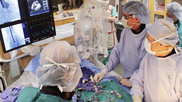
Overall, PCI patients appear to face a higher risk of in-hospital mortality, 30-day mortality and in-hospital cardiovascular mortality if they present with an active or historical cancer diagnosis. The group's analysis included data from nearly 6.6 million patients.

READ MORE >
Overall, PCI patients appear to face a higher risk of in-hospital mortality, 30-day mortality and in-hospital cardiovascular mortality if they present with an active or historical cancer diagnosis. The group's analysis included data from nearly 6.6 million patients. Photo by Jose Arellano
Share on Twitter Share on Facebook Share on Linkedin

Cancer patients who undergo PCI face a higher risk of early mortality

Share on Twitter Share on Facebook Share on Linkedin
Overall, PCI patients appear to face a higher risk of in-hospital mortality, 30-day mortality and in-hospital cardiovascular mortality if they present with an active or historical cancer diagnosis. The group's analysis included data from nearly 6.6 million patients. Photo by Jose Arellano
Overall, PCI patients appear to face a higher risk of in-hospital mortality, 30-day mortality and in-hospital cardiovascular mortality if they present with an active or historical cancer diagnosis. The group's analysis included data from nearly 6.6 million patients.
READ MORE >

Researchers receive $11.2M to study how the heart recovers from significant damage

The National Heart, Lung and Blood Institute, part of the National Institutes of Health, awarded the funds to three research teams. 

READ MORE >
Jianyi "Jay" Zhang, MD, PhD, is leading research on growing new heart muscle cells
Share on Twitter Share on Facebook Share on Linkedin

Researchers receive $11.2M to study how the heart recovers from significant damage

Share on Twitter Share on Facebook Share on Linkedin
Jianyi "Jay" Zhang, MD, PhD, is leading research on growing new heart muscle cells
The National Heart, Lung and Blood Institute, part of the National Institutes of Health, awarded the funds to three research teams. 
READ MORE >

Featured Articles

VIDEO: Use of temporary left ventricular pacing during TAVR procedures

Philippe Genereux, MD, medical director of the structural heart disease program at Morristown Medical Center, discusses the various options used for temporary pacing of the heart during transcatheter aortic valve replacement (TAVR) procedures.

READ MORE >
Three systems for left ventricular pacing during TAVR, modified TAVR valve delivery wire, the Opsens Savvy wire, and the Teleflex Wattson wire.
Share on Twitter Share on Facebook Share on Linkedin

VIDEO: Use of temporary left ventricular pacing during TAVR procedures

Share on Twitter Share on Facebook Share on Linkedin
Three systems for left ventricular pacing during TAVR, modified TAVR valve delivery wire, the Opsens Savvy wire, and the Teleflex Wattson wire.
Philippe Genereux, MD, medical director of the structural heart disease program at Morristown Medical Center, discusses the various options used for temporary pacing of the heart during transcatheter aortic valve replacement (TAVR) procedures.
READ MORE >

Medical marijuana linked to a higher risk of heart rhythm issues

The new analysis, presented at ESC Congress 2022, found that a medical marijuana prescription for chronic pain may increase a person's overall arrhythmia risk. 

READ MORE >
The new analysis, based on data from 1.6 million patients, found that a medical marijuana prescription for chronic pain may increase a person's overall arrhythmia risk. Medical marijuana
Share on Twitter Share on Facebook Share on Linkedin

Medical marijuana linked to a higher risk of heart rhythm issues

Share on Twitter Share on Facebook Share on Linkedin
The new analysis, based on data from 1.6 million patients, found that a medical marijuana prescription for chronic pain may increase a person's overall arrhythmia risk. Medical marijuana
The new analysis, presented at ESC Congress 2022, found that a medical marijuana prescription for chronic pain may increase a person's overall arrhythmia risk. 
READ MORE >

Robotic IVC thrombectomy: A safe, effective alternative to open surgery

A new meta-analysis of 28 different studies confirmed that robotic-assisted radical nephrectomy with IVC thrombectomy is a safe treatment option for kidney cancer.

READ MORE >
When kidney cancer invades a patient’s inferior vena cava (IVC), robotic-assisted radical nephrectomy with IVC thrombectomy is a safe and effective alternative to open surgery, according to a new meta-analysis published in the Journal of Urology.[1]
Share on Twitter Share on Facebook Share on Linkedin

Robotic IVC thrombectomy: A safe, effective alternative to open surgery

Share on Twitter Share on Facebook Share on Linkedin
When kidney cancer invades a patient’s inferior vena cava (IVC), robotic-assisted radical nephrectomy with IVC thrombectomy is a safe and effective alternative to open surgery, according to a new meta-analysis published in the Journal of Urology.[1]
A new meta-analysis of 28 different studies confirmed that robotic-assisted radical nephrectomy with IVC thrombectomy is a safe treatment option for kidney cancer.
READ MORE >

In Case You Missed It

VIDEO: How to build a collaborative heart team in structural heart

Brijeshwar Maini, MD, structural heart cardiologist, national and Florida medical director of cardiology, Tenant Health, explains what hospitals need to build a structural heart program and develop a heart-team care collaboration approach.

READ MORE >
A transcatheter aortic valve replacement (TAVR) procedure being performed at Intermountain Healthcare. Image from Intermountain Healthcare. Sex differences in TAVR one-year mortality.
Share on Twitter Share on Facebook Share on Linkedin

VIDEO: How to build a collaborative heart team in structural heart

Share on Twitter Share on Facebook Share on Linkedin
A transcatheter aortic valve replacement (TAVR) procedure being performed at Intermountain Healthcare. Image from Intermountain Healthcare. Sex differences in TAVR one-year mortality.
Brijeshwar Maini, MD, structural heart cardiologist, national and Florida medical director of cardiology, Tenant Health, explains what hospitals need to build a structural heart program and develop a heart-team care collaboration approach.
READ MORE >

Cardiologists linked to higher net worths, larger homes and less debt than many other physicians

Twenty-three percent of cardiologists have a net worth of more than $5 million, No. 5 among all specialties, according to a new report. A majority of cardiologists also said they have had no significant financial losses in the last year.

READ MORE >
Twenty-three percent of cardiologists have a net worth of more than $5 million, No. 5 among all specialties, according to a new report. A majority of cardiologists also said they have had no significant financial losses in the last year. What are cardiologists paid? How much do cardiologists make?
Share on Twitter Share on Facebook Share on Linkedin

Cardiologists linked to higher net worths, larger homes and less debt than many other physicians

Share on Twitter Share on Facebook Share on Linkedin
Twenty-three percent of cardiologists have a net worth of more than $5 million, No. 5 among all specialties, according to a new report. A majority of cardiologists also said they have had no significant financial losses in the last year. What are cardiologists paid? How much do cardiologists make?
Twenty-three percent of cardiologists have a net worth of more than $5 million, No. 5 among all specialties, according to a new report. A majority of cardiologists also said they have had no significant financial losses in the last year.
READ MORE >

In Other News

AI identifies Parkinson’s from breathing patterns

The tool could help alleviate the disease onset gap between when symptoms of Parkinson’s first appear and when most people receive a diagnosis.

READ MORE >
Share on Twitter Share on Facebook Share on Linkedin

AI identifies Parkinson’s from breathing patterns

Share on Twitter Share on Facebook Share on Linkedin
The tool could help alleviate the disease onset gap between when symptoms of Parkinson’s first appear and when most people receive a diagnosis.
READ MORE >

Poor midlife health leads to advanced brain aging, MRI analysis shows

Though the participants’ actual ages ranged from 69 to 72 years old, the experts’ predictive analysis revealed their estimated current brain ages to be between 46 and 93.

READ MORE >
Transcatheter aortic valve replacement (TAVR) patients who suffer from cognitive impairment face a higher risk of one-year mortality and developing postoperative delirium (POD), according to a new study published in the American Journal of Cardiology.
Share on Twitter Share on Facebook Share on Linkedin

Poor midlife health leads to advanced brain aging, MRI analysis shows

Share on Twitter Share on Facebook Share on Linkedin
Transcatheter aortic valve replacement (TAVR) patients who suffer from cognitive impairment face a higher risk of one-year mortality and developing postoperative delirium (POD), according to a new study published in the American Journal of Cardiology.
Though the participants’ actual ages ranged from 69 to 72 years old, the experts’ predictive analysis revealed their estimated current brain ages to be between 46 and 93.
READ MORE >

Innovate Healthcare thanks our partners for supporting our newsletters.
Sponsorship has no influence on editorial content.

Interested in reaching our audiences, contact our team

*|LIST:ADDRESSLINE|*

You received this email because you signed up for newsletters from Innovate Healthcare.
Change your preferences or unsubscribe here

Contact Us  |  Unsubscribe from all  |  Privacy Policy

© Innovate Healthcare, a TriMed Media brand
Innovate Healthcare

Recent Newsletters

AI is gaining ground, but clinicians run the show | Siemens Healthineers doubles down | Electrophysiologist compensation
News Alert: FDA shares warning about heart valve tech after patient death
Cardiologist pay & productivity are up | FDA clears PE thrombectomy devices | Cardiology tech in spotlight | Gore's new approval
Cardiology salaries on the rise | The climbing costs of care | M&A trends | Siemens Healthineers, J&J make big business moves
Major MRI trends | Blood thinner recalled | When to perform PCI before TAVR | How to build a CCTA program | Steroids & the heart
CMS boosts coverage for heart failure tech | FDA approves CardioMEMS updates | LVADs linked to strokes, other risks
M&A activity in cardiology: Exploring key trends | Cardiac PET vs. SPECT | Doctors support Medicare covering TAVR for AR
Newsletter archive
  • Home
  • News
  • Article Archive
  • Custom Content
  • Webinars
  • Press Releases
  • Content Studio
  • Advertising
  • Submit Press Release
  • Contact Us
  • Terms of Use
  • Privacy Policy
  • Cardiovascular Business
  • HealthExec
  • Radiology Business
  • Press Releases
  • Submit Press Release
© 2026 Innovate Healthcare | All Rights Reserved. | Terms of Use | Privacy Policy
Design by Adaptive Theme