• Clinical
      |Clinical
    • Acute Coronary Syndromes
    • Cardiac Surgery
    • Covid-19
    • Heart Failure
    • Heart Health
    • Heart Rhythm
    • Hypertension
    • Interventional Cardiology
    • Mitral Valve
    • Pharmaceutics
    • Structural Heart Disease
    • TAVR
    • Tricuspid Valve
    • Vascular & Endovascular
  • Management
      |Management
    • Chest Pain Guidelines
    • Compensation
    • Economics
    • Education & Training
    • Legal News
    • Patient Care
    • Policy & Regulations
    • Professional Associations
    • Quality
    • Revenue
    • Staffing
  • Technology
      |Technology
    • AI
    • Cardiac Imaging
    • Cath Lab
    • CT
    • CVIS
    • ECG
    • Echo
    • EP Lab
    • Informatics
    • MRI
    • Nuclear Cardiology
    • Remote Monitoring
  • Videos
  • Conferences
      |Conferences
    • ACC
    • AHA
    • ASE
    • ASNC
    • ESC
    • EuroPCR
    • HFSA
    • HRS
    • HRS
    • SCAI
    • SCCT
    • SIIM
    • SNMMI
    • STS
    • TCT
    • VIVA
  • Custom Content
      |Custom Content
    • Experience Stories
    • Webinars & Videos
  • Subscribe
  • Forty Under 40 Award
      |Forty Under 40 Award
    • Class of 2026
    • Class of 2025

Search form

Home

News You Need to Know Today
Polypill strategy boosts heart attack survival | A historic TMVR procedure | Edoxaban for elderly AFib patients
Monday, August 29, 2022
Link to Twitter Link to Facebook Link to Linkedin Link to Vimeo

Today's News and Trends

Polypill strategy improves odds of survival after a heart attack

The new findings, presented during ESC Congress 2022 and published in the New England Journal of Medicine, suggest that prescribing these new-look pills to heart patients could boost outcomes while also improving medication adherence.

READ MORE >
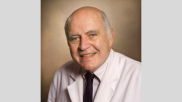
Valentin Fuster, MD, PhD, director of Mount Sinai Heart and general director of the Spanish National Center for Cardiovascular Research.
Share on Twitter Share on Facebook Share on Linkedin

Polypill strategy improves odds of survival after a heart attack

Share on Twitter Share on Facebook Share on Linkedin
Valentin Fuster, MD, PhD, director of Mount Sinai Heart and general director of the Spanish National Center for Cardiovascular Research.
The new findings, presented during ESC Congress 2022 and published in the New England Journal of Medicine, suggest that prescribing these new-look pills to heart patients could boost outcomes while also improving medication adherence.
READ MORE >

Cardiologist praises updated design of new TMVR system after historic interventional procedure

A care team with the Sanger Heart & Vascular Institute has shared details about its recent successes in TMVR and TAVR. Cardiologist Michael Rinaldi, MD, highlighted the importance of having "a coordinated team of specialists with expertise in treating valve diseases."

READ MORE >
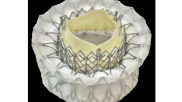
The Abbott Cephea transcatheter mitral valve replacement (TMVR) system.
Share on Twitter Share on Facebook Share on Linkedin

Cardiologist praises updated design of new TMVR system after historic interventional procedure

Share on Twitter Share on Facebook Share on Linkedin
The Abbott Cephea transcatheter mitral valve replacement (TMVR) system.
A care team with the Sanger Heart & Vascular Institute has shared details about its recent successes in TMVR and TAVR. Cardiologist Michael Rinaldi, MD, highlighted the importance of having "a coordinated team of specialists with expertise in treating valve diseases."
READ MORE >

Very low doses of edoxaban are safe and effective for frail, elderly AFib patients

Elderly patients are often not eligible for oral anticoagulant therapy due to the risk of bleeding events or other adverse outcomes. A very low dose of edoxaban, however, appears to be a safe treatment option, even for especially frail patients.

READ MORE >
Treating elderly atrial fibrillation (AFib) patients—even those who are traditionally ineligible for direct oral anticoagulants (DOACs)—with a very low dose of edoxaban is associated with improved outcomes, according to new research published in JAMA Network Open.
Share on Twitter Share on Facebook Share on Linkedin

Very low doses of edoxaban are safe and effective for frail, elderly AFib patients

Share on Twitter Share on Facebook Share on Linkedin
Treating elderly atrial fibrillation (AFib) patients—even those who are traditionally ineligible for direct oral anticoagulants (DOACs)—with a very low dose of edoxaban is associated with improved outcomes, according to new research published in JAMA Network Open.
Elderly patients are often not eligible for oral anticoagulant therapy due to the risk of bleeding events or other adverse outcomes. A very low dose of edoxaban, however, appears to be a safe treatment option, even for especially frail patients.
READ MORE >

Featured Articles

FDA announces a new recall of more than 23,000 batteries for Medtronic’s HVAD system

This latest recall was initiated because electrical faults could cause the batteries to stop working, which leads to a risk of serious injury or death.

READ MORE >
Recall | Product recall
Share on Twitter Share on Facebook Share on Linkedin

FDA announces a new recall of more than 23,000 batteries for Medtronic’s HVAD system

Share on Twitter Share on Facebook Share on Linkedin
Recall | Product recall
This latest recall was initiated because electrical faults could cause the batteries to stop working, which leads to a risk of serious injury or death.
READ MORE >

VIDEO: TAVR for asymptomatic patients with severe calcific aortic stenosis

Philippe Genereux, MD, medical director of the Structural Heart Disease Program at Morristown Medical Center, discusses the use of transcatheter aortic valve replacement (TAVR) procedures in patients with severe, calcific aortic stenosis who are asymptomatic. 

READ MORE >
Balloon expansion deployment of an Edwards Lifesciences Sapien 3 transcatheter aortic valve replacement (TAVR) device.
Share on Twitter Share on Facebook Share on Linkedin

VIDEO: TAVR for asymptomatic patients with severe calcific aortic stenosis

Share on Twitter Share on Facebook Share on Linkedin
Balloon expansion deployment of an Edwards Lifesciences Sapien 3 transcatheter aortic valve replacement (TAVR) device.
Philippe Genereux, MD, medical director of the Structural Heart Disease Program at Morristown Medical Center, discusses the use of transcatheter aortic valve replacement (TAVR) procedures in patients with severe, calcific aortic stenosis who are asymptomatic. 
READ MORE >

What to expect at the TCT MedTech Innovation Forum during TCT 2022

The all-day summit, a collaboration between CRF and Fogarty Innovation, will focus on advances in healthcare technologies and patient care.

READ MORE >
idea light bulb innovation
Share on Twitter Share on Facebook Share on Linkedin

What to expect at the TCT MedTech Innovation Forum during TCT 2022

Share on Twitter Share on Facebook Share on Linkedin
idea light bulb innovation
The all-day summit, a collaboration between CRF and Fogarty Innovation, will focus on advances in healthcare technologies and patient care.
READ MORE >

USPSTF highlights the benefits of statin use among high-risk CVD patients in new recommendations

The USPSTF recommends statin use for high-risk patients between the ages of 40 to 75 to help prevent a first heart attack or stroke. Other patients in that same age group may also benefit, the group noted, but physician input is needed. 

READ MORE >
The U.S. Preventive Services Task Force (USPSTF) has finalized its new recommendations on the use of statins to prevent cardiovascular disease (CVD) in August 2022. The USPSTF recommends statin use for high-risk patients between the ages of 40 to 75 to help prevent a first heart attack or stroke. This received the group’s “B” recommendation, which means there is high certainty that there is net benefit. #statins
Share on Twitter Share on Facebook Share on Linkedin

USPSTF highlights the benefits of statin use among high-risk CVD patients in new recommendations

Share on Twitter Share on Facebook Share on Linkedin
The U.S. Preventive Services Task Force (USPSTF) has finalized its new recommendations on the use of statins to prevent cardiovascular disease (CVD) in August 2022. The USPSTF recommends statin use for high-risk patients between the ages of 40 to 75 to help prevent a first heart attack or stroke. This received the group’s “B” recommendation, which means there is high certainty that there is net benefit. #statins
The USPSTF recommends statin use for high-risk patients between the ages of 40 to 75 to help prevent a first heart attack or stroke. Other patients in that same age group may also benefit, the group noted, but physician input is needed. 
READ MORE >

In Case You Missed It

‘The end of an era’: Influential cardiologist, dead at 88, made a lasting impact

“We are so fortunate to have had fearless luminaries such as Harry Page at the helm of our profession,” SCAI President Sunil V. Rao, MD, said in a statement.

READ MORE >
Harry Lee Page, Jr., MD, a veteran cardiologist who helped pioneer many modern interventional techniques, died on August 11 after a long illness. He was 88 years old. SCAI
Share on Twitter Share on Facebook Share on Linkedin

‘The end of an era’: Influential cardiologist, dead at 88, made a lasting impact

Share on Twitter Share on Facebook Share on Linkedin
Harry Lee Page, Jr., MD, a veteran cardiologist who helped pioneer many modern interventional techniques, died on August 11 after a long illness. He was 88 years old. SCAI
“We are so fortunate to have had fearless luminaries such as Harry Page at the helm of our profession,” SCAI President Sunil V. Rao, MD, said in a statement.
READ MORE >

Surgeons behind historic pig heart transplant to share their story at HFSA annual meeting

Multiple specialists involved in the procedure, including the surgeon who transplanted the pig heart, are scheduled to speak at the conference. 

READ MORE >
The most successful case to date of a pig organ being transplanted into a human occurred back in January, when specialists at the University of Maryland Medical Center (UMMC) in Baltimore transplanted a modified pig heart into 57-year-old David Bennett. The FDA approved the heart transplant transplant through an emergency authorization typically reserved for experimental procedures seen as a patient’s last chance at survival. Bennett did die of heart failure two months later.#pigheart
Share on Twitter Share on Facebook Share on Linkedin

Surgeons behind historic pig heart transplant to share their story at HFSA annual meeting

Share on Twitter Share on Facebook Share on Linkedin
The most successful case to date of a pig organ being transplanted into a human occurred back in January, when specialists at the University of Maryland Medical Center (UMMC) in Baltimore transplanted a modified pig heart into 57-year-old David Bennett. The FDA approved the heart transplant transplant through an emergency authorization typically reserved for experimental procedures seen as a patient’s last chance at survival. Bennett did die of heart failure two months later.#pigheart
Multiple specialists involved in the procedure, including the surgeon who transplanted the pig heart, are scheduled to speak at the conference. 
READ MORE >

In Other News

A significant finding was missed by two radiologists, so why was only one held liable?

One radiologist is being held liable for a patient’s injuries due to a “breach of standard of care” despite another radiologist also missing the same significant finding, Canadian Lawyer reports. 

READ MORE >
Judge bangs gavel
Share on Twitter Share on Facebook Share on Linkedin

A significant finding was missed by two radiologists, so why was only one held liable?

Share on Twitter Share on Facebook Share on Linkedin
Judge bangs gavel
One radiologist is being held liable for a patient’s injuries due to a “breach of standard of care” despite another radiologist also missing the same significant finding, Canadian Lawyer reports. 
READ MORE >

White House says all federally-funded research must be available to the public

The Biden administration has mandated that all federally-funded research become available to the public––for free.

READ MORE >
Researcher
Share on Twitter Share on Facebook Share on Linkedin

White House says all federally-funded research must be available to the public

Share on Twitter Share on Facebook Share on Linkedin
Researcher
The Biden administration has mandated that all federally-funded research become available to the public––for free.
READ MORE >

Innovate Healthcare thanks our partners for supporting our newsletters.
Sponsorship has no influence on editorial content.

Interested in reaching our audiences, contact our team

*|LIST:ADDRESSLINE|*

You received this email because you signed up for newsletters from Innovate Healthcare.
Change your preferences or unsubscribe here

Contact Us  |  Unsubscribe from all  |  Privacy Policy

© Innovate Healthcare, a TriMed Media brand
Innovate Healthcare

Recent Newsletters

AI is gaining ground, but clinicians run the show | Siemens Healthineers doubles down | Electrophysiologist compensation
News Alert: FDA shares warning about heart valve tech after patient death
Cardiologist pay & productivity are up | FDA clears PE thrombectomy devices | Cardiology tech in spotlight | Gore's new approval
Cardiology salaries on the rise | The climbing costs of care | M&A trends | Siemens Healthineers, J&J make big business moves
Major MRI trends | Blood thinner recalled | When to perform PCI before TAVR | How to build a CCTA program | Steroids & the heart
CMS boosts coverage for heart failure tech | FDA approves CardioMEMS updates | LVADs linked to strokes, other risks
M&A activity in cardiology: Exploring key trends | Cardiac PET vs. SPECT | Doctors support Medicare covering TAVR for AR
Newsletter archive
  • Home
  • News
  • Article Archive
  • Custom Content
  • Webinars
  • Press Releases
  • Content Studio
  • Advertising
  • Submit Press Release
  • Contact Us
  • Terms of Use
  • Privacy Policy
  • Cardiovascular Business
  • HealthExec
  • Radiology Business
  • Press Releases
  • Submit Press Release
© 2026 Innovate Healthcare | All Rights Reserved. | Terms of Use | Privacy Policy
Design by Adaptive Theme