This channel includes news on cardiovascular care delivery, including how patients are diagnosed and treated, cardiac care guidelines, policies or legislation impacting patient care, device recalls that may impact patient care, and cardiology practice management.
According to Newsweek, 13 of the top 20 hospitals for cardiac surgery in the entire world are located in the United States. The list includes 150 hospitals in total.
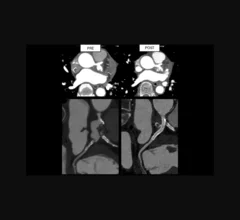
Cleerly and Clear Heart and Lung Imaging partnered to drive a cardiac-capable mobile CT scanner across Arizona, Louisiana, Georgia and Florida. Their goals were to evaluate patients in underserved parts of the United States and collect data for an ongoing clinical trial.
The overall mortality rate for U.S. patients with cardiovascular disease has improved significantly in recent years. At the same time, however, care gaps remain that must be addressed.
Patients with coronary artery disease and severe aortic stenosis often undergo PCI before TAVR. According to new data presented at ACC.26, however, deferring PCI is associated with comparable outcomes as well as a reduced bleeding risk.
Neurosurgeon Vitor Mendes Pereira, MD, was in Santiago, Panama, but his patient was in Panama City. "It is the highlight of my career to be involved in this historic achievement," Pereira said.
A multidisciplinary research team has found a new use for a reliable medical device. Multiple heart patients have already benefited for the group’s outside-the-box thinking.
The high-risk patients who require urgent or emergent TAVR are often excluded from major clinical trials. To learn more about this population, researchers explored data from nearly 600 patients treated at high-volume facilities.
Several U.S. medical societies have collaborated on a new report advocating for better safety standards in cardiac catheterization labs. As one cardiologist described it, clinicians have shifted from "accepting risk" to "expecting better."
The Cardiovascular Business Forty Under 40 Class of 2026 represents an accomplished group of clinicians, researchers, entrepreneurs and administrators who are redefining what cardiovascular leadership looks like under the age of 40.