• Clinical
      |Clinical
    • Acute Coronary Syndromes
    • Cardiac Surgery
    • Covid-19
    • Heart Failure
    • Heart Health
    • Heart Rhythm
    • Hypertension
    • Interventional Cardiology
    • Mitral Valve
    • Pharmaceutics
    • Structural Heart Disease
    • TAVR
    • Tricuspid Valve
    • Vascular & Endovascular
  • Management
      |Management
    • Chest Pain Guidelines
    • Compensation
    • Economics
    • Education & Training
    • Legal News
    • Patient Care
    • Policy & Regulations
    • Professional Associations
    • Quality
    • Revenue
    • Staffing
  • Technology
      |Technology
    • AI
    • Cardiac Imaging
    • Cath Lab
    • CT
    • CVIS
    • ECG
    • Echo
    • EP Lab
    • Informatics
    • MRI
    • Nuclear Cardiology
    • Remote Monitoring
  • Videos
  • Conferences
      |Conferences
    • ACC
    • AHA
    • ASE
    • ASNC
    • ESC
    • EuroPCR
    • HFSA
    • HRS
    • HRS
    • SCAI
    • SCCT
    • SIIM
    • SNMMI
    • STS
    • TCT
    • VIVA
  • Custom Content
      |Custom Content
    • Experience Stories
    • Webinars & Videos
  • Subscribe
  • Forty Under 40 Award
      |Forty Under 40 Award
    • Class of 2026
    • Class of 2025

Search form

Home

News You Need to Know Today
Early mortality vs. occasional walking | ‘Obesity paradox’ nullified | Ionizing radiation and heart disease
Thursday, March 30, 2023
Link to Twitter Link to Facebook Link to Linkedin Link to Vimeo

Today's News and Trends

Longevity, cardiovascular durability improve with just 1 or 2 walks per week

Weekend warriors who take brisk walks of around four miles just once or twice per week enjoy lower cardiovascular and all-cause mortality than their sedentary peers.

READ MORE >
Health walk heart health longevity
Share on Twitter Share on Facebook Share on Linkedin

Longevity, cardiovascular durability improve with just 1 or 2 walks per week

Share on Twitter Share on Facebook Share on Linkedin
Health walk heart health longevity
Weekend warriors who take brisk walks of around four miles just once or twice per week enjoy lower cardiovascular and all-cause mortality than their sedentary peers.
READ MORE >

New research debunks the ‘obesity paradox’

Using waist-to-height ratio instead of body mass index (BMI) eliminates the oft-debated "advantage" of being overweight or obese with a heart condition.

READ MORE >
Obesity Paradox Body Mass Index
Share on Twitter Share on Facebook Share on Linkedin

New research debunks the ‘obesity paradox’

Share on Twitter Share on Facebook Share on Linkedin
Obesity Paradox Body Mass Index
Using waist-to-height ratio instead of body mass index (BMI) eliminates the oft-debated "advantage" of being overweight or obese with a heart condition.
READ MORE >

In Case You Missed It

AI predicts mortality risk based on ECG results with 85% accuracy

The model estimated mortality risk for more than 244,000 patients in Alberta, Canada, who had an ECG taken after a related health incident. 

READ MORE >
Electrocardiograms analyzed by AI can offer information about mortality risk.
Share on Twitter Share on Facebook Share on Linkedin

AI predicts mortality risk based on ECG results with 85% accuracy

Share on Twitter Share on Facebook Share on Linkedin
Electrocardiograms analyzed by AI can offer information about mortality risk.
The model estimated mortality risk for more than 244,000 patients in Alberta, Canada, who had an ECG taken after a related health incident. 
READ MORE >

Heart Association: 5 principles for dealing with genetic testing that may unduly trouble patients

When should a clinician tell a patient they have a gene variant that appeared incidentally but may have ramifications for cardiovascular health?

READ MORE >
DNA sequencing for inheritable heart disease
Share on Twitter Share on Facebook Share on Linkedin

Heart Association: 5 principles for dealing with genetic testing that may unduly trouble patients

Share on Twitter Share on Facebook Share on Linkedin
DNA sequencing for inheritable heart disease
When should a clinician tell a patient they have a gene variant that appeared incidentally but may have ramifications for cardiovascular health?
READ MORE >

FDA approves drug for children with rare condition causing high LDL cholesterol

Evkeeza, which was previously approved for patients ages 12 and above, was shown to help lower cholesterol for children with homozygous familial hypercholesterolemia (HoFH), in conjunction with other therapies. 


READ MORE >
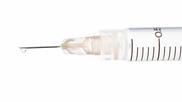
Evkeeza is a prescription medication administered by injection, aiming to lower LDL cholesterol. .
Share on Twitter Share on Facebook Share on Linkedin

FDA approves drug for children with rare condition causing high LDL cholesterol

Share on Twitter Share on Facebook Share on Linkedin
Evkeeza is a prescription medication administered by injection, aiming to lower LDL cholesterol. .
Evkeeza, which was previously approved for patients ages 12 and above, was shown to help lower cholesterol for children with homozygous familial hypercholesterolemia (HoFH), in conjunction with other therapies.   
READ MORE >

In Other News

Exposure to ionizing radiation can increase risk of heart disease

“The effect of lower doses of radiation on the heart and blood vessels may have been underestimated in the past,” experts explained in BMJ.

READ MORE >
heart_body_blood_bloodvessel.jpg
Share on Twitter Share on Facebook Share on Linkedin

Exposure to ionizing radiation can increase risk of heart disease

Share on Twitter Share on Facebook Share on Linkedin
heart_body_blood_bloodvessel.jpg
“The effect of lower doses of radiation on the heart and blood vessels may have been underestimated in the past,” experts explained in BMJ.
READ MORE >

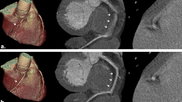
Even in asymptomatic, CCTA-detected coronary artery disease increases heart attack risk

These individuals face a more than an eightfold risk for myocardial infarction, according to new findings published in the Annals of Internal Medicine. 

READ MORE >
Share on Twitter Share on Facebook Share on Linkedin

Even in asymptomatic, CCTA-detected coronary artery disease increases heart attack risk

Share on Twitter Share on Facebook Share on Linkedin
These individuals face a more than an eightfold risk for myocardial infarction, according to new findings published in the Annals of Internal Medicine. 
READ MORE >

UnitedHealthcare to cut back on prior authorization paperwork

UnitedHealthcare announced it would remove 20% of its current prior authorizations starting with the third quarter of this year. 


READ MORE >
files paperwork work load
Share on Twitter Share on Facebook Share on Linkedin

UnitedHealthcare to cut back on prior authorization paperwork

Share on Twitter Share on Facebook Share on Linkedin
files paperwork work load
UnitedHealthcare announced it would remove 20% of its current prior authorizations starting with the third quarter of this year.   
READ MORE >

Innovate Healthcare thanks our partners for supporting our newsletters.
Sponsorship has no influence on editorial content.

Interested in reaching our audiences, contact our team

*|LIST:ADDRESSLINE|*

You received this email because you signed up for newsletters from Innovate Healthcare.
Change your preferences or unsubscribe here

Contact Us  |  Unsubscribe from all  |  Privacy Policy

© Innovate Healthcare, a TriMed Media brand
Innovate Healthcare

Recent Newsletters

AI is gaining ground, but clinicians run the show | Siemens Healthineers doubles down | Electrophysiologist compensation
News Alert: FDA shares warning about heart valve tech after patient death
Cardiologist pay & productivity are up | FDA clears PE thrombectomy devices | Cardiology tech in spotlight | Gore's new approval
Cardiology salaries on the rise | The climbing costs of care | M&A trends | Siemens Healthineers, J&J make big business moves
Major MRI trends | Blood thinner recalled | When to perform PCI before TAVR | How to build a CCTA program | Steroids & the heart
CMS boosts coverage for heart failure tech | FDA approves CardioMEMS updates | LVADs linked to strokes, other risks
M&A activity in cardiology: Exploring key trends | Cardiac PET vs. SPECT | Doctors support Medicare covering TAVR for AR
Newsletter archive
  • Home
  • News
  • Article Archive
  • Custom Content
  • Webinars
  • Press Releases
  • Content Studio
  • Advertising
  • Submit Press Release
  • Contact Us
  • Terms of Use
  • Privacy Policy
  • Cardiovascular Business
  • HealthExec
  • Radiology Business
  • Press Releases
  • Submit Press Release
© 2026 Innovate Healthcare | All Rights Reserved. | Terms of Use | Privacy Policy
Design by Adaptive Theme
Trimed Popup