• Clinical
      |Clinical
    • Acute Coronary Syndromes
    • Cardiac Surgery
    • Covid-19
    • Heart Failure
    • Heart Health
    • Heart Rhythm
    • Hypertension
    • Interventional Cardiology
    • Mitral Valve
    • Pharmaceutics
    • Structural Heart Disease
    • TAVR
    • Tricuspid Valve
    • Vascular & Endovascular
  • Management
      |Management
    • Chest Pain Guidelines
    • Compensation
    • Economics
    • Education & Training
    • Legal News
    • Patient Care
    • Policy & Regulations
    • Professional Associations
    • Quality
    • Revenue
    • Staffing
  • Technology
      |Technology
    • AI
    • Cardiac Imaging
    • Cath Lab
    • CT
    • CVIS
    • ECG
    • Echo
    • EP Lab
    • Informatics
    • MRI
    • Nuclear Cardiology
    • Remote Monitoring
  • Videos
  • Conferences
      |Conferences
    • ACC
    • AHA
    • ASE
    • ASNC
    • ESC
    • EuroPCR
    • HFSA
    • HRS
    • HRS
    • SCAI
    • SCCT
    • SIIM
    • SNMMI
    • STS
    • TCT
    • VIVA
  • Custom Content
      |Custom Content
    • Experience Stories
    • Webinars & Videos
  • Subscribe
  • Forty Under 40 Award
      |Forty Under 40 Award
    • Class of 2026
    • Class of 2025

Search form

Home

News You Need to Know Today
Cardiac Imaging Highlights: Managing patients with SCAD | Heart damage after TAVR | Cardiology groups unite
Tuesday, June 20, 2023
Link to Twitter Link to Facebook Link to Linkedin Link to Vimeo

Editor's Choice: Cardiac Imaging

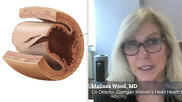
Management of patients with SCAD

Malissa Wood, MD, co-director of Corrigan Women’s Heart Health Program at Massachusetts General Hospital, shares some of the latest data from the iSCAD Registry.

READ MORE >
Malissa J. Wood, MD, associate chief of cardiology for diversity and equity, and co-director, Corrigan Women’s Heart Health Program, Massachusetts General Hospital, spoke with Cardiovascular Business to explains some of the latest data from the iSCAD Registry presented at the American College of Cardiology 2023 meeting. She also discussed how these patients are currently diagnosed and and managed. #SCAD
Share on Twitter Share on Facebook Share on Linkedin

Management of patients with SCAD

Share on Twitter Share on Facebook Share on Linkedin
Malissa J. Wood, MD, associate chief of cardiology for diversity and equity, and co-director, Corrigan Women’s Heart Health Program, Massachusetts General Hospital, spoke with Cardiovascular Business to explains some of the latest data from the iSCAD Registry presented at the American College of Cardiology 2023 meeting. She also discussed how these patients are currently diagnosed and and managed. #SCAD
Malissa Wood, MD, co-director of Corrigan Women’s Heart Health Program at Massachusetts General Hospital, shares some of the latest data from the iSCAD Registry.
READ MORE >

Heart damage after TAVR: Follow-up imaging helps cardiologists anticipate problems

While cardiac damage reverses in many patients following treatment, it can actually continue to get worse in others. 

READ MORE >
A TAVR procedure being performed at Northwestern Medicine in Chicago.
Share on Twitter Share on Facebook Share on Linkedin

Heart damage after TAVR: Follow-up imaging helps cardiologists anticipate problems

Share on Twitter Share on Facebook Share on Linkedin
A TAVR procedure being performed at Northwestern Medicine in Chicago.
While cardiac damage reverses in many patients following treatment, it can actually continue to get worse in others. 
READ MORE >

‘A hugely significant development’: Severe heart condition reverses in 3 patients, shocking experts

Cardiologists and other physicians have always believed cardiac transthyretin amyloidosis, a progressive heart condition associated with a high mortality rate, was irreversible. Now, though, new evidence suggests that there may be hope. 

READ MORE >
Large peridevice leaks after left atrial appendage occlusion (LAAO) are incredibly rare and not associated with a greater risk of adverse outcomes, according to new research published in JACC: Clinical Electrophysiology.[1] Smaller residual links are more common, however, and associated with a risk of thromboembolic and bleeding events.
Share on Twitter Share on Facebook Share on Linkedin

‘A hugely significant development’: Severe heart condition reverses in 3 patients, shocking experts

Share on Twitter Share on Facebook Share on Linkedin
Large peridevice leaks after left atrial appendage occlusion (LAAO) are incredibly rare and not associated with a greater risk of adverse outcomes, according to new research published in JACC: Clinical Electrophysiology.[1] Smaller residual links are more common, however, and associated with a risk of thromboembolic and bleeding events.
Cardiologists and other physicians have always believed cardiac transthyretin amyloidosis, a progressive heart condition associated with a high mortality rate, was irreversible. Now, though, new evidence suggests that there may be hope. 
READ MORE >

Cardiac ultrasound could lead to key advances in heart attack care, drug delivery

Jonathan Lindner, MD, offers an update on the use of echocardiography and bubble contrast agents in a therapy role to help revascularize STEMI patients and increase drug and gene delivery.

READ MORE >
Video of Jon Lindner explaining the use of ultrasound and bubble contrast for therapy.
Share on Twitter Share on Facebook Share on Linkedin

Cardiac ultrasound could lead to key advances in heart attack care, drug delivery

Share on Twitter Share on Facebook Share on Linkedin
Video of Jon Lindner explaining the use of ultrasound and bubble contrast for therapy.
Jonathan Lindner, MD, offers an update on the use of echocardiography and bubble contrast agents in a therapy role to help revascularize STEMI patients and increase drug and gene delivery.
READ MORE >

11 leading cardiology societies collaborate on new AUC for chronic coronary disease

The new AUC document, which examines the treatment of both symptomatic and asymptomatic patients, was published in full in the Journal of the American College of Cardiology.

READ MORE >
Cardiologist heart
Share on Twitter Share on Facebook Share on Linkedin

11 leading cardiology societies collaborate on new AUC for chronic coronary disease

Share on Twitter Share on Facebook Share on Linkedin
Cardiologist heart
The new AUC document, which examines the treatment of both symptomatic and asymptomatic patients, was published in full in the Journal of the American College of Cardiology.
READ MORE >

New Cedars-Sinai AI tool may predict cardiac events and better assess risk

Cedars-Sinai researchers are developing a deep-learning algorithm to personalize patient cardiac risk predictions in a patient-friendly, graphical report.

READ MORE >
Part of the graphical results from the Cedars-Sinai AI cardiac risk assessment tool from basic data like the patient’s age, gender, weight, heart rate, and blood pressure, and AI interpretation of cardiac imaging.
Share on Twitter Share on Facebook Share on Linkedin

New Cedars-Sinai AI tool may predict cardiac events and better assess risk

Share on Twitter Share on Facebook Share on Linkedin
Part of the graphical results from the Cedars-Sinai AI cardiac risk assessment tool from basic data like the patient’s age, gender, weight, heart rate, and blood pressure, and AI interpretation of cardiac imaging.
Cedars-Sinai researchers are developing a deep-learning algorithm to personalize patient cardiac risk predictions in a patient-friendly, graphical report.
READ MORE >

Imaging results more helpful than genetics when predicting heart disease, new head-to-head study confirms

The new analysis, published in JAMA, suggests that CT results can help identify medium- and high-risk patients who may need to be considered for statin therapy or other preventive treatments.

READ MORE >
A CTA scan being performed at Beaumont Hospital in Michigan by cardiac CT expert Kavitha M Chinnaiyan, MD. CCTA has largely been used at academic medical centers for the past decade, but it is now expanding in 2022 to community hospitals and clinics thanks to a Class 1A recommendation in the 2021 chest pain guidelines. #CCTA #CTA #Beaumont
Share on Twitter Share on Facebook Share on Linkedin

Imaging results more helpful than genetics when predicting heart disease, new head-to-head study confirms

Share on Twitter Share on Facebook Share on Linkedin
A CTA scan being performed at Beaumont Hospital in Michigan by cardiac CT expert Kavitha M Chinnaiyan, MD. CCTA has largely been used at academic medical centers for the past decade, but it is now expanding in 2022 to community hospitals and clinics thanks to a Class 1A recommendation in the 2021 chest pain guidelines. #CCTA #CTA #Beaumont
The new analysis, published in JAMA, suggests that CT results can help identify medium- and high-risk patients who may need to be considered for statin therapy or other preventive treatments.
READ MORE >

Innovate Healthcare thanks our partners for supporting our newsletters.
Sponsorship has no influence on editorial content.

Interested in reaching our audiences, contact our team

*|LIST:ADDRESSLINE|*

You received this email because you signed up for newsletters from Innovate Healthcare.
Change your preferences or unsubscribe here

Contact Us  |  Unsubscribe from all  |  Privacy Policy

© Innovate Healthcare, a TriMed Media brand
Innovate Healthcare

Recent Newsletters

Medtech giant makes big move | The world’s top hospitals for heart surgery | New CPT codes | PET vs. SPECT | TAVR tech recalled
AI is gaining ground, but clinicians run the show | Siemens Healthineers doubles down | Electrophysiologist compensation
News Alert: FDA shares warning about heart valve tech after patient death
Cardiologist pay & productivity are up | FDA clears PE thrombectomy devices | Cardiology tech in spotlight | Gore's new approval
Cardiology salaries on the rise | The climbing costs of care | M&A trends | Siemens Healthineers, J&J make big business moves
Major MRI trends | Blood thinner recalled | When to perform PCI before TAVR | How to build a CCTA program | Steroids & the heart
CMS boosts coverage for heart failure tech | FDA approves CardioMEMS updates | LVADs linked to strokes, other risks
Newsletter archive
  • Home
  • News
  • Article Archive
  • Custom Content
  • Webinars
  • Press Releases
  • Content Studio
  • Advertising
  • Submit Press Release
  • Contact Us
  • Terms of Use
  • Privacy Policy
  • Cardiovascular Business
  • HealthExec
  • Radiology Business
  • Press Releases
  • Submit Press Release
© 2026 Innovate Healthcare | All Rights Reserved. | Terms of Use | Privacy Policy
Design by Adaptive Theme
Trimed Popup