• Clinical
      |Clinical
    • Acute Coronary Syndromes
    • Cardiac Surgery
    • Covid-19
    • Heart Failure
    • Heart Health
    • Heart Rhythm
    • Hypertension
    • Interventional Cardiology
    • Mitral Valve
    • Pharmaceutics
    • Structural Heart Disease
    • TAVR
    • Tricuspid Valve
    • Vascular & Endovascular
  • Management
      |Management
    • Chest Pain Guidelines
    • Compensation
    • Economics
    • Education & Training
    • Legal News
    • Patient Care
    • Policy & Regulations
    • Professional Associations
    • Quality
    • Revenue
    • Staffing
  • Technology
      |Technology
    • AI
    • Cardiac Imaging
    • Cath Lab
    • CT
    • CVIS
    • ECG
    • Echo
    • EP Lab
    • Informatics
    • MRI
    • Nuclear Cardiology
    • Remote Monitoring
  • Videos
  • Conferences
      |Conferences
    • ACC
    • AHA
    • ASE
    • ASNC
    • ESC
    • EuroPCR
    • HFSA
    • HRS
    • HRS
    • SCAI
    • SCCT
    • SIIM
    • SNMMI
    • STS
    • TCT
    • VIVA
  • Custom Content
      |Custom Content
    • Experience Stories
    • Webinars & Videos
  • Subscribe
  • Forty Under 40 Award
      |Forty Under 40 Award
    • Class of 2026
    • Class of 2025

Search form

Home

News You Need to Know Today
FDA clears interventional device | Safety issues leads to recall | TAVR valve used for first time | Shockwave tests new IVL tech
Tuesday, April 15, 2025
Link to Twitter Link to Facebook Link to Linkedin Link to Vimeo

Editor's Choice: Interventional Cardiology

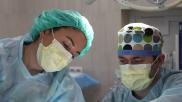
FDA clears new device for enabling access to the heart’s surface without an exposed needle

CardioVia's ViaOne technology includes a blunt-tip needle that remains concealed to help interventional cardiologists and electrophysiologists treat cardiac arrhythmias with a reduced risk of perforation or any other complications. 

READ MORE >
surgery.jpg
Share on Twitter Share on Facebook Share on Linkedin

FDA clears new device for enabling access to the heart’s surface without an exposed needle

Share on Twitter Share on Facebook Share on Linkedin
surgery.jpg
CardioVia's ViaOne technology includes a blunt-tip needle that remains concealed to help interventional cardiologists and electrophysiologists treat cardiac arrhythmias with a reduced risk of perforation or any other complications. 
READ MORE >

Safety update: FDA announces Class I recall due to atherectomy devices breaking during use

The FDA shared a warning about these safety issues in February, but said it was still reviewing the evidence. The agency is now saying the devices “may cause serious injury or death” if used without following the updated instructions for use.

READ MORE >
Bard Peripheral Vascular Rotarex Atherectomy System recall
Share on Twitter Share on Facebook Share on Linkedin

Safety update: FDA announces Class I recall due to atherectomy devices breaking during use

Share on Twitter Share on Facebook Share on Linkedin
Bard Peripheral Vascular Rotarex Atherectomy System recall
The FDA shared a warning about these safety issues in February, but said it was still reviewing the evidence. The agency is now saying the devices “may cause serious injury or death” if used without following the updated instructions for use.
READ MORE >

Cardiologists perform world’s first TAVR procedures with new fully retrievable valve

Researchers detailed their experience performing the very first TAVR procedures with the Venus-PowerX TAVR valve from Venus MedTech. The valve includes a wire-controlled mechanism that makes it possible to recapture after full deployment. 

READ MORE >
Venus-PowerX TAVR valve developed by Venus MedTech
Share on Twitter Share on Facebook Share on Linkedin

Cardiologists perform world’s first TAVR procedures with new fully retrievable valve

Share on Twitter Share on Facebook Share on Linkedin
Venus-PowerX TAVR valve developed by Venus MedTech
Researchers detailed their experience performing the very first TAVR procedures with the Venus-PowerX TAVR valve from Venus MedTech. The valve includes a wire-controlled mechanism that makes it possible to recapture after full deployment. 
READ MORE >

Shockwave Medical testing new-look IVL technology on challenging coronary lesions

Care teams throughout the U.S. and U.K. are now exploring the safety and effectiveness of using Shockwave Medical's new Javelin IVL catheters to treat challenging, difficult-to-cross coronary lesions. 

READ MORE >
Shockwave Medical IVL
Share on Twitter Share on Facebook Share on Linkedin

Shockwave Medical testing new-look IVL technology on challenging coronary lesions

Share on Twitter Share on Facebook Share on Linkedin
Shockwave Medical IVL
Care teams throughout the U.S. and U.K. are now exploring the safety and effectiveness of using Shockwave Medical's new Javelin IVL catheters to treat challenging, difficult-to-cross coronary lesions. 
READ MORE >

Key takeaways from ACC.25: Advances in cardiovascular science

Former American College of Cardiology president Hadley Wilson, MD, executive vice chair of Atrium Health Sanger Heart and Vascular Institute, explains his main takeaway messages from the ACC 2025 late-breaking trials.

READ MORE >
Former American College of Cardiology president Hadley Wilson, MD, executive vice chair of Atrium Health Sanger Heart and Vascular Institute, and a clinical professor of medicine at Wake Forest University School of Medicine, offers what he saw as the main takeaway messages in the ACC 2025 late breaking trials.
Share on Twitter Share on Facebook Share on Linkedin

Key takeaways from ACC.25: Advances in cardiovascular science

Share on Twitter Share on Facebook Share on Linkedin
Former American College of Cardiology president Hadley Wilson, MD, executive vice chair of Atrium Health Sanger Heart and Vascular Institute, and a clinical professor of medicine at Wake Forest University School of Medicine, offers what he saw as the main takeaway messages in the ACC 2025 late breaking trials.
Former American College of Cardiology president Hadley Wilson, MD, executive vice chair of Atrium Health Sanger Heart and Vascular Institute, explains his main takeaway messages from the ACC 2025 late-breaking trials.
READ MORE >

Edwards Lifesciences announces key approval for new mitral valve replacement system

The Sapien M3 device was designed to treat symptomatic mitral regurgitation in patients who are not suitable candidates for surgery or transcatheter edge-to-edge repair.

READ MORE >
The Sapien M3 system for transcatheter mitral valve replacement. Image courtesy of Edwards Lifesciences.
Share on Twitter Share on Facebook Share on Linkedin

Edwards Lifesciences announces key approval for new mitral valve replacement system

Share on Twitter Share on Facebook Share on Linkedin
The Sapien M3 system for transcatheter mitral valve replacement. Image courtesy of Edwards Lifesciences.
The Sapien M3 device was designed to treat symptomatic mitral regurgitation in patients who are not suitable candidates for surgery or transcatheter edge-to-edge repair.
READ MORE >

Boston Scientific finalizes Bolt Medical acquisition as FDA clears company’s IVL technology

Boston Scientific hopes to officially launch its new IVL system in the first half of 2026.

READ MORE >
merger acquisition M&A business
Share on Twitter Share on Facebook Share on Linkedin

Boston Scientific finalizes Bolt Medical acquisition as FDA clears company’s IVL technology

Share on Twitter Share on Facebook Share on Linkedin
merger acquisition M&A business
Boston Scientific hopes to officially launch its new IVL system in the first half of 2026.
READ MORE >

Advances in bioresorbable stents show promise for treating PAD

Bioresorbable stents are back in the spotlight thanks to some significant progress from multiple medtech companies. Eric Secemsky, MD, discussed some of the biggest breakthroughs in this space at CRT 2025.

READ MORE >
Eric Secemsky, MD, MSc, RPVI, FACC, FAHA, FSCAI, FSVM, director of vascular intervention, Beth Israel Deaconess, section head, interventional cardiology and vascular research, Susan F. Smith Center for Outcomes Research, and associate professor of medicine, Harvard Medical School, explained some of the new bioresorbable stent scaffold technology that is being developed for use in PAD below the knee at CRT 2025.
Share on Twitter Share on Facebook Share on Linkedin

Advances in bioresorbable stents show promise for treating PAD

Share on Twitter Share on Facebook Share on Linkedin
Eric Secemsky, MD, MSc, RPVI, FACC, FAHA, FSCAI, FSVM, director of vascular intervention, Beth Israel Deaconess, section head, interventional cardiology and vascular research, Susan F. Smith Center for Outcomes Research, and associate professor of medicine, Harvard Medical School, explained some of the new bioresorbable stent scaffold technology that is being developed for use in PAD below the knee at CRT 2025.
Bioresorbable stents are back in the spotlight thanks to some significant progress from multiple medtech companies. Eric Secemsky, MD, discussed some of the biggest breakthroughs in this space at CRT 2025.
READ MORE >

Abbott makes IVL move as FDA approves new clinical trial

Abbott has received an investigational device exemption from the FDA for a new clinical trial evaluating the safety and effectiveness of using its coronary IVL technology. The trial is expected to enroll up to 335 U.S. patients.

READ MORE >
progress step forward business announce
Share on Twitter Share on Facebook Share on Linkedin

Abbott makes IVL move as FDA approves new clinical trial

Share on Twitter Share on Facebook Share on Linkedin
progress step forward business announce
Abbott has received an investigational device exemption from the FDA for a new clinical trial evaluating the safety and effectiveness of using its coronary IVL technology. The trial is expected to enroll up to 335 U.S. patients.
READ MORE >

Choosing left radial access in the cath lab helps cardiologists limit radiation exposure

Using a left radial artery approach in the cath lab exposes interventional cardiologists to significantly less radiation than a hyper-adducted right radial artery approach. The difference is substantial enough for researchers to declare LRA "the primary access site for cardiac catheterization."

READ MORE >
Using a left radial artery (LRA) vs. hyper-adducted right radial artery (HARRA) approach in the cath lab.
Share on Twitter Share on Facebook Share on Linkedin

Choosing left radial access in the cath lab helps cardiologists limit radiation exposure

Share on Twitter Share on Facebook Share on Linkedin
Using a left radial artery (LRA) vs. hyper-adducted right radial artery (HARRA) approach in the cath lab.
Using a left radial artery approach in the cath lab exposes interventional cardiologists to significantly less radiation than a hyper-adducted right radial artery approach. The difference is substantial enough for researchers to declare LRA "the primary access site for cardiac catheterization."
READ MORE >

Innovate Healthcare thanks our partners for supporting our newsletters.
Sponsorship has no influence on editorial content.

Interested in reaching our audiences, contact our team

*|LIST:ADDRESSLINE|*

You received this email because you signed up for newsletters from Innovate Healthcare.
Change your preferences or unsubscribe here

Contact Us  |  Unsubscribe from all  |  Privacy Policy

© Innovate Healthcare, a TriMed Media brand
Innovate Healthcare

Recent Newsletters

Medtech giant makes big move | The world’s top hospitals for heart surgery | New CPT codes | PET vs. SPECT | TAVR tech recalled
AI is gaining ground, but clinicians run the show | Siemens Healthineers doubles down | Electrophysiologist compensation
News Alert: FDA shares warning about heart valve tech after patient death
Cardiologist pay & productivity are up | FDA clears PE thrombectomy devices | Cardiology tech in spotlight | Gore's new approval
Cardiology salaries on the rise | The climbing costs of care | M&A trends | Siemens Healthineers, J&J make big business moves
Major MRI trends | Blood thinner recalled | When to perform PCI before TAVR | How to build a CCTA program | Steroids & the heart
CMS boosts coverage for heart failure tech | FDA approves CardioMEMS updates | LVADs linked to strokes, other risks
Newsletter archive
  • Home
  • News
  • Article Archive
  • Custom Content
  • Webinars
  • Press Releases
  • Content Studio
  • Advertising
  • Submit Press Release
  • Contact Us
  • Terms of Use
  • Privacy Policy
  • Cardiovascular Business
  • HealthExec
  • Radiology Business
  • Press Releases
  • Submit Press Release
© 2026 Innovate Healthcare | All Rights Reserved. | Terms of Use | Privacy Policy
Design by Adaptive Theme
Trimed Popup