• Clinical
      |Clinical
    • Acute Coronary Syndromes
    • Cardiac Surgery
    • Covid-19
    • Heart Failure
    • Heart Health
    • Heart Rhythm
    • Hypertension
    • Interventional Cardiology
    • Mitral Valve
    • Pharmaceutics
    • Structural Heart Disease
    • TAVR
    • Tricuspid Valve
    • Vascular & Endovascular
  • Management
      |Management
    • Chest Pain Guidelines
    • Compensation
    • Economics
    • Education & Training
    • Legal News
    • Patient Care
    • Policy & Regulations
    • Professional Associations
    • Quality
    • Revenue
    • Staffing
  • Technology
      |Technology
    • AI
    • Cardiac Imaging
    • Cath Lab
    • CT
    • CVIS
    • ECG
    • Echo
    • EP Lab
    • Informatics
    • MRI
    • Nuclear Cardiology
    • Remote Monitoring
  • Videos
  • Conferences
      |Conferences
    • ACC
    • AHA
    • ASE
    • ASNC
    • ESC
    • EuroPCR
    • HFSA
    • HRS
    • SCAI
    • SCCT
    • SIIM
    • SNMMI
    • STS
    • TCT
    • VIVA
  • Custom Content
      |Custom Content
    • Experience Stories
    • Webinars & Videos
  • Subscribe
  • Forty Under 40 Award
      |Forty Under 40 Award
    • Class of 2026
    • Class of 2025

Search form

Home

FDA approves AI-enabled wearable cardioverter defibrillator | Predicting LBBB risk before TAVR | Real-time blood clot monitoring

News You Need to Know Today
FDA approves AI-enabled wearable cardioverter defibrillator | Predicting LBBB risk before TAVR | Real-time blood clot monitoring
Wednesday, June 4, 2025
Link to Twitter Link to Facebook Link to Linkedin Link to Vimeo

Editor's Choice: Artificial intelligence

FDA approves new AI-enabled wearable cardioverter defibrillator

The newly approved device can be worn for up to a week at a time, with no daily maintenance required, and includes advanced AI algorithms that minimize the risk of false alarms or inappropriate shocks.

READ MORE >
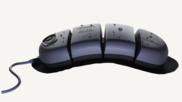
Jewel Patch Wearable Cardioverter Defibrillator from Element Science
Share on Twitter Share on Facebook Share on Linkedin

FDA approves new AI-enabled wearable cardioverter defibrillator

Share on Twitter Share on Facebook Share on Linkedin
Jewel Patch Wearable Cardioverter Defibrillator from Element Science
The newly approved device can be worn for up to a week at a time, with no daily maintenance required, and includes advanced AI algorithms that minimize the risk of false alarms or inappropriate shocks.
READ MORE >

AI predicts LBBB risk in TAVR patients prior to treatment

The authors tested out a variety of machine learning techniques, including large language models and more traditional algorithms. They focused on data that can be gathered prior to treatment, ensuring cardiologists know as much as possible before the procedure.

READ MORE >
artificial intelligence heart AI
Share on Twitter Share on Facebook Share on Linkedin

AI predicts LBBB risk in TAVR patients prior to treatment

Share on Twitter Share on Facebook Share on Linkedin
artificial intelligence heart AI
The authors tested out a variety of machine learning techniques, including large language models and more traditional algorithms. They focused on data that can be gathered prior to treatment, ensuring cardiologists know as much as possible before the procedure.
READ MORE >

AI delivers real-time blood clot monitoring, helping cardiologists make treatment decisions

Researchers have used a state-of-the-art microscope and advanced AI to track clotting risks in CAD patients. The goal is to spot blood clots before they even happen, ensuring patients are prescribed the right therapy for their specific needs. 

READ MORE >
robot reviewing heart data
Share on Twitter Share on Facebook Share on Linkedin

AI delivers real-time blood clot monitoring, helping cardiologists make treatment decisions

Share on Twitter Share on Facebook Share on Linkedin
robot reviewing heart data
Researchers have used a state-of-the-art microscope and advanced AI to track clotting risks in CAD patients. The goal is to spot blood clots before they even happen, ensuring patients are prescribed the right therapy for their specific needs. 
READ MORE >

FDA gives AI-powered blood test for obstructive CAD breakthrough device designation

The FDA clearly sees significant potential in a new multi-protein blood test from Prevencio. The company's goal is to gain full approval and get the test in the hands of emergency departments all over the United States.

READ MORE >
blood test research laboratory
Share on Twitter Share on Facebook Share on Linkedin

FDA gives AI-powered blood test for obstructive CAD breakthrough device designation

Share on Twitter Share on Facebook Share on Linkedin
blood test research laboratory
The FDA clearly sees significant potential in a new multi-protein blood test from Prevencio. The company's goal is to gain full approval and get the test in the hands of emergency departments all over the United States.
READ MORE >

AI-enabled CCTA evaluations reduce use of invasive imaging exams

This two-year analysis of the FISH&CHIPS study found that using advanced AI from Heartflow to evaluate cardiac CT is safe, effective and limits the use of unnecessary follow-up tests.

READ MORE >
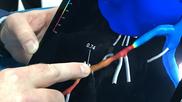
An example of HeartFlow's FFR-CT technology, which takes the cardiac CT dataset and uses computational fluid dynamics to create virtual fraction flow reserve values. The FFR measurement can help determine if a coronary lesion is significant enough to require revascularization, or if the patient should be treated with medication. FFR-CT was included as a recommendation in select patients in the 2021 Chest Pain Guidelines.
Share on Twitter Share on Facebook Share on Linkedin

AI-enabled CCTA evaluations reduce use of invasive imaging exams

Share on Twitter Share on Facebook Share on Linkedin
An example of HeartFlow's FFR-CT technology, which takes the cardiac CT dataset and uses computational fluid dynamics to create virtual fraction flow reserve values. The FFR measurement can help determine if a coronary lesion is significant enough to require revascularization, or if the patient should be treated with medication. FFR-CT was included as a recommendation in select patients in the 2021 Chest Pain Guidelines.
This two-year analysis of the FISH&CHIPS study found that using advanced AI from Heartflow to evaluate cardiac CT is safe, effective and limits the use of unnecessary follow-up tests.
READ MORE >

Opportunistic screening: AI highlights key heart findings in mammography images

Breast artery calcifications are already visible when radiologists review mammograms, but nothing typically happens with them. Researchers aimed to see if AI could help translate those findings into an easy-to-understand cardiovascular risk score.

READ MORE >
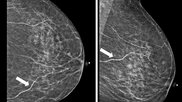
Breast arterial calcifications (BACs) identified on screening mammograms may help identify women who face a heightened risk of developing cardiovascular disease (CVD), according to a new analysis published in Clinical Imaging.
Share on Twitter Share on Facebook Share on Linkedin

Opportunistic screening: AI highlights key heart findings in mammography images

Share on Twitter Share on Facebook Share on Linkedin
Breast arterial calcifications (BACs) identified on screening mammograms may help identify women who face a heightened risk of developing cardiovascular disease (CVD), according to a new analysis published in Clinical Imaging.
Breast artery calcifications are already visible when radiologists review mammograms, but nothing typically happens with them. Researchers aimed to see if AI could help translate those findings into an easy-to-understand cardiovascular risk score.
READ MORE >

In Case You Missed It

The revolution is here: AI’s growing role in cardiovascular imaging, interventional cardiology

AI has already made a massive impact on healthcare, especially in the fields of cardiology and radiology. With the FDA clearing more and more algorithms, this trend is only expected to grow as time goes on.

READ MORE >
The rapid rise of artificial intelligence (AI) has helped cardiologists, radiologists, nurses and other healthcare providers embrace precision medicine in a way that ensures more heart patients are receiving personalized care.
Share on Twitter Share on Facebook Share on Linkedin

The revolution is here: AI’s growing role in cardiovascular imaging, interventional cardiology

Share on Twitter Share on Facebook Share on Linkedin
The rapid rise of artificial intelligence (AI) has helped cardiologists, radiologists, nurses and other healthcare providers embrace precision medicine in a way that ensures more heart patients are receiving personalized care.
AI has already made a massive impact on healthcare, especially in the fields of cardiology and radiology. With the FDA clearing more and more algorithms, this trend is only expected to grow as time goes on.
READ MORE >

Innovate Healthcare thanks our partners for supporting our newsletters.
Sponsorship has no influence on editorial content.

Interested in reaching our audiences, contact our team

*|LIST:ADDRESSLINE|*

You received this email because you signed up for newsletters from Innovate Healthcare.
Change your preferences or unsubscribe here

Contact Us  |  Unsubscribe from all  |  Privacy Policy

© Innovate Healthcare, a TriMed Media brand
Innovate Healthcare

Recent Newsletters

Week in Review: Reprocessed catheters recalled | New payment model almost here | 3-year SMART data | Hypertension drug approved
New payment model on the way | Major recalls could impact care | Policy changes for breakthrough devices
FDA warns public after patient death | Medtronic recalls heart devices | 'Compelling' new PE data | Pushing for TAVR changes
News Alert: Medtronic recalls thousands of surgical devices
New IVL tech overcomes previous limitations | 3-year SMART data looks at TAVR outcomes | Artivion acquires Endospan for $135M
FDA approves next-gen mitral valve | Doctors are first in world to use new TAVR technique | Preventing a common complication
Key updates in PFA & beyond | More good IVL news for Boston Scientific | FDA approves new hypertension drug

Pagination

    • First page « First
    • Previous page ‹‹
    • Page 1
    • Page 2
    • Page 3
    • Page 4
    • Current page 5
    • Page 6
    • Page 7
    • Page 8
    • Page 9 …
    • Next page ››
    • Last page Last »
  • Home
  • News
  • Article Archive
  • Custom Content
  • Webinars
  • Press Releases
  • Content Studio
  • Advertising
  • Submit Press Release
  • Contact Us
  • Terms of Use
  • Privacy Policy
  • Cardiovascular Business
  • HealthExec
  • Radiology Business
 
© 2026 Innovate Healthcare | All Rights Reserved. | Terms of Use | Privacy Policy
 
Design by Adaptive Theme
Trimed Popup