• Clinical
      |Clinical
    • Acute Coronary Syndromes
    • Cardiac Surgery
    • Covid-19
    • Heart Failure
    • Heart Health
    • Heart Rhythm
    • Hypertension
    • Interventional Cardiology
    • Mitral Valve
    • Pharmaceutics
    • Structural Heart Disease
    • TAVR
    • Tricuspid Valve
    • Vascular & Endovascular
  • Management
      |Management
    • Chest Pain Guidelines
    • Compensation
    • Economics
    • Education & Training
    • Legal News
    • Patient Care
    • Policy & Regulations
    • Professional Associations
    • Quality
    • Revenue
    • Staffing
  • Technology
      |Technology
    • AI
    • Cardiac Imaging
    • Cath Lab
    • CT
    • CVIS
    • ECG
    • Echo
    • EP Lab
    • Informatics
    • MRI
    • Nuclear Cardiology
    • Remote Monitoring
  • Videos
  • Conferences
      |Conferences
    • ACC
    • AHA
    • ASE
    • ASNC
    • ESC
    • EuroPCR
    • HFSA
    • HRS
    • SCAI
    • SCCT
    • SIIM
    • SNMMI
    • STS
    • TCT
    • VIVA
  • Custom Content
      |Custom Content
    • Experience Stories
    • Webinars & Videos
  • Subscribe
  • Forty Under 40 Award
      |Forty Under 40 Award
    • Class of 2026
    • Class of 2025

Search form

Home

Predicting & preventing heart attacks | Carotid plaque assessments | Key FDA decisions | ICE for structural heart interventions

News You Need to Know Today
Predicting & preventing heart attacks | Carotid plaque assessments | Key FDA decisions | ICE for structural heart interventions
Thursday, October 23, 2025
Link to Twitter Link to Facebook Link to Linkedin Link to Vimeo

Editor's Choice: Cardiac Imaging

Advances in imaging could help predict, prevent heart attacks

Imagers can now identify vulnerable plaques that were once very challenging to find. The next steps include improving the screening process and determining which lesions need to be treated right away.

READ MORE >
James Muller, MD, explains advances in vulnerable plaque imaging aim to predict and prevent heart attacks.
Share on Twitter Share on Facebook Share on Linkedin

Advances in imaging could help predict, prevent heart attacks

Share on Twitter Share on Facebook Share on Linkedin
James Muller, MD, explains advances in vulnerable plaque imaging aim to predict and prevent heart attacks.
Imagers can now identify vulnerable plaques that were once very challenging to find. The next steps include improving the screening process and determining which lesions need to be treated right away.
READ MORE >

How to take your CCTA program to the next level

Changing society guidelines and insurance policies have resulted in more interest in CCTA. To help your CCTA program expand, one expert told Cardiovascular Business, it is important to remember the close relationship between cardiology and radiology. 

READ MORE >
Jaime Warren, EdD, MBA, BHS, CNMT, NCT, FACC, vice president, care transformation, MedAxiom, an ACC company, explains some of the things centers should be thinking about when creating or expanding cardiac CT angiography (CCTA) programs.
Share on Twitter Share on Facebook Share on Linkedin

How to take your CCTA program to the next level

Share on Twitter Share on Facebook Share on Linkedin
Jaime Warren, EdD, MBA, BHS, CNMT, NCT, FACC, vice president, care transformation, MedAxiom, an ACC company, explains some of the things centers should be thinking about when creating or expanding cardiac CT angiography (CCTA) programs.
Changing society guidelines and insurance policies have resulted in more interest in CCTA. To help your CCTA program expand, one expert told Cardiovascular Business, it is important to remember the close relationship between cardiology and radiology. 
READ MORE >

How PET is transforming cardiac nuclear imaging

"PET has changed the practice of nuclear medicine in general and I think it is going to revitalize the practice of cardiology,"  Marcelo Di Carli, MD, told Cardiovascular Business. He noted that more practices seem interested in implementing PET than ever before.

READ MORE >
Marcelo Di Carli, MD, editor-in-Chief of the Journal of Nuclear Cardiology, chief, Division of Nuclear Medicine and Molecular Imaging, Department of Radiology, and executive director, Cardiovascular Imaging Program, at Brigham and Women's Hospital, explains why there is rapid growth of PET imaging because of the extra value it brings in detecting microvascular disease.
Share on Twitter Share on Facebook Share on Linkedin

How PET is transforming cardiac nuclear imaging

Share on Twitter Share on Facebook Share on Linkedin
Marcelo Di Carli, MD, editor-in-Chief of the Journal of Nuclear Cardiology, chief, Division of Nuclear Medicine and Molecular Imaging, Department of Radiology, and executive director, Cardiovascular Imaging Program, at Brigham and Women's Hospital, explains why there is rapid growth of PET imaging because of the extra value it brings in detecting microvascular disease.
"PET has changed the practice of nuclear medicine in general and I think it is going to revitalize the practice of cardiology,"  Marcelo Di Carli, MD, told Cardiovascular Business. He noted that more practices seem interested in implementing PET than ever before.
READ MORE >

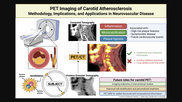
PET holds promise for carotid plaque assessments

PET has already gained significant momentum in recent years. Now, researchers are pointing to another possible use for the popular imaging modality: assessing carotid artery atherosclerosis.

READ MORE >
Positron emission tomography (PET) nuclear imaging has seen rapid expansion in cardiology and oncology due to its improve accuracy over SPECT and its ability to expand into new areas of cardiovascular imaging. A new review in the American Heart Association journal Stroke outlines another possible use of PET to assess carotid artery atherosclerosis for stroke prevention. Figure courtesy Stroke, https://www.ahajournals.org/doi/10.1161/STROKEAHA.125.050399
Share on Twitter Share on Facebook Share on Linkedin

PET holds promise for carotid plaque assessments

Share on Twitter Share on Facebook Share on Linkedin
Positron emission tomography (PET) nuclear imaging has seen rapid expansion in cardiology and oncology due to its improve accuracy over SPECT and its ability to expand into new areas of cardiovascular imaging. A new review in the American Heart Association journal Stroke outlines another possible use of PET to assess carotid artery atherosclerosis for stroke prevention. Figure courtesy Stroke, https://www.ahajournals.org/doi/10.1161/STROKEAHA.125.050399
PET has already gained significant momentum in recent years. Now, researchers are pointing to another possible use for the popular imaging modality: assessing carotid artery atherosclerosis.
READ MORE >

FDA clears new AI model for MAC detection in routine imaging results

The advanced algorithm was designed to detect and evaluate mitral annular calcification on routine, non-gated CT scans. It is now available as part of Carebricks, a generative AI platform from Bunkerhill Health. 

READ MORE >
robot reviewing heart data
Share on Twitter Share on Facebook Share on Linkedin

FDA clears new AI model for MAC detection in routine imaging results

Share on Twitter Share on Facebook Share on Linkedin
robot reviewing heart data
The advanced algorithm was designed to detect and evaluate mitral annular calcification on routine, non-gated CT scans. It is now available as part of Carebricks, a generative AI platform from Bunkerhill Health. 
READ MORE >

American College of Cardiology shares new expert recommendations on treating tricuspid regurgitation

There have been so many developments in the treatment of TR that it can be challenging to keep up. The ACC crafted this new document to help ensure cardiologists, cardiac imagers and other clinicians have access to the most recent clinical data and policy decisions.

READ MORE >
Edwards Evoque transcatheter tricuspid valve replacement TTVR.
Share on Twitter Share on Facebook Share on Linkedin

American College of Cardiology shares new expert recommendations on treating tricuspid regurgitation

Share on Twitter Share on Facebook Share on Linkedin
Edwards Evoque transcatheter tricuspid valve replacement TTVR.
There have been so many developments in the treatment of TR that it can be challenging to keep up. The ACC crafted this new document to help ensure cardiologists, cardiac imagers and other clinicians have access to the most recent clinical data and policy decisions.
READ MORE >

FDA clears next-generation platform for AI-powered heart assessments

An updated version of Heartflow's Plaque Analysis platform has gained FDA clearance. In addition, the company announced that Cigna will cover the platform going forward.

READ MORE >
Heartflow's Plaque Analysis AI-driven software that automtically assesses the coronary arteries, maps them and adds markers for areas of interest with plaque.
Share on Twitter Share on Facebook Share on Linkedin

FDA clears next-generation platform for AI-powered heart assessments

Share on Twitter Share on Facebook Share on Linkedin
Heartflow's Plaque Analysis AI-driven software that automtically assesses the coronary arteries, maps them and adds markers for areas of interest with plaque.
An updated version of Heartflow's Plaque Analysis platform has gained FDA clearance. In addition, the company announced that Cigna will cover the platform going forward.
READ MORE >

SCAI highlights the benefits of ICE-guided structural heart interventions

ICE is gaining momentum as a helpful imaging option during structural heart interventions, according to a new SCAI position statement. TEE and TTE remain incredibly important, but there are times when ICE can provide the guidance necessary.

READ MORE >
SCAI ICE position statement
Share on Twitter Share on Facebook Share on Linkedin

SCAI highlights the benefits of ICE-guided structural heart interventions

Share on Twitter Share on Facebook Share on Linkedin
SCAI ICE position statement
ICE is gaining momentum as a helpful imaging option during structural heart interventions, according to a new SCAI position statement. TEE and TTE remain incredibly important, but there are times when ICE can provide the guidance necessary.
READ MORE >

Multimodality imaging is more important than ever to the field of cardio-oncology

“Multimodality imaging in cardio-oncology is something many of us in the field are truly excited about," Daniel Addison, MD, told Cardiovascular Business. He noted that modalities other than echocardiography are starting to play a much larger role in the treatment of these patients.

READ MORE >
As cancer therapies become increasingly targeted and complex, the need for sophisticated cardiovascular monitoring has grown in parallel. Cardiovascular Business spoke with Daniel Addison, MD, director of the cardio-oncology program at The Ohio State University and chair of the American Heart Association’s (AHA) Cardiac Imaging Committee, who said the use of multimodality imaging is transforming how clinicians manage cardiovascular risk in cancer patients and survivors.
Share on Twitter Share on Facebook Share on Linkedin

Multimodality imaging is more important than ever to the field of cardio-oncology

Share on Twitter Share on Facebook Share on Linkedin
As cancer therapies become increasingly targeted and complex, the need for sophisticated cardiovascular monitoring has grown in parallel. Cardiovascular Business spoke with Daniel Addison, MD, director of the cardio-oncology program at The Ohio State University and chair of the American Heart Association’s (AHA) Cardiac Imaging Committee, who said the use of multimodality imaging is transforming how clinicians manage cardiovascular risk in cancer patients and survivors.
“Multimodality imaging in cardio-oncology is something many of us in the field are truly excited about," Daniel Addison, MD, told Cardiovascular Business. He noted that modalities other than echocardiography are starting to play a much larger role in the treatment of these patients.
READ MORE >

AI turns mammograms into CVD risk assessments—no outside data required

Thanks to AI, clinicians can use mammograms to do a lot more than identify signs of breast cancer. Researchers explored data from nearly 50,000 patients, presenting their findings in Heart.

READ MORE >
mammogram mammography breast cancer
Share on Twitter Share on Facebook Share on Linkedin

AI turns mammograms into CVD risk assessments—no outside data required

Share on Twitter Share on Facebook Share on Linkedin
mammogram mammography breast cancer
Thanks to AI, clinicians can use mammograms to do a lot more than identify signs of breast cancer. Researchers explored data from nearly 50,000 patients, presenting their findings in Heart.
READ MORE >

Innovate Healthcare thanks our partners for supporting our newsletters.
Sponsorship has no influence on editorial content.

Interested in reaching our audiences, contact our team

*|LIST:ADDRESSLINE|*

You received this email because you signed up for newsletters from Innovate Healthcare.
Change your preferences or unsubscribe here

Contact Us  |  Unsubscribe from all  |  Privacy Policy

© Innovate Healthcare, a TriMed Media brand
Innovate Healthcare

Recent Newsletters

Recall announced after 3 injuries | Medical societies respond to government report | New-look pacemaker requires no implant
Is coffee bad for the heart? | FDA approves new hypertension drug | Stolen devices sold to patients | BP drug recalled
OIG questions vascular procedures | Things to consider before signing your next contract | Is coffee bad for the heart?
Looking Back: Cardiovascular care hit by major recalls | New payment model on the way | SMART update | Trends in cardiac CT
Another Impella warning | Devices stolen, sold to patients | FDA impressed by new AI software | SAPT after TAVR
Week in Review: FDA confirms recall for vascular device | BATMAN to the rescue | Prasugrel after PCI | GLP-1 drugs & AFib
News Alert: FDA shares new warning about Impella heart pumps after death

Pagination

    • First page « First
    • Previous page ‹‹
    • Page 1
    • Page 2
    • Current page 3
    • Page 4
    • Page 5
    • Page 6
    • Page 7
    • Page 8
    • Page 9 …
    • Next page ››
    • Last page Last »
  • Home
  • News
  • Article Archive
  • Custom Content
  • Webinars
  • Press Releases
  • Content Studio
  • Advertising
  • Submit Press Release
  • Contact Us
  • Terms of Use
  • Privacy Policy
  • Cardiovascular Business
  • HealthExec
  • Radiology Business
 
© 2026 Innovate Healthcare | All Rights Reserved. | Terms of Use | Privacy Policy
 
Design by Adaptive Theme
Trimed Popup