• Clinical
      |Clinical
    • Acute Coronary Syndromes
    • Cardiac Surgery
    • Covid-19
    • Heart Failure
    • Heart Health
    • Heart Rhythm
    • Hypertension
    • Interventional Cardiology
    • Mitral Valve
    • Pharmaceutics
    • Structural Heart Disease
    • TAVR
    • Tricuspid Valve
    • Vascular & Endovascular
  • Management
      |Management
    • Chest Pain Guidelines
    • Compensation
    • Economics
    • Education & Training
    • Legal News
    • Patient Care
    • Policy & Regulations
    • Professional Associations
    • Quality
    • Revenue
    • Staffing
  • Technology
      |Technology
    • AI
    • Cardiac Imaging
    • Cath Lab
    • CT
    • CVIS
    • ECG
    • Echo
    • EP Lab
    • Informatics
    • MRI
    • Nuclear Cardiology
    • Remote Monitoring
  • Videos
  • Conferences
      |Conferences
    • ACC
    • AHA
    • ASE
    • ASNC
    • ESC
    • EuroPCR
    • HFSA
    • HRS
    • HRS
    • SCAI
    • SCCT
    • SIIM
    • SNMMI
    • STS
    • TCT
    • VIVA
  • Custom Content
      |Custom Content
    • Experience Stories
    • Webinars & Videos
  • Subscribe
  • Forty Under 40 Award
      |Forty Under 40 Award
    • Class of 2026
    • Class of 2025

Search form

Home

News You Need to Know Today
November's Top Stories: New CMS policies | CCTA's impact | Gene-editing therapy impresses | Robotic aortic valve replacement
Tuesday, December 2, 2025
Link to Twitter Link to Facebook Link to Linkedin Link to Vimeo

The Month in Review

Medicare Physician Fee Schedule cuts cardiologist pay because CMS says doctors should be more efficient

The new, negative 2.5% efficiency adjustment will be applied to the vast majority of Medicare payments for physician services. It was opposed by cardiology and most other medical societies. 

READ MORE >
Medicare physician fee schedule final rule 2026.
Share on Twitter Share on Facebook Share on Linkedin

Medicare Physician Fee Schedule cuts cardiologist pay because CMS says doctors should be more efficient

Share on Twitter Share on Facebook Share on Linkedin
Medicare physician fee schedule final rule 2026.
The new, negative 2.5% efficiency adjustment will be applied to the vast majority of Medicare payments for physician services. It was opposed by cardiology and most other medical societies. 
READ MORE >

CMS to cover cardiac ablations performed in ASCs—cardiology group calls it a ‘tremendous victory’

Electrophysiologists can now perform cardiac ablation outside of a hospital setting. Groups such as the American College of Cardiology and Heart Rhythm Society have been pushing for this change for quite some time, pointing to the potential to cut costs and boost patient satisfaction.

READ MORE >
Share on Twitter Share on Facebook Share on Linkedin

CMS to cover cardiac ablations performed in ASCs—cardiology group calls it a ‘tremendous victory’

Share on Twitter Share on Facebook Share on Linkedin
Electrophysiologists can now perform cardiac ablation outside of a hospital setting. Groups such as the American College of Cardiology and Heart Rhythm Society have been pushing for this change for quite some time, pointing to the potential to cut costs and boost patient satisfaction.
READ MORE >

CCTA will play an essential role in the cath labs of the future

Noninvasive coronary CT angiography is growing more and more important as time goes on, helping cardiologists make critical treatment decisions. Carlos Collet, MD, PhD, discussed the technique's potential to be a real game-changer for patient care in a new interview. 

READ MORE >
Carlos Collet, MD, PhD, director, cardiovascular imaging, physiology and translational therapeutics, Cardiovascular Research Foundation, explains how noninvasive coronary CT angiography (CCTA) assessments will play a major role to eliminate invasive diagnostic angiography and to pre-plan percutaneous coronary intervention (PCI) procedures.
Share on Twitter Share on Facebook Share on Linkedin

CCTA will play an essential role in the cath labs of the future

Share on Twitter Share on Facebook Share on Linkedin
Carlos Collet, MD, PhD, director, cardiovascular imaging, physiology and translational therapeutics, Cardiovascular Research Foundation, explains how noninvasive coronary CT angiography (CCTA) assessments will play a major role to eliminate invasive diagnostic angiography and to pre-plan percutaneous coronary intervention (PCI) procedures.
Noninvasive coronary CT angiography is growing more and more important as time goes on, helping cardiologists make critical treatment decisions. Carlos Collet, MD, PhD, discussed the technique's potential to be a real game-changer for patient care in a new interview. 
READ MORE >

New pill lowers cholesterol for patients already on statins—no needles required

The new drug from Merck was linked to several benefits for patients who are already on statins. If an oral PCSK9 inhibitor gains FDA approval, it could be a game-changer for the field of preventive medicine. 

READ MORE >
cholesterol.png
Share on Twitter Share on Facebook Share on Linkedin

New pill lowers cholesterol for patients already on statins—no needles required

Share on Twitter Share on Facebook Share on Linkedin
cholesterol.png
The new drug from Merck was linked to several benefits for patients who are already on statins. If an oral PCSK9 inhibitor gains FDA approval, it could be a game-changer for the field of preventive medicine. 
READ MORE >

Myval TAVR valve outperforms Sapien and Evolut in the late-breaking LANDMARK trial

The LANDMARK trial continues to show positive outcomes for the TAVR valve made in India.

READ MORE >
Meril Life Sciences, an India-based medical device company founded in 2006, developed the Myval TAVR valve. The Myval transcatheter heart valve (THV) is non-inferior to the Sapien 3 THV after one year, according to new transcatheter aortic valve replacement (TAVR) data published in The Lancet.
Share on Twitter Share on Facebook Share on Linkedin

Myval TAVR valve outperforms Sapien and Evolut in the late-breaking LANDMARK trial

Share on Twitter Share on Facebook Share on Linkedin
Meril Life Sciences, an India-based medical device company founded in 2006, developed the Myval TAVR valve. The Myval transcatheter heart valve (THV) is non-inferior to the Sapien 3 THV after one year, according to new transcatheter aortic valve replacement (TAVR) data published in The Lancet.
The LANDMARK trial continues to show positive outcomes for the TAVR valve made in India.
READ MORE >

FDA panel to review first heart failure device of its kind

The shunt device being reviewed showed a 52% reduction in hospitalizations and favorable trends in mortality in patients with heart failure with reduced ejection fraction. 

READ MORE >
The V-Wave intra-atrial shunt to treat heart failure on display on the expo floor at ACC.24. The device was used in one of the late breaking trials at ACC. DF 3
Share on Twitter Share on Facebook Share on Linkedin

FDA panel to review first heart failure device of its kind

Share on Twitter Share on Facebook Share on Linkedin
The V-Wave intra-atrial shunt to treat heart failure on display on the expo floor at ACC.24. The device was used in one of the late breaking trials at ACC. DF 3
The shunt device being reviewed showed a 52% reduction in hospitalizations and favorable trends in mortality in patients with heart failure with reduced ejection fraction. 
READ MORE >

FDA clears AI-powered ‘thermometer of the future’ with ECG sensors

BeamO combines electrocardiogram sensors, a stethoscope and a thermometer into a single device that patients can use at home to learn more about their health. Findings can then be submitted for a cardiologist to review.

READ MORE >
Withings BeamO
Share on Twitter Share on Facebook Share on Linkedin

FDA clears AI-powered ‘thermometer of the future’ with ECG sensors

Share on Twitter Share on Facebook Share on Linkedin
Withings BeamO
BeamO combines electrocardiogram sensors, a stethoscope and a thermometer into a single device that patients can use at home to learn more about their health. Findings can then be submitted for a cardiologist to review.
READ MORE >

‘Unprecedented’: Single dose of new gene-editing therapy lowers cholesterol, triglycerides

First-in-human data suggest the therapy, CTX310, could be a breakthrough for patients with lipid disorders.

READ MORE >
A new gene-editing therapy has been tested on humans for the first time, resulting in a significant reduction in their low-density lipoprotein (LDL) cholesterol that could potentially last for decades. The study’s authors presented these early results at the AHA 2023 meeting.
Share on Twitter Share on Facebook Share on Linkedin

‘Unprecedented’: Single dose of new gene-editing therapy lowers cholesterol, triglycerides

Share on Twitter Share on Facebook Share on Linkedin
A new gene-editing therapy has been tested on humans for the first time, resulting in a significant reduction in their low-density lipoprotein (LDL) cholesterol that could potentially last for decades. The study’s authors presented these early results at the AHA 2023 meeting.
First-in-human data suggest the therapy, CTX310, could be a breakthrough for patients with lipid disorders.
READ MORE >

Did Boston Scientific pull the plug too early on TAVR devices? Cardiologists weigh in

Boston Scientific stopped selling its Acurate TAVR systems after they underperformed in a few key trials and failed to gain FDA approval. Was it the right call?

READ MORE >
Boston Scientific ACURATE neo2 aortic valve system self-expanding TAVR valve.
Share on Twitter Share on Facebook Share on Linkedin

Did Boston Scientific pull the plug too early on TAVR devices? Cardiologists weigh in

Share on Twitter Share on Facebook Share on Linkedin
Boston Scientific ACURATE neo2 aortic valve system self-expanding TAVR valve.
Boston Scientific stopped selling its Acurate TAVR systems after they underperformed in a few key trials and failed to gain FDA approval. Was it the right call?
READ MORE >

A new alternative: Surgeons, cardiologists gather to learn about robotic aortic valve replacement

The WVU Heart and Vascular Institute is hosting a two-day symposium focused on exploring the benefits and long-term potential of robotic aortic valve replacement. Fans of the procedure say it represents a safe, effective alternative to TAVR and SAVR in patients with severe aortic stenosis. 

READ MORE >
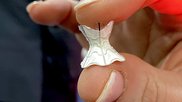
robotic aortic valve replacement (RAVR)
Share on Twitter Share on Facebook Share on Linkedin

A new alternative: Surgeons, cardiologists gather to learn about robotic aortic valve replacement

Share on Twitter Share on Facebook Share on Linkedin
robotic aortic valve replacement (RAVR)
The WVU Heart and Vascular Institute is hosting a two-day symposium focused on exploring the benefits and long-term potential of robotic aortic valve replacement. Fans of the procedure say it represents a safe, effective alternative to TAVR and SAVR in patients with severe aortic stenosis. 
READ MORE >

Innovate Healthcare thanks our partners for supporting our newsletters.
Sponsorship has no influence on editorial content.

Interested in reaching our audiences, contact our team

*|LIST:ADDRESSLINE|*

You received this email because you signed up for newsletters from Innovate Healthcare.
Change your preferences or unsubscribe here

Contact Us  |  Unsubscribe from all  |  Privacy Policy

© Innovate Healthcare, a TriMed Media brand
Innovate Healthcare

Recent Newsletters

AI is gaining ground, but clinicians run the show | Siemens Healthineers doubles down | Electrophysiologist compensation
News Alert: FDA shares warning about heart valve tech after patient death
Cardiologist pay & productivity are up | FDA clears PE thrombectomy devices | Cardiology tech in spotlight | Gore's new approval
Cardiology salaries on the rise | The climbing costs of care | M&A trends | Siemens Healthineers, J&J make big business moves
Major MRI trends | Blood thinner recalled | When to perform PCI before TAVR | How to build a CCTA program | Steroids & the heart
CMS boosts coverage for heart failure tech | FDA approves CardioMEMS updates | LVADs linked to strokes, other risks
M&A activity in cardiology: Exploring key trends | Cardiac PET vs. SPECT | Doctors support Medicare covering TAVR for AR
Newsletter archive
  • Home
  • News
  • Article Archive
  • Custom Content
  • Webinars
  • Press Releases
  • Content Studio
  • Advertising
  • Submit Press Release
  • Contact Us
  • Terms of Use
  • Privacy Policy
  • Cardiovascular Business
  • HealthExec
  • Radiology Business
  • Press Releases
  • Submit Press Release
© 2026 Innovate Healthcare | All Rights Reserved. | Terms of Use | Privacy Policy
Design by Adaptive Theme
Trimed Popup