• Clinical
      |Clinical
    • Acute Coronary Syndromes
    • Cardiac Surgery
    • Covid-19
    • Heart Failure
    • Heart Health
    • Heart Rhythm
    • Hypertension
    • Interventional Cardiology
    • Mitral Valve
    • Pharmaceutics
    • Structural Heart Disease
    • TAVR
    • Tricuspid Valve
    • Vascular & Endovascular
  • Management
      |Management
    • Chest Pain Guidelines
    • Compensation
    • Economics
    • Education & Training
    • Legal News
    • Patient Care
    • Policy & Regulations
    • Professional Associations
    • Quality
    • Revenue
    • Staffing
  • Technology
      |Technology
    • AI
    • Cardiac Imaging
    • Cath Lab
    • CT
    • CVIS
    • ECG
    • Echo
    • EP Lab
    • Informatics
    • MRI
    • Nuclear Cardiology
    • Remote Monitoring
  • Videos
  • Conferences
      |Conferences
    • ACC
    • AHA
    • ASE
    • ASNC
    • ESC
    • EuroPCR
    • HFSA
    • HRS
    • SCAI
    • SCCT
    • SIIM
    • SNMMI
    • STS
    • TCT
    • VIVA
  • Custom Content
      |Custom Content
    • Experience Stories
    • Webinars & Videos
  • Subscribe
  • Forty Under 40 Award
      |Forty Under 40 Award
    • Class of 2026
    • Class of 2025

Search form

Home

News You Need to Know Today
FDA panel votes against J&J device | Progress for oral heart failure drug | New recalls announced
Friday, December 19, 2025
Link to Twitter Link to Facebook Link to Linkedin Link to Vimeo

Editor's Choice: Heart Failure

FDA panel votes against approving first-of-its-kind heart failure device

All 15 members of the FDA's Circulatory System Devices Panel agreed that more data is required to confirm the new device from Johnson & Johnson MedTech is effective. Will the agency agree with these recommendations? Only time will tell.

READ MORE >
V-Wave has gained considerable attention or its Ventura Interatrial Shunt System, a small implantable device designed to reduce pressure on the left atrium and the lungs in patients with heart failure with reduced ejection fraction (HFrEF). The Ventura device includes a nitinol hourglass-shaped frame that anchors to the patient’s fossa ovalis in a way that prevents migration or embolization. It is implanted via an interventional procedure with fluoroscopy and echocardiography guidance.
Share on Twitter Share on Facebook Share on Linkedin

FDA panel votes against approving first-of-its-kind heart failure device

Share on Twitter Share on Facebook Share on Linkedin
V-Wave has gained considerable attention or its Ventura Interatrial Shunt System, a small implantable device designed to reduce pressure on the left atrium and the lungs in patients with heart failure with reduced ejection fraction (HFrEF). The Ventura device includes a nitinol hourglass-shaped frame that anchors to the patient’s fossa ovalis in a way that prevents migration or embolization. It is implanted via an interventional procedure with fluoroscopy and echocardiography guidance.
All 15 members of the FDA's Circulatory System Devices Panel agreed that more data is required to confirm the new device from Johnson & Johnson MedTech is effective. Will the agency agree with these recommendations? Only time will tell.
READ MORE >

Oral heart failure drug receives FDA’s fast track designation

A clinical trial focused on patients with HFpEF is expected to be completed by July 2026.

READ MORE >
A majority of medical devices involved in Class I recalls were never required by the U.S. Food and Drug Administration (FDA) to undergo premarket or postmarket clinical testing, according to new research published in Annals of Internal Medicine.[1]
Share on Twitter Share on Facebook Share on Linkedin

Oral heart failure drug receives FDA’s fast track designation

Share on Twitter Share on Facebook Share on Linkedin
A majority of medical devices involved in Class I recalls were never required by the U.S. Food and Drug Administration (FDA) to undergo premarket or postmarket clinical testing, according to new research published in Annals of Internal Medicine.[1]
A clinical trial focused on patients with HFpEF is expected to be completed by July 2026.
READ MORE >

‘Beer belly’ associated with multiple heart risks, especially in men

Abdominal obesity, the phenomenon commonly known as “beer belly," may be associated with significant risks, including heart failure. Researchers urged cardiologists and radiologists alike to keep these findings in mind going forward.

READ MORE >
Oktoberfest beer pretzel germany munich
Share on Twitter Share on Facebook Share on Linkedin

‘Beer belly’ associated with multiple heart risks, especially in men

Share on Twitter Share on Facebook Share on Linkedin
Oktoberfest beer pretzel germany munich
Abdominal obesity, the phenomenon commonly known as “beer belly," may be associated with significant risks, including heart failure. Researchers urged cardiologists and radiologists alike to keep these findings in mind going forward.
READ MORE >

New recalls announced for troubled heart devices—FDA previously urged customers to seek alternatives

These most recent recalls focus on a series of maintenance issues. In 2024, the FDA advised customers to transition away from the two devices and find alternative treatment options.

READ MORE >
Product Recall
Share on Twitter Share on Facebook Share on Linkedin

New recalls announced for troubled heart devices—FDA previously urged customers to seek alternatives

Share on Twitter Share on Facebook Share on Linkedin
Product Recall
These most recent recalls focus on a series of maintenance issues. In 2024, the FDA advised customers to transition away from the two devices and find alternative treatment options.
READ MORE >

Transcaval access a safe, effective alternative during Impella implants

In some cases, researchers noted, cardiologists may need to rely on transcaval access during the treatment of a high-risk heart failure patient. 

READ MORE >
High-risk percutaneous coronary intervention (PCI) with an Impella heart pump is associated with better outcomes, including a significantly higher survival rate, than high-risk PCI with an intra-aortic balloon pump (IABP), according to new findings published in the American Journal of Cardiology. Impella Heart Pump Abiomed RECOVER IV RCT cardiogenic shock
Share on Twitter Share on Facebook Share on Linkedin

Transcaval access a safe, effective alternative during Impella implants

Share on Twitter Share on Facebook Share on Linkedin
High-risk percutaneous coronary intervention (PCI) with an Impella heart pump is associated with better outcomes, including a significantly higher survival rate, than high-risk PCI with an intra-aortic balloon pump (IABP), according to new findings published in the American Journal of Cardiology. Impella Heart Pump Abiomed RECOVER IV RCT cardiogenic shock
In some cases, researchers noted, cardiologists may need to rely on transcaval access during the treatment of a high-risk heart failure patient. 
READ MORE >

In Case You Missed It

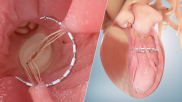
Transcatheter heart failure implant from Ancora Heart linked to positive 2-year data

The flexible device is attached to the inner wall of the left ventricle during a minimally invasive procedure. It was designed to reduce the size of the left ventricle over time.

READ MORE >
Ancora Heart AccuCinch Ventricular Restoration System heart failure FDA
Share on Twitter Share on Facebook Share on Linkedin

Transcatheter heart failure implant from Ancora Heart linked to positive 2-year data

Share on Twitter Share on Facebook Share on Linkedin
Ancora Heart AccuCinch Ventricular Restoration System heart failure FDA
The flexible device is attached to the inner wall of the left ventricle during a minimally invasive procedure. It was designed to reduce the size of the left ventricle over time.
READ MORE >

Innovate Healthcare thanks our partners for supporting our newsletters.
Sponsorship has no influence on editorial content.

Interested in reaching our audiences, contact our team

*|LIST:ADDRESSLINE|*

You received this email because you signed up for newsletters from Innovate Healthcare.
Change your preferences or unsubscribe here

Contact Us  |  Unsubscribe from all  |  Privacy Policy

© Innovate Healthcare, a TriMed Media brand
Innovate Healthcare

Recent Newsletters

October in Review: The beta-blocker of choice for MI patients | Humans & pig hearts | Hydroxychloroquine & ICU admissions
Weekend Edition: Patients dying as hospitals struggle | COVID-19 & the hearts of athletes | Keto diet prevents HF
Cardiologist says patients are dying because hospitals can't keep up | Omega-3 fatty acids & STEMI outcomes
Practice Management: Excellence in cardiology | A new guidance on TAVR | Reducing burnout among cardiologists
Expert cardiologists answer tough questions about COVID-19 & athletes | How the keto diet may prevent HF
Electrophysiology & Arrhythmia: Birthweight & AFib risk | A new ablation technique | COVID-19 & in-hospital cardiac arrest
What new imaging data tells us about COVID-19 & heart damage | EPDs fail to limit death or stroke among TAVR patients

Pagination

    • First page « First
    • Previous page ‹‹
    • Page …317
    • Page 318
    • Page 319
    • Page 320
    • Current page 321
    • Page 322
    • Page 323
    • Page 324
    • Page 325 …
    • Next page ››
    • Last page Last »
  • Home
  • News
  • Article Archive
  • Custom Content
  • Webinars
  • Press Releases
  • Content Studio
  • Advertising
  • Submit Press Release
  • Contact Us
  • Terms of Use
  • Privacy Policy
  • Cardiovascular Business
  • HealthExec
  • Radiology Business
 
© 2026 Innovate Healthcare | All Rights Reserved. | Terms of Use | Privacy Policy
 
Design by Adaptive Theme
Trimed Popup