• Clinical
      |Clinical
    • Acute Coronary Syndromes
    • Cardiac Surgery
    • Covid-19
    • Heart Failure
    • Heart Health
    • Heart Rhythm
    • Hypertension
    • Interventional Cardiology
    • Mitral Valve
    • Pharmaceutics
    • Structural Heart Disease
    • TAVR
    • Tricuspid Valve
    • Vascular & Endovascular
  • Management
      |Management
    • Chest Pain Guidelines
    • Compensation
    • Economics
    • Education & Training
    • Legal News
    • Patient Care
    • Policy & Regulations
    • Professional Associations
    • Quality
    • Revenue
    • Staffing
  • Technology
      |Technology
    • AI
    • Cardiac Imaging
    • Cath Lab
    • CT
    • CVIS
    • ECG
    • Echo
    • EP Lab
    • Informatics
    • MRI
    • Nuclear Cardiology
    • Remote Monitoring
  • Videos
  • Conferences
      |Conferences
    • ACC
    • AHA
    • ASE
    • ASNC
    • ESC
    • EuroPCR
    • HFSA
    • HRS
    • HRS
    • SCAI
    • SCCT
    • SIIM
    • SNMMI
    • STS
    • TCT
    • VIVA
  • Custom Content
      |Custom Content
    • Experience Stories
    • Webinars & Videos
  • Subscribe
  • Forty Under 40 Award
      |Forty Under 40 Award
    • Class of 2026
    • Class of 2025

Search form

Home

News You Need to Know Today
Top 10 most popular cardiology video interviews this past month
Sunday, February 15, 2026
Link to Twitter Link to Facebook Link to Linkedin Link to Vimeo

Top Video Content

The business of cardiology is changing—and cath labs are working to keep up

Financial literacy is no longer optional for physicians. “If you're not financially viable, you can't function,” explained Nirat Beohar, MD. “The business education is probably just as important as learning a new procedure.”

READ MORE >
Nirat Beohar, MD, director, cardiac catheterization laboratory, medical director of the structural heart disease program, Mount Sinai Medical Center in Miami Beach, Florida, and a professor at the Columbia University Division of Cardiology, explains the financial landscape of the cath lab, what is ahead, and why cardiologists need to become more business savvy. #TCT
Share on Twitter Share on Facebook Share on Linkedin

The business of cardiology is changing—and cath labs are working to keep up

Share on Twitter Share on Facebook Share on Linkedin
Nirat Beohar, MD, director, cardiac catheterization laboratory, medical director of the structural heart disease program, Mount Sinai Medical Center in Miami Beach, Florida, and a professor at the Columbia University Division of Cardiology, explains the financial landscape of the cath lab, what is ahead, and why cardiologists need to become more business savvy. #TCT
Financial literacy is no longer optional for physicians. “If you're not financially viable, you can't function,” explained Nirat Beohar, MD. “The business education is probably just as important as learning a new procedure.”
READ MORE >

CPT code updates in 2026 will change how interventional cardiologists get paid

A variety of CPT code changes take effect in 2026, and many of them will make a direct impact on interventional cardiology. Arnold Seto, MD, spoke to Cardiovascular Business about these updates for a new video interview.

READ MORE >
Arnold Seto, MD, MPA, FACC, FSCAI, cath lab director, Long Beach VA Medical Center, professor of medicine at Charles Drew University, Society for Cardiovascular Angiography and Interventions (SCAI) treasurer and chair of the SCAI Advocacy Committee, explains the new CPT reimbursement codes being introduced in January 2026 and their impact on practice.
Share on Twitter Share on Facebook Share on Linkedin

CPT code updates in 2026 will change how interventional cardiologists get paid

Share on Twitter Share on Facebook Share on Linkedin
Arnold Seto, MD, MPA, FACC, FSCAI, cath lab director, Long Beach VA Medical Center, professor of medicine at Charles Drew University, Society for Cardiovascular Angiography and Interventions (SCAI) treasurer and chair of the SCAI Advocacy Committee, explains the new CPT reimbursement codes being introduced in January 2026 and their impact on practice.
A variety of CPT code changes take effect in 2026, and many of them will make a direct impact on interventional cardiology. Arnold Seto, MD, spoke to Cardiovascular Business about these updates for a new video interview.
READ MORE >

CCTA continues to transform cardiac imaging, interventional cardiology

Mirvat Alasnag, MD, spoke to Cardiovascular Business about CCTA's growing influence in cardiology. 

READ MORE >
Mirvat Alasnag, MD, FACP, FACC, FSCAI, FSCCT, director of catheterization laboratory and research, King Fahd Armed Forces Hospital, Jeddah-Saudi Arabia, director of TCT Middle East, and member of Society of Cardiovascular CT (SCCT) Education Committee, outlines why coronary CT angiography (CCTA) imaging will likely be a paradigm shift in cardiology, and where the gaps remain to gather more clinical evidence.
Share on Twitter Share on Facebook Share on Linkedin

CCTA continues to transform cardiac imaging, interventional cardiology

Share on Twitter Share on Facebook Share on Linkedin
Mirvat Alasnag, MD, FACP, FACC, FSCAI, FSCCT, director of catheterization laboratory and research, King Fahd Armed Forces Hospital, Jeddah-Saudi Arabia, director of TCT Middle East, and member of Society of Cardiovascular CT (SCCT) Education Committee, outlines why coronary CT angiography (CCTA) imaging will likely be a paradigm shift in cardiology, and where the gaps remain to gather more clinical evidence.
Mirvat Alasnag, MD, spoke to Cardiovascular Business about CCTA's growing influence in cardiology. 
READ MORE >

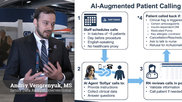
AI agent calling cath lab patients to help them prepare for treatment

Mount Sinai Hospital in New York is now using AI-powered virtual agents to call some patients before cath lab procedures. The move was designed to help nurses focus more on patient care and reduce their risk of burnout.

READ MORE >
Andriy Vengrenyuk, MS, senior data analyst for interventional cardiology at the Icahn School of Medicine at Mount Sinai, explains a pilot program where artificial intelligence (AI) virtual agents call patients prior to their cath lab procedures to save nursing staff time doing administrative tasks.
Share on Twitter Share on Facebook Share on Linkedin

AI agent calling cath lab patients to help them prepare for treatment

Share on Twitter Share on Facebook Share on Linkedin
Andriy Vengrenyuk, MS, senior data analyst for interventional cardiology at the Icahn School of Medicine at Mount Sinai, explains a pilot program where artificial intelligence (AI) virtual agents call patients prior to their cath lab procedures to save nursing staff time doing administrative tasks.
Mount Sinai Hospital in New York is now using AI-powered virtual agents to call some patients before cath lab procedures. The move was designed to help nurses focus more on patient care and reduce their risk of burnout.
READ MORE >

Cardiologist highlights key differences between OBLs and ASCs

Current payment policies have health systems and physicians all over the country looking to learn more about these two business models. 

READ MORE >
Samir B. Pancholy, MD, chief interventional cardiologist, Wayne Memorial Hospital in Honesdale, Pennsylvania, discusses the differences in the business models for office based labs (OBL) vs ambulatory surgical centers (ASC) and choosing the right model cardiovascular and vascular procedures. #TCT #SCAI #OBL #ASC
Share on Twitter Share on Facebook Share on Linkedin

Cardiologist highlights key differences between OBLs and ASCs

Share on Twitter Share on Facebook Share on Linkedin
Samir B. Pancholy, MD, chief interventional cardiologist, Wayne Memorial Hospital in Honesdale, Pennsylvania, discusses the differences in the business models for office based labs (OBL) vs ambulatory surgical centers (ASC) and choosing the right model cardiovascular and vascular procedures. #TCT #SCAI #OBL #ASC
Current payment policies have health systems and physicians all over the country looking to learn more about these two business models. 
READ MORE >

Why Shockwave Medical is so excited about the future of intravascular lithotripsy

Nick West, MD, Shockwave Medical's chief medical officer, detailed how the company is continuing to push IVL technologies forward. "We are leading the space ... we have no intention of giving up that position," he said.

READ MORE >
Nick West, MD, chief medical officer, Shockwave Medical, Johnson and Johnson Meditech, explains how the company is innovating intravascular lithotripsy (IVL) therapy devices and building clinical evidence from trials for its use in a variety of calcified lesions. There are several companies developing IVL therapy, but West says Shockwave will remain the market leader because of its nearly decade long head start in the market, strong clinical evidence and has about a 10% market penetration. #IVKL
Share on Twitter Share on Facebook Share on Linkedin

Why Shockwave Medical is so excited about the future of intravascular lithotripsy

Share on Twitter Share on Facebook Share on Linkedin
Nick West, MD, chief medical officer, Shockwave Medical, Johnson and Johnson Meditech, explains how the company is innovating intravascular lithotripsy (IVL) therapy devices and building clinical evidence from trials for its use in a variety of calcified lesions. There are several companies developing IVL therapy, but West says Shockwave will remain the market leader because of its nearly decade long head start in the market, strong clinical evidence and has about a 10% market penetration. #IVKL
Nick West, MD, Shockwave Medical's chief medical officer, detailed how the company is continuing to push IVL technologies forward. "We are leading the space ... we have no intention of giving up that position," he said.
READ MORE >

Same-day discharge after PCI for NSTE-ACS is on the rise

Sunil Rao, MD, told Cardiovascular Business that same-day discharge is still relatively rare for these patients, but it appears to be growing more common over time. The COVID-19 pandemic appears to have played a key role in the development of this trend.

READ MORE >
Sunil Rao, MD, MSCAI, director, interventional cardiology, cardiac catheterization laboratory, NYU Langone Heart, professor, Department of Medicine, the Leon H. Charney Division of Cardiology, NYU Grossman School of Medicine, explains the prevalence, trends and predictors of same day discharge after percutaneous coronary intervention (PCI) data for non-ST-elevation acute coronary syndrome (NSTE-ACS) in clinical practice from the NCDR-CathPCI Registry.
Share on Twitter Share on Facebook Share on Linkedin

Same-day discharge after PCI for NSTE-ACS is on the rise

Share on Twitter Share on Facebook Share on Linkedin
Sunil Rao, MD, MSCAI, director, interventional cardiology, cardiac catheterization laboratory, NYU Langone Heart, professor, Department of Medicine, the Leon H. Charney Division of Cardiology, NYU Grossman School of Medicine, explains the prevalence, trends and predictors of same day discharge after percutaneous coronary intervention (PCI) data for non-ST-elevation acute coronary syndrome (NSTE-ACS) in clinical practice from the NCDR-CathPCI Registry.
Sunil Rao, MD, told Cardiovascular Business that same-day discharge is still relatively rare for these patients, but it appears to be growing more common over time. The COVID-19 pandemic appears to have played a key role in the development of this trend.
READ MORE >

Cardiology needs to evolve in the face of employment trends

Cardiology has largely shifted to hospital-employed models, driven by reimbursement compression and evolving physician priorities. This has created challenges as well as opportunities.

READ MORE >
Herbert D. Aronow, MD, MPH, FACC, FSCAI, FSVM, medical director, heart and vascular service line and the Benson Ford Chair in Cardiology at Henry Ford Health, board member of the Society for Cardiovascular Angiography and Interventions (SCAI), explains the pros and cons and economic pressures involved with shifts in how cardiologists are now employment.
Share on Twitter Share on Facebook Share on Linkedin

Cardiology needs to evolve in the face of employment trends

Share on Twitter Share on Facebook Share on Linkedin
Herbert D. Aronow, MD, MPH, FACC, FSCAI, FSVM, medical director, heart and vascular service line and the Benson Ford Chair in Cardiology at Henry Ford Health, board member of the Society for Cardiovascular Angiography and Interventions (SCAI), explains the pros and cons and economic pressures involved with shifts in how cardiologists are now employment.
Cardiology has largely shifted to hospital-employed models, driven by reimbursement compression and evolving physician priorities. This has created challenges as well as opportunities.
READ MORE >

STEMI cases bring high doses of radiation to the cath lab

“We're so focused on quickly taking care of the patient ... we may be forgetting about radiation safety,” one researcher explained. 

READ MORE >
Ryan Madder, MD, Program Director, Interventional Cardiology Fellowship, William Beaumont University Hospital, Corewell Health East, and Michael Abiragi, MD, cardiology fellow, Frederik Meijer Heart and Vascular Institute, Corewell Health West in Grand Rapids, explain a study showing a small number of high dose cases contribute the majority of staff dose, especially STEMI.
Share on Twitter Share on Facebook Share on Linkedin

STEMI cases bring high doses of radiation to the cath lab

Share on Twitter Share on Facebook Share on Linkedin
Ryan Madder, MD, Program Director, Interventional Cardiology Fellowship, William Beaumont University Hospital, Corewell Health East, and Michael Abiragi, MD, cardiology fellow, Frederik Meijer Heart and Vascular Institute, Corewell Health West in Grand Rapids, explain a study showing a small number of high dose cases contribute the majority of staff dose, especially STEMI.
“We're so focused on quickly taking care of the patient ... we may be forgetting about radiation safety,” one researcher explained. 
READ MORE >

New strategies for intravascular imaging and physiological assessments in the cath lab

"If you're not using an intravascular imaging modality, the PCI is not optimal," explained Haroon Faraz, MD, from Hackensack University Medical Center. Faraz is hopeful new and improved technologies will help these modalities become more popular among interventional cardiologists.

READ MORE >
 Advances in intravascular imaging and physiology assessment are reshaping how interventional cardiologists plan and optimize percutaneous coronary interventions (PCI), but workflow challenges continue to limit adoption, according to Haroon Faraz, MD, director of interventional cardiology and cardiovascular research at Hackensack University Medical Center.
Share on Twitter Share on Facebook Share on Linkedin

New strategies for intravascular imaging and physiological assessments in the cath lab

Share on Twitter Share on Facebook Share on Linkedin
 Advances in intravascular imaging and physiology assessment are reshaping how interventional cardiologists plan and optimize percutaneous coronary interventions (PCI), but workflow challenges continue to limit adoption, according to Haroon Faraz, MD, director of interventional cardiology and cardiovascular research at Hackensack University Medical Center.
"If you're not using an intravascular imaging modality, the PCI is not optimal," explained Haroon Faraz, MD, from Hackensack University Medical Center. Faraz is hopeful new and improved technologies will help these modalities become more popular among interventional cardiologists.
READ MORE >

Innovate Healthcare thanks our partners for supporting our newsletters.
Sponsorship has no influence on editorial content.

Interested in reaching our audiences, contact our team

*|LIST:ADDRESSLINE|*

You received this email because you signed up for newsletters from Innovate Healthcare.
Change your preferences or unsubscribe here

Contact Us  |  Unsubscribe from all  |  Privacy Policy

© Innovate Healthcare, a TriMed Media brand
Innovate Healthcare

Recent Newsletters

Medtech giant makes big move | The world’s top hospitals for heart surgery | New CPT codes | PET vs. SPECT | TAVR tech recalled
AI is gaining ground, but clinicians run the show | Siemens Healthineers doubles down | Electrophysiologist compensation
News Alert: FDA shares warning about heart valve tech after patient death
Cardiologist pay & productivity are up | FDA clears PE thrombectomy devices | Cardiology tech in spotlight | Gore's new approval
Cardiology salaries on the rise | The climbing costs of care | M&A trends | Siemens Healthineers, J&J make big business moves
Major MRI trends | Blood thinner recalled | When to perform PCI before TAVR | How to build a CCTA program | Steroids & the heart
CMS boosts coverage for heart failure tech | FDA approves CardioMEMS updates | LVADs linked to strokes, other risks
Newsletter archive
  • Home
  • News
  • Article Archive
  • Custom Content
  • Webinars
  • Press Releases
  • Content Studio
  • Advertising
  • Submit Press Release
  • Contact Us
  • Terms of Use
  • Privacy Policy
  • Cardiovascular Business
  • HealthExec
  • Radiology Business
  • Press Releases
  • Submit Press Release
© 2026 Innovate Healthcare | All Rights Reserved. | Terms of Use | Privacy Policy
Design by Adaptive Theme
Trimed Popup