• Clinical
      |Clinical
    • Acute Coronary Syndromes
    • Cardiac Surgery
    • Covid-19
    • Heart Failure
    • Heart Health
    • Heart Rhythm
    • Hypertension
    • Interventional Cardiology
    • Mitral Valve
    • Pharmaceutics
    • Structural Heart Disease
    • TAVR
    • Tricuspid Valve
    • Vascular & Endovascular
  • Management
      |Management
    • Chest Pain Guidelines
    • Compensation
    • Economics
    • Education & Training
    • Legal News
    • Patient Care
    • Policy & Regulations
    • Professional Associations
    • Quality
    • Revenue
    • Staffing
  • Technology
      |Technology
    • AI
    • Cardiac Imaging
    • Cath Lab
    • CT
    • CVIS
    • ECG
    • Echo
    • EP Lab
    • Informatics
    • MRI
    • Nuclear Cardiology
    • Remote Monitoring
  • Videos
  • Conferences
      |Conferences
    • ACC
    • AHA
    • ASE
    • ASNC
    • ESC
    • EuroPCR
    • HFSA
    • HRS
    • SCAI
    • SCCT
    • SIIM
    • SNMMI
    • STS
    • TCT
    • VIVA
  • Custom Content
      |Custom Content
    • Experience Stories
    • Webinars & Videos
  • Subscribe
  • Forty Under 40 Award
      |Forty Under 40 Award
    • Class of 2026
    • Class of 2025

Search form

Home

AI's growing influence in cardiology | New heart failure implant shows potential | FDA clears advanced technologies

News You Need to Know Today
AI's growing influence in cardiology | New heart failure implant shows potential | FDA clears advanced technologies
Tuesday, March 17, 2026
Link to Twitter Link to Facebook Link to Linkedin Link to Vimeo

Editor's Choice: Artificial intelligence

Cardiology now has more than 200 FDA-cleared AI algorithms

Cardiology is No. 2 behind radiology when it comes to FDA-cleared AI algorithms. Neurology, meanwhile, is a distant No. 3. 

READ MORE >
Ligence Heart is a recently FDA cleared AI that fully automates analyses, measurements and reporting for transthoracic echo.
Share on Twitter Share on Facebook Share on Linkedin

Cardiology now has more than 200 FDA-cleared AI algorithms

Share on Twitter Share on Facebook Share on Linkedin
Ligence Heart is a recently FDA cleared AI that fully automates analyses, measurements and reporting for transthoracic echo.
Cardiology is No. 2 behind radiology when it comes to FDA-cleared AI algorithms. Neurology, meanwhile, is a distant No. 3. 
READ MORE >

New AI-enabled heart failure implant shows early potential

The AI-powered Relief System is able to modulate venous pressure using hemodynamic data. The goal is to help patients better manage heart failure congestion at home. 

READ MORE >
The Relief System from Relief Cardiovascular Inc. is a first of its kind device. It incorporates a valve and sensor implant that uses AI to intelligently modulate venous pressure using hemodynamic data. The system actively adjusts flow in the inferior vena cava (IVC), which lowers venous pressure to drive durable decongestion in heart failure.
Share on Twitter Share on Facebook Share on Linkedin

New AI-enabled heart failure implant shows early potential

Share on Twitter Share on Facebook Share on Linkedin
The Relief System from Relief Cardiovascular Inc. is a first of its kind device. It incorporates a valve and sensor implant that uses AI to intelligently modulate venous pressure using hemodynamic data. The system actively adjusts flow in the inferior vena cava (IVC), which lowers venous pressure to drive durable decongestion in heart failure.
The AI-powered Relief System is able to modulate venous pressure using hemodynamic data. The goal is to help patients better manage heart failure congestion at home. 
READ MORE >

Whole-body MRI provider starts offering AI-powered CCTA scans

Patients electing to undergo a whole-body MRI at one Florida facility are now able to undergo a CCTA exam at the same time. All results are interpreted by a cardiologist, and the patient meets with a physician for a one-on-one consultation.  

READ MORE >
Performing CT-derived fractional flow reserve (CT-FFR) before transcatheter aortic valve replacement (TAVR) improves the accuracy of coronary CT angiography (CCTA) and helps limit unneeded invasive coronary angiography (ICA), according to a new study published in JACC: Cardiovascular Interventions. Heartflow
Share on Twitter Share on Facebook Share on Linkedin

Whole-body MRI provider starts offering AI-powered CCTA scans

Share on Twitter Share on Facebook Share on Linkedin
Performing CT-derived fractional flow reserve (CT-FFR) before transcatheter aortic valve replacement (TAVR) improves the accuracy of coronary CT angiography (CCTA) and helps limit unneeded invasive coronary angiography (ICA), according to a new study published in JACC: Cardiovascular Interventions. Heartflow
Patients electing to undergo a whole-body MRI at one Florida facility are now able to undergo a CCTA exam at the same time. All results are interpreted by a cardiologist, and the patient meets with a physician for a one-on-one consultation.  
READ MORE >

AI is transforming patient care—and cardiologists have a critical role to play

While the Trump administration is pushing to accelerate clinical AI adoption, SCAI has emphasized that physicians must guide how the technology is implemented and governed.

READ MORE >
The Society for Cardiovascular Angiography and Interventions (SCAI) is urging federal policymakers to ensure physicians play a central role in guiding the integration of artificial intelligence (AI) into clinical care, while also raising questions about liability as the technology expands across healthcare.
Share on Twitter Share on Facebook Share on Linkedin

AI is transforming patient care—and cardiologists have a critical role to play

Share on Twitter Share on Facebook Share on Linkedin
The Society for Cardiovascular Angiography and Interventions (SCAI) is urging federal policymakers to ensure physicians play a central role in guiding the integration of artificial intelligence (AI) into clinical care, while also raising questions about liability as the technology expands across healthcare.
While the Trump administration is pushing to accelerate clinical AI adoption, SCAI has emphasized that physicians must guide how the technology is implemented and governed.
READ MORE >

FDA clears AI-enabled cardiac MR planning technology from Philips

The new SmartHeart technology automates 14 cardiac views in less than 30 seconds. It was designed to increase productivity and bring more consistency to cardiology and radiology departments.

READ MORE >
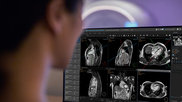
Philips has secured U.S. Food and Drug Administration (FDA) clearance for SmartHeart, the company’s new artificial intelligence (AI)-powered planning technology for cardiac MR (CMR) exams.
Share on Twitter Share on Facebook Share on Linkedin

FDA clears AI-enabled cardiac MR planning technology from Philips

Share on Twitter Share on Facebook Share on Linkedin
Philips has secured U.S. Food and Drug Administration (FDA) clearance for SmartHeart, the company’s new artificial intelligence (AI)-powered planning technology for cardiac MR (CMR) exams.
The new SmartHeart technology automates 14 cardiac views in less than 30 seconds. It was designed to increase productivity and bring more consistency to cardiology and radiology departments.
READ MORE >

Imaging evaluations and PCI planning: Heartflow announces ‘tremendous progress’ for AI portfolio

Heartflow's AI technologies are at the center of multiple ACC.26 presentations. In addition, the company announced, the first patient was enrolled into the NAVIGATE-PCI registry.

READ MORE >
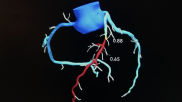
Heartflow PCI Navigator Cardiology. PCI Navigator from Heartflow was designed to help cardiologists plan ahead for percutaneous coronary interventions before they even step foot into the cath lab. It assesses a patient’s CCTA results and creates a state-of-the-art 3D model.
Share on Twitter Share on Facebook Share on Linkedin

Imaging evaluations and PCI planning: Heartflow announces ‘tremendous progress’ for AI portfolio

Share on Twitter Share on Facebook Share on Linkedin
Heartflow PCI Navigator Cardiology. PCI Navigator from Heartflow was designed to help cardiologists plan ahead for percutaneous coronary interventions before they even step foot into the cath lab. It assesses a patient’s CCTA results and creates a state-of-the-art 3D model.
Heartflow's AI technologies are at the center of multiple ACC.26 presentations. In addition, the company announced, the first patient was enrolled into the NAVIGATE-PCI registry.
READ MORE >

Cardiology groups to Trump administration: AI still has a long way to go

Multiple cardiology societies responded to an HHS request for public feedback by outlining some of the current barriers to wider AI adoption. "It is essential that any policy frameworks must reaffirm that clinicians—not algorithms—remain at the center of patient care," ACC President Christopher Kramer, MD, said. 

READ MORE >
artificial intelligence AI policy washington capitol
Share on Twitter Share on Facebook Share on Linkedin

Cardiology groups to Trump administration: AI still has a long way to go

Share on Twitter Share on Facebook Share on Linkedin
artificial intelligence AI policy washington capitol
Multiple cardiology societies responded to an HHS request for public feedback by outlining some of the current barriers to wider AI adoption. "It is essential that any policy frameworks must reaffirm that clinicians—not algorithms—remain at the center of patient care," ACC President Christopher Kramer, MD, said. 
READ MORE >

How the rise of AI could lead to efficiency issues and lower reimbursement payments

AI has shown the potential to transform patient care. However, there are more details to consider than many health systems and policymakers realize. 

READ MORE >
Friederike Keating, MD, professor of medicine at the Larner College of Medicine, and director of nuclear cardiology at University of Vermont Health, said artificial intelligence (AI) in medical imaging may actually increase costs and make workflows less efficient in some instances. She said this is a key thing for health systems and policy makers to keep in mind if there is not clear data showing it helps.
Share on Twitter Share on Facebook Share on Linkedin

How the rise of AI could lead to efficiency issues and lower reimbursement payments

Share on Twitter Share on Facebook Share on Linkedin
Friederike Keating, MD, professor of medicine at the Larner College of Medicine, and director of nuclear cardiology at University of Vermont Health, said artificial intelligence (AI) in medical imaging may actually increase costs and make workflows less efficient in some instances. She said this is a key thing for health systems and policy makers to keep in mind if there is not clear data showing it helps.
AI has shown the potential to transform patient care. However, there are more details to consider than many health systems and policymakers realize. 
READ MORE >

FDA clears AI-powered platform that personalizes care during TAVR, cardiac pacing procedures

The newly cleared CARA System from Cara Medical was designed to help clinicians before and during a variety of cardiac procedures. It provides a personalized 3D map of the patient's cardiac conduction system and then overlays that map onto live fluoroscopic images.

READ MORE >
simulation of the conduction pathway relative to various cardiac structures.
Share on Twitter Share on Facebook Share on Linkedin

FDA clears AI-powered platform that personalizes care during TAVR, cardiac pacing procedures

Share on Twitter Share on Facebook Share on Linkedin
simulation of the conduction pathway relative to various cardiac structures.
The newly cleared CARA System from Cara Medical was designed to help clinicians before and during a variety of cardiac procedures. It provides a personalized 3D map of the patient's cardiac conduction system and then overlays that map onto live fluoroscopic images.
READ MORE >

AI spots heart and lung conditions in eye images of premature infants

The AI model showcased an ability to accurately identify signs of pulmonary hypertension in retinal images. "This opens the possibility of using a simple photograph to gain insights into a premature infant's overall health," one researcher explained.

READ MORE >
baby parent parental leave family infant
Share on Twitter Share on Facebook Share on Linkedin

AI spots heart and lung conditions in eye images of premature infants

Share on Twitter Share on Facebook Share on Linkedin
baby parent parental leave family infant
The AI model showcased an ability to accurately identify signs of pulmonary hypertension in retinal images. "This opens the possibility of using a simple photograph to gain insights into a premature infant's overall health," one researcher explained.
READ MORE >

Innovate Healthcare thanks our partners for supporting our newsletters.
Sponsorship has no influence on editorial content.

Interested in reaching our audiences, contact our team

*|LIST:ADDRESSLINE|*

You received this email because you signed up for newsletters from Innovate Healthcare.
Change your preferences or unsubscribe here

Contact Us  |  Unsubscribe from all  |  Privacy Policy

© Innovate Healthcare, a TriMed Media brand
Innovate Healthcare

Recent Newsletters

Pacemakers recalled again | Johnson & Johnson makes a move | GLP-1 drugs & AFib | Strokes after PFA | New LAAO data
More recalls announced due to high-risk device | AATS helps surgeons manage a major complication | How guidelines impact care
Week in Review: TAVR or SAVR? | Key trends in cardiac CT | Fraud allegations lead to $6.7M settlement | CTO PCI
FDA clears intravascular imaging tech | Key trends in cardiac CT | Heartflow sues rival | Opportunistic screening
Vascular specialist agrees to pay $6.7M | Robotic heart surgery: Worth the cost? | E-cigarette concerns | Heart tech on display
FDA clears next-gen heart device | Catching up with SCAI's new president | A warning for cath labs | Late-breaking PCI data
New data confirm long-term durability of Resilia tissue | CCTA delivers clarity, better outcomes | Cannabis use & heart attacks

Pagination

    • First page « First
    • Previous page ‹‹
    • Page …2
    • Page 3
    • Page 4
    • Page 5
    • Current page 6
    • Page 7
    • Page 8
    • Page 9
    • Page 10 …
    • Next page ››
    • Last page Last »
  • Home
  • News
  • Article Archive
  • Custom Content
  • Webinars
  • Press Releases
  • Content Studio
  • Advertising
  • Submit Press Release
  • Contact Us
  • Terms of Use
  • Privacy Policy
  • Cardiovascular Business
  • HealthExec
  • Radiology Business
 
© 2026 Innovate Healthcare | All Rights Reserved. | Terms of Use | Privacy Policy
 
Design by Adaptive Theme
Trimed Popup