• Clinical
      |Clinical
    • Acute Coronary Syndromes
    • Cardiac Surgery
    • Covid-19
    • Heart Failure
    • Heart Health
    • Heart Rhythm
    • Hypertension
    • Interventional Cardiology
    • Mitral Valve
    • Pharmaceutics
    • Structural Heart Disease
    • TAVR
    • Tricuspid Valve
    • Vascular & Endovascular
  • Management
      |Management
    • Chest Pain Guidelines
    • Compensation
    • Economics
    • Education & Training
    • Legal News
    • Patient Care
    • Policy & Regulations
    • Professional Associations
    • Quality
    • Revenue
    • Staffing
  • Technology
      |Technology
    • AI
    • Cardiac Imaging
    • Cath Lab
    • CT
    • CVIS
    • ECG
    • Echo
    • EP Lab
    • Informatics
    • MRI
    • Nuclear Cardiology
    • Remote Monitoring
  • Videos
  • Conferences
      |Conferences
    • ACC
    • AHA
    • ASE
    • ASNC
    • ESC
    • EuroPCR
    • HFSA
    • HRS
    • HRS
    • SCAI
    • SCCT
    • SIIM
    • SNMMI
    • STS
    • TCT
    • VIVA
  • Custom Content
      |Custom Content
    • Experience Stories
    • Webinars & Videos
  • Subscribe
  • Forty Under 40 Award
      |Forty Under 40 Award
    • Class of 2026
    • Class of 2025

Search form

Home

News You Need to Know Today
The risks of PFA | FDA's warning after patient death | Cardiac ablations in ASCs | Group wants TAVR changes
Tuesday, May 26, 2026
Link to Twitter Link to Facebook Link to Linkedin Link to Vimeo

Editor's Choice: Care Delivery

PFA has been a game-changer for heart patients—but there are still risks

Devi Nair, MD, reviewed some of the rare complications clinicians are seeing with PFA.

READ MORE >
Devi Nair, MD, director of electrophysiology and research, St. Bernards Medical Center and Arrhythmia Research Group, spoke with Cardiovascular Business at the Heart Rhythm 2026 meeting in the above video interview. She explained both the explosion of PFA use since the first FDA approvals in 2024, and the recently discovered complications of coronary vessel spasm and hemolysis and how newer PFA technology might address this.
Share on Twitter Share on Facebook Share on Linkedin

PFA has been a game-changer for heart patients—but there are still risks

Share on Twitter Share on Facebook Share on Linkedin
Devi Nair, MD, director of electrophysiology and research, St. Bernards Medical Center and Arrhythmia Research Group, spoke with Cardiovascular Business at the Heart Rhythm 2026 meeting in the above video interview. She explained both the explosion of PFA use since the first FDA approvals in 2024, and the recently discovered complications of coronary vessel spasm and hemolysis and how newer PFA technology might address this.
Devi Nair, MD, reviewed some of the rare complications clinicians are seeing with PFA.
READ MORE >

How TAVR valve implant depth impacts clinical outcomes

TAVR procedures with a higher implant depth are associated with certain clinical benefits after one year, according to a new study of data from more than 600 patients.

READ MORE >
cardiologists heart doctors
Share on Twitter Share on Facebook Share on Linkedin

How TAVR valve implant depth impacts clinical outcomes

Share on Twitter Share on Facebook Share on Linkedin
cardiologists heart doctors
TAVR procedures with a higher implant depth are associated with certain clinical benefits after one year, according to a new study of data from more than 600 patients.
READ MORE >

Fewer biopsies, happier patients: Why molecular blood testing is a game-changer for managing heart transplant recipients

In cooperation with CareDx

Follow-up care after a successful heart transplant can be challenging—both for providers and their patients. Consider, for example, the fact that so many patients who develop complications never actually present with symptoms.  

READ MORE >
heart patient
Share on Twitter Share on Facebook Share on Linkedin

Fewer biopsies, happier patients: Why molecular blood testing is a game-changer for managing heart transplant recipients

In cooperation with CareDx

Share on Twitter Share on Facebook Share on Linkedin
heart patient
Follow-up care after a successful heart transplant can be challenging—both for providers and their patients. Consider, for example, the fact that so many patients who develop complications never actually present with symptoms.  
READ MORE >

FDA warns public about Johnson & Johnson heart pump controllers after patient death

The FDA has identified another safety concern with Johnson & Johnson MedTech's Automated Impella Controllers. This comes after the devices were linked to five separate recalls in 2025. 

READ MORE >
The FDA has identified another safety concern with Johnson & Johnson MedTech's Automated Impella Controllers. This comes after the devices were linked to five separate recalls in 2025.
Share on Twitter Share on Facebook Share on Linkedin

FDA warns public about Johnson & Johnson heart pump controllers after patient death

Share on Twitter Share on Facebook Share on Linkedin
The FDA has identified another safety concern with Johnson & Johnson MedTech's Automated Impella Controllers. This comes after the devices were linked to five separate recalls in 2025.
The FDA has identified another safety concern with Johnson & Johnson MedTech's Automated Impella Controllers. This comes after the devices were linked to five separate recalls in 2025. 
READ MORE >

Key points to remember when performing cardiac ablations in ASCs

When CMS finalized coverage for cardiac ablations performed in ASCs, experts from HRS and ACC published recommendations for performing those procedures safely and effectively. One of the cardiologists behind that guidance shared some important takeaways with Cardiovascular Business. 

READ MORE >
Video: Samuel Jones, MD, MPH, FACC, director of Inpatient Electrophysiology at the Memorial Hospital for Chattanooga Heart Institute, and co-chair of the American College of Cardiology (ACC) and Heart Rhythm Society (HRS) guidance For electrophysiology ablation in ambulatory surgical centers (ASCs), explains the details of this shift in cardiology care delivery.
Share on Twitter Share on Facebook Share on Linkedin

Key points to remember when performing cardiac ablations in ASCs

Share on Twitter Share on Facebook Share on Linkedin
Video: Samuel Jones, MD, MPH, FACC, director of Inpatient Electrophysiology at the Memorial Hospital for Chattanooga Heart Institute, and co-chair of the American College of Cardiology (ACC) and Heart Rhythm Society (HRS) guidance For electrophysiology ablation in ambulatory surgical centers (ASCs), explains the details of this shift in cardiology care delivery.
When CMS finalized coverage for cardiac ablations performed in ASCs, experts from HRS and ACC published recommendations for performing those procedures safely and effectively. One of the cardiologists behind that guidance shared some important takeaways with Cardiovascular Business. 
READ MORE >

Advocacy group wants TAVR changes, urging Trump admin to ‘stop getting in between patients and their doctors’

The Alliance for Aging Research wants CMS to go through with policy changes that could make many more patients eligible for TAVR. The agency is currently considering the changes, and a final decision is expected in June. 

READ MORE >
2024 has been a banner year for structural heart treatments, especially those focused on the tricuspid valve. In February, for example, Edwards Lifesciences made history when its Evoque transcatheter tricuspid valve replacement (TTVR) system became the first device of its kind to gain U.S. Food and Drug Administration (FDA) approval for treating tricuspid regurgitation (TR). Two months later, Abbott’s TriClip transcatheter edge-to-edge repair (TEER) system also gained FDA approval for the treatment of TR.
Share on Twitter Share on Facebook Share on Linkedin

Advocacy group wants TAVR changes, urging Trump admin to ‘stop getting in between patients and their doctors’

Share on Twitter Share on Facebook Share on Linkedin
2024 has been a banner year for structural heart treatments, especially those focused on the tricuspid valve. In February, for example, Edwards Lifesciences made history when its Evoque transcatheter tricuspid valve replacement (TTVR) system became the first device of its kind to gain U.S. Food and Drug Administration (FDA) approval for treating tricuspid regurgitation (TR). Two months later, Abbott’s TriClip transcatheter edge-to-edge repair (TEER) system also gained FDA approval for the treatment of TR.
The Alliance for Aging Research wants CMS to go through with policy changes that could make many more patients eligible for TAVR. The agency is currently considering the changes, and a final decision is expected in June. 
READ MORE >

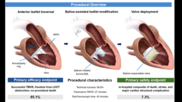
BATMAN to the rescue: TMVR technique helps cardiologists reduce risk of LVOT obstruction

LVOT obstruction is a serious complication of TMVR. BATMAN may help protect patients from LVOT obstruction without leading to any additional risks.

READ MORE >
How BATMAN technique can reduce risk of LVOT obstruction during TMVR
Share on Twitter Share on Facebook Share on Linkedin

BATMAN to the rescue: TMVR technique helps cardiologists reduce risk of LVOT obstruction

Share on Twitter Share on Facebook Share on Linkedin
How BATMAN technique can reduce risk of LVOT obstruction during TMVR
LVOT obstruction is a serious complication of TMVR. BATMAN may help protect patients from LVOT obstruction without leading to any additional risks.
READ MORE >

Upfront costs of robotic heart surgery are high—but it may be a smart investment

Makoto Hashimoto, MD, PhD, said robotic procedures are associated with a faster recovery time and many other potential benefits.

READ MORE >
Video of Makoto Hashimoto, MD, PhD, professor and director of robotic cardiac surgery at Florida International University, Baptist Health, who presented a study on robotic surgery outcomes and costs at the American Association for Thoracic Surgery (AATS) 2026 annual meeting this week. While the costs of these minimally invasive robotic procedures is higher that traditional surgical procedures, he said costs overall can be reduced in terms of faster patient recovery, shorter length of stays.
Share on Twitter Share on Facebook Share on Linkedin

Upfront costs of robotic heart surgery are high—but it may be a smart investment

Share on Twitter Share on Facebook Share on Linkedin
Video of Makoto Hashimoto, MD, PhD, professor and director of robotic cardiac surgery at Florida International University, Baptist Health, who presented a study on robotic surgery outcomes and costs at the American Association for Thoracic Surgery (AATS) 2026 annual meeting this week. While the costs of these minimally invasive robotic procedures is higher that traditional surgical procedures, he said costs overall can be reduced in terms of faster patient recovery, shorter length of stays.
Makoto Hashimoto, MD, PhD, said robotic procedures are associated with a faster recovery time and many other potential benefits.
READ MORE >

Virtual nursing staff may help save cardiology departments from burnout

The idea is spreading thanks to a new startup focused on providing support for cardiologists.

READ MORE >
doctorwithpatient.jpg
Share on Twitter Share on Facebook Share on Linkedin

Virtual nursing staff may help save cardiology departments from burnout

Share on Twitter Share on Facebook Share on Linkedin
doctorwithpatient.jpg
The idea is spreading thanks to a new startup focused on providing support for cardiologists.
READ MORE >

Doctors agree: There’s a lot to love about cardiology’s future

According to a new survey, both cardiologists and noncardiologists feel good about the specialty's long-term health. 

READ MORE >
Cardiologists employed by a hospital appear to be more likely to pursue cardiac catheterization or angioplasty than independent cardiologists. female physician male
Share on Twitter Share on Facebook Share on Linkedin

Doctors agree: There’s a lot to love about cardiology’s future

Share on Twitter Share on Facebook Share on Linkedin
Cardiologists employed by a hospital appear to be more likely to pursue cardiac catheterization or angioplasty than independent cardiologists. female physician male
According to a new survey, both cardiologists and noncardiologists feel good about the specialty's long-term health. 
READ MORE >

Innovate Healthcare thanks our partners for supporting our newsletters.
Sponsorship has no influence on editorial content.

Interested in reaching our audiences, contact our team

*|LIST:ADDRESSLINE|*

You received this email because you signed up for newsletters from Innovate Healthcare.
Change your preferences or unsubscribe here

Contact Us  |  Unsubscribe from all  |  Privacy Policy

© Innovate Healthcare, a TriMed Media brand
Innovate Healthcare

Recent Newsletters

Medtech giant makes big move | The world’s top hospitals for heart surgery | New CPT codes | PET vs. SPECT | TAVR tech recalled
AI is gaining ground, but clinicians run the show | Siemens Healthineers doubles down | Electrophysiologist compensation
News Alert: FDA shares warning about heart valve tech after patient death
Cardiologist pay & productivity are up | FDA clears PE thrombectomy devices | Cardiology tech in spotlight | Gore's new approval
Cardiology salaries on the rise | The climbing costs of care | M&A trends | Siemens Healthineers, J&J make big business moves
Major MRI trends | Blood thinner recalled | When to perform PCI before TAVR | How to build a CCTA program | Steroids & the heart
CMS boosts coverage for heart failure tech | FDA approves CardioMEMS updates | LVADs linked to strokes, other risks
Newsletter archive
  • Home
  • News
  • Article Archive
  • Custom Content
  • Webinars
  • Press Releases
  • Content Studio
  • Advertising
  • Submit Press Release
  • Contact Us
  • Terms of Use
  • Privacy Policy
  • Cardiovascular Business
  • HealthExec
  • Radiology Business
  • Press Releases
  • Submit Press Release
© 2026 Innovate Healthcare | All Rights Reserved. | Terms of Use | Privacy Policy
Design by Adaptive Theme
Trimed Popup