• Clinical
      |Clinical
    • Acute Coronary Syndromes
    • Cardiac Surgery
    • Covid-19
    • Heart Failure
    • Heart Health
    • Heart Rhythm
    • Hypertension
    • Interventional Cardiology
    • Mitral Valve
    • Pharmaceutics
    • Structural Heart Disease
    • TAVR
    • Tricuspid Valve
    • Vascular & Endovascular
  • Management
      |Management
    • Chest Pain Guidelines
    • Compensation
    • Economics
    • Education & Training
    • Legal News
    • Patient Care
    • Policy & Regulations
    • Professional Associations
    • Quality
    • Revenue
    • Staffing
  • Technology
      |Technology
    • AI
    • Cardiac Imaging
    • Cath Lab
    • CT
    • CVIS
    • ECG
    • Echo
    • EP Lab
    • Informatics
    • MRI
    • Nuclear Cardiology
    • Remote Monitoring
  • Videos
  • Conferences
      |Conferences
    • ACC
    • AHA
    • ASE
    • ASNC
    • ESC
    • EuroPCR
    • HFSA
    • HRS
    • HRS
    • SCAI
    • SCCT
    • SIIM
    • SNMMI
    • STS
    • TCT
    • VIVA
  • Custom Content
      |Custom Content
    • Experience Stories
    • Webinars & Videos
  • Subscribe
  • Forty Under 40 Award
      |Forty Under 40 Award
    • Class of 2026
    • Class of 2025

Search form

Home

News You Need to Know Today
Top 10 most popular cardiology video interviews this past month
Sunday, August 16, 2026
Link to Twitter Link to Facebook Link to Linkedin Link to Vimeo

Top Video Content

New STS guideline tackles the prevention of AFib after cardiac surgery

Among the guideline's most significant changes is a Class I recommendation for prophylactic amiodarone.

READ MORE >
Subhasis Chatterjee, MD, FACS, FACC, FCCP, Associate Professor of Surgery, Director Thoracic Surgical ICU and ECMO Program, Baylor St. Lukes, explains the new 2026 guidelines for management of new onset post-operative atrial fibrillation (AFib), which he spoke about at the American Association for Thoracic Surgery (AATS) 2026 annual meeting.
Share on Twitter Share on Facebook Share on Linkedin

New STS guideline tackles the prevention of AFib after cardiac surgery

Share on Twitter Share on Facebook Share on Linkedin
Subhasis Chatterjee, MD, FACS, FACC, FCCP, Associate Professor of Surgery, Director Thoracic Surgical ICU and ECMO Program, Baylor St. Lukes, explains the new 2026 guidelines for management of new onset post-operative atrial fibrillation (AFib), which he spoke about at the American Association for Thoracic Surgery (AATS) 2026 annual meeting.
Among the guideline's most significant changes is a Class I recommendation for prophylactic amiodarone.
READ MORE >

The burnout crisis among cardiac CT specialists is getting worse

Six in 10 cardiovascular imagers report feelings of burnout, and many of them are thinking about leaving the field altogether. 

READ MORE >
Kavitha Chinnaiyan, MD, immediate past-president of the SCCT, and a professor of medicine at Corewell Health William Beaumont University Hospital, Royal Oak, Michigan, explains how to prevent workforce burnout and promote well-being in cardiac CT. #SCCT #SCCT2026 #YesCCT
Share on Twitter Share on Facebook Share on Linkedin

The burnout crisis among cardiac CT specialists is getting worse

Share on Twitter Share on Facebook Share on Linkedin
Kavitha Chinnaiyan, MD, immediate past-president of the SCCT, and a professor of medicine at Corewell Health William Beaumont University Hospital, Royal Oak, Michigan, explains how to prevent workforce burnout and promote well-being in cardiac CT. #SCCT #SCCT2026 #YesCCT
Six in 10 cardiovascular imagers report feelings of burnout, and many of them are thinking about leaving the field altogether. 
READ MORE >

'Not sustainable': The real impact of RVU cuts in electrophysiology

Despite a substantial increase in demand for electrophysiologists, payments for their services have remained stagnant. 

READ MORE >
Joshua R. Silverstein, MD, FHRS, a cardiac electrophysiologist at Allegheny Health Network Cardiovascular Institute, explains the real-world impacts of Centers of Medicare and Medicaid Services (CMS) RVU cuts in electrophysiology.
Share on Twitter Share on Facebook Share on Linkedin

'Not sustainable': The real impact of RVU cuts in electrophysiology

Share on Twitter Share on Facebook Share on Linkedin
Joshua R. Silverstein, MD, FHRS, a cardiac electrophysiologist at Allegheny Health Network Cardiovascular Institute, explains the real-world impacts of Centers of Medicare and Medicaid Services (CMS) RVU cuts in electrophysiology.
Despite a substantial increase in demand for electrophysiologists, payments for their services have remained stagnant. 
READ MORE >

Former FDA commissioner warns that US healthcare system is falling behind

Robert Califf, MD, MACC, a veteran cardiologist, delivered the keynote speech at SCCT 2026 and then spoke to Cardiovascular Business about where the country's healthcare system is headed. 

READ MORE >
Robert Califf offers a dismal report card for the US healthcare system but offers solutions
Share on Twitter Share on Facebook Share on Linkedin

Former FDA commissioner warns that US healthcare system is falling behind

Share on Twitter Share on Facebook Share on Linkedin
Robert Califf offers a dismal report card for the US healthcare system but offers solutions
Robert Califf, MD, MACC, a veteran cardiologist, delivered the keynote speech at SCCT 2026 and then spoke to Cardiovascular Business about where the country's healthcare system is headed. 
READ MORE >

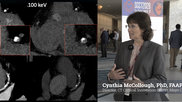
Photon-counting CT vs. conventional detector technologies

Computed tomography research medical physicist Cynthia McCollough, PhD, Mayo Clinic, explains the advantages of photon-counting CT systems.

READ MORE >
ynthia McCollough, PhD, FAAPM, FACR, FAIMBE, professor of medical physics and biomedical engineering, and director of the CT Clinical Innovation Center and X-ray imaging core at Mayo Clinic, Rochester, has been working on conventional CT and photon-counting CT research for years. She shares and overview of the advantages of photon-counting CT scanners as compared to conventional EID (energy-integrating detector) technology.
Share on Twitter Share on Facebook Share on Linkedin

Photon-counting CT vs. conventional detector technologies

Share on Twitter Share on Facebook Share on Linkedin
ynthia McCollough, PhD, FAAPM, FACR, FAIMBE, professor of medical physics and biomedical engineering, and director of the CT Clinical Innovation Center and X-ray imaging core at Mayo Clinic, Rochester, has been working on conventional CT and photon-counting CT research for years. She shares and overview of the advantages of photon-counting CT scanners as compared to conventional EID (energy-integrating detector) technology.
Computed tomography research medical physicist Cynthia McCollough, PhD, Mayo Clinic, explains the advantages of photon-counting CT systems.
READ MORE >

SCCT highlights payment gains, policy challenges as coronary CT use surges

An increase of nearly 200% in the use of CCTA over the past year has driven policy changes.

READ MORE >
Ahmad M. Slim, MD, FACC, FASNC, FSCCT, chair of the SCCT Health Policy and Practice Committee, Chief Medical Officer at Pulse Heart Institute, and associate professor of medicine, University of Washington, delivered a state of the union for coronary CT angiography (CCTA) policy, changes in payment models, advocacy effort, and payer engagement during the Society of Cardiovascular Computed Tomography (SCCT) 2026 annual meeting. #SCCT #SCCT2026 #YesCCT #CCTA
Share on Twitter Share on Facebook Share on Linkedin

SCCT highlights payment gains, policy challenges as coronary CT use surges

Share on Twitter Share on Facebook Share on Linkedin
Ahmad M. Slim, MD, FACC, FASNC, FSCCT, chair of the SCCT Health Policy and Practice Committee, Chief Medical Officer at Pulse Heart Institute, and associate professor of medicine, University of Washington, delivered a state of the union for coronary CT angiography (CCTA) policy, changes in payment models, advocacy effort, and payer engagement during the Society of Cardiovascular Computed Tomography (SCCT) 2026 annual meeting. #SCCT #SCCT2026 #YesCCT #CCTA
An increase of nearly 200% in the use of CCTA over the past year has driven policy changes.
READ MORE >

CCTA highlights plaque regression due to treatment

CCTA can show the regression of atherosclerosis due to drug therapies over time, so it may be a good tool to identify those patients who need of more aggressive therapy.

READ MORE >
Coronary CT angiography (CCTA) is emerging as a powerful tool not only for diagnosing coronary artery disease, but also for tracking how patients respond to preventive therapies over time, according to Mark G. Rabbat, MD, FACC, FAHA, FSCCT, professor of medicine and radiology and director of cardiac imaging at Loyola University Medical Center.
Share on Twitter Share on Facebook Share on Linkedin

CCTA highlights plaque regression due to treatment

Share on Twitter Share on Facebook Share on Linkedin
Coronary CT angiography (CCTA) is emerging as a powerful tool not only for diagnosing coronary artery disease, but also for tracking how patients respond to preventive therapies over time, according to Mark G. Rabbat, MD, FACC, FAHA, FSCCT, professor of medicine and radiology and director of cardiac imaging at Loyola University Medical Center.
CCTA can show the regression of atherosclerosis due to drug therapies over time, so it may be a good tool to identify those patients who need of more aggressive therapy.
READ MORE >

Cardiac CT's future could include AI-driven prevention, noncontrast imaging

Structural heart disease is just one of the many areas where cardiac CT is expected to expand in the near future.

READ MORE >
Ed Nicol, MD, FACC, FSCCT, MBA, FRCP, FRCR, FRAeS, head of cardiovascular CT, Royal Brompton Hospital, London, United Kingdom, and former president of the Society of Cardiovascular Computed Tomography (SCCT), explains some of the new technologies being developed to expand cardiac CT as a diagnostic tool.
Share on Twitter Share on Facebook Share on Linkedin

Cardiac CT's future could include AI-driven prevention, noncontrast imaging

Share on Twitter Share on Facebook Share on Linkedin
Ed Nicol, MD, FACC, FSCCT, MBA, FRCP, FRCR, FRAeS, head of cardiovascular CT, Royal Brompton Hospital, London, United Kingdom, and former president of the Society of Cardiovascular Computed Tomography (SCCT), explains some of the new technologies being developed to expand cardiac CT as a diagnostic tool.
Structural heart disease is just one of the many areas where cardiac CT is expected to expand in the near future.
READ MORE >

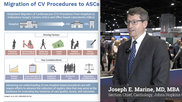
Safety a top priority as more heart procedures move to outpatient settings

The push to move certain procedures to ambulatory surgical centers is one of the biggest business trends in electrophysiology. Medical societies are watching this space closely to ensure high quality remains the goal.

READ MORE >
Video interview with Joseph E. Marine, MD, MBA, Vice-Director of Operations, Division of Cardiology, Section Chief of Cardiology, Johns Hopkins Community Physicians, and Professor of Medicine at Johns Hopkins University, explains the growing trend of using ambulatory surgical centers (ASCs) for cardiac and electrophysiology (EP) procedures.
Share on Twitter Share on Facebook Share on Linkedin

Safety a top priority as more heart procedures move to outpatient settings

Share on Twitter Share on Facebook Share on Linkedin
Video interview with Joseph E. Marine, MD, MBA, Vice-Director of Operations, Division of Cardiology, Section Chief of Cardiology, Johns Hopkins Community Physicians, and Professor of Medicine at Johns Hopkins University, explains the growing trend of using ambulatory surgical centers (ASCs) for cardiac and electrophysiology (EP) procedures.
The push to move certain procedures to ambulatory surgical centers is one of the biggest business trends in electrophysiology. Medical societies are watching this space closely to ensure high quality remains the goal.
READ MORE >

CCTA being used more and more to plan ahead before complex PCI

Interventional cardiologist Yader Sandoval, MD, discusses the growing trend of using CCTA imaging to plan ahead before complex PCI procedures.

READ MORE >
Yader Sandoval, MD, FACC, FSCAI, an interventional cardiologist at the Minneapolis Heart Institute, and an adjunct associate professor of medicine at Mayo Clinic, explains how coronary computed tomography angiography (CCTA) is being used increasingly to pre-plan percutaneous coronary interventions (PCI).
Share on Twitter Share on Facebook Share on Linkedin

CCTA being used more and more to plan ahead before complex PCI

Share on Twitter Share on Facebook Share on Linkedin
Yader Sandoval, MD, FACC, FSCAI, an interventional cardiologist at the Minneapolis Heart Institute, and an adjunct associate professor of medicine at Mayo Clinic, explains how coronary computed tomography angiography (CCTA) is being used increasingly to pre-plan percutaneous coronary interventions (PCI).
Interventional cardiologist Yader Sandoval, MD, discusses the growing trend of using CCTA imaging to plan ahead before complex PCI procedures.
READ MORE >

Innovate Healthcare thanks our partners for supporting our newsletters.
Sponsorship has no influence on editorial content.

Interested in reaching our audiences, contact our team

*|LIST:ADDRESSLINE|*

You received this email because you signed up for newsletters from Innovate Healthcare.
Change your preferences or unsubscribe here

Contact Us  |  Unsubscribe from all  |  Privacy Policy

© Innovate Healthcare, a TriMed Media brand
Innovate Healthcare

Recent Newsletters

AI is gaining ground, but clinicians run the show | Siemens Healthineers doubles down | Electrophysiologist compensation
News Alert: FDA shares warning about heart valve tech after patient death
Cardiologist pay & productivity are up | FDA clears PE thrombectomy devices | Cardiology tech in spotlight | Gore's new approval
Cardiology salaries on the rise | The climbing costs of care | M&A trends | Siemens Healthineers, J&J make big business moves
Major MRI trends | Blood thinner recalled | When to perform PCI before TAVR | How to build a CCTA program | Steroids & the heart
CMS boosts coverage for heart failure tech | FDA approves CardioMEMS updates | LVADs linked to strokes, other risks
M&A activity in cardiology: Exploring key trends | Cardiac PET vs. SPECT | Doctors support Medicare covering TAVR for AR
Newsletter archive
  • Home
  • News
  • Article Archive
  • Custom Content
  • Webinars
  • Press Releases
  • Content Studio
  • Advertising
  • Submit Press Release
  • Contact Us
  • Terms of Use
  • Privacy Policy
  • Cardiovascular Business
  • HealthExec
  • Radiology Business
  • Press Releases
  • Submit Press Release
© 2026 Innovate Healthcare | All Rights Reserved. | Terms of Use | Privacy Policy
Design by Adaptive Theme
Trimed Popup