• Clinical
      |Clinical
    • Acute Coronary Syndromes
    • Cardiac Surgery
    • Covid-19
    • Heart Failure
    • Heart Health
    • Heart Rhythm
    • Hypertension
    • Interventional Cardiology
    • Mitral Valve
    • Pharmaceutics
    • Structural Heart Disease
    • TAVR
    • Tricuspid Valve
    • Vascular & Endovascular
  • Management
      |Management
    • Chest Pain Guidelines
    • Compensation
    • Economics
    • Education & Training
    • Legal News
    • Patient Care
    • Policy & Regulations
    • Professional Associations
    • Quality
    • Revenue
    • Staffing
  • Technology
      |Technology
    • AI
    • Cardiac Imaging
    • Cath Lab
    • CT
    • CVIS
    • ECG
    • Echo
    • EP Lab
    • Informatics
    • MRI
    • Nuclear Cardiology
    • Remote Monitoring
  • Videos
  • Conferences
      |Conferences
    • ACC
    • AHA
    • ASE
    • ASNC
    • ESC
    • EuroPCR
    • HFSA
    • HRS
    • HRS
    • SCAI
    • SCCT
    • SIIM
    • SNMMI
    • STS
    • TCT
    • VIVA
  • Custom Content
      |Custom Content
    • Experience Stories
    • Webinars & Videos
  • Subscribe
  • Forty Under 40 Award
      |Forty Under 40 Award
    • Class of 2026
    • Class of 2025

Search form

Home

News You Need to Know Today
Major MRI trends | Blood thinner recalled | When to perform PCI before TAVR | How to build a CCTA program | Steroids & the heart
Thursday, October 15, 2026
Link to Twitter Link to Facebook Link to Linkedin Link to Vimeo

Today's News and Trends

Exploring major trends in cardiac MRI

Cardiac MRI scans are delivering more and more value as time goes on, in part thanks to the continued rise of AI. 

READ MORE >
Amit Patel, MD, FSCCT, secretary of the Society for Cardiovascular Magnetic Resonance (SCMR), director of cardiac imaging and professor of medicine at the University of Virginia Health System in Charlottesville, outlined four key areas where cardiac MRI is expanding its clinical value, along with the growing role of artificial intelligence (AI) in making advanced imaging techniques more practical for routine clinical use. #CMR #SCMR #CardiacMR
Share on Twitter Share on Facebook Share on Linkedin

Exploring major trends in cardiac MRI

Share on Twitter Share on Facebook Share on Linkedin
Amit Patel, MD, FSCCT, secretary of the Society for Cardiovascular Magnetic Resonance (SCMR), director of cardiac imaging and professor of medicine at the University of Virginia Health System in Charlottesville, outlined four key areas where cardiac MRI is expanding its clinical value, along with the growing role of artificial intelligence (AI) in making advanced imaging techniques more practical for routine clinical use. #CMR #SCMR #CardiacMR
Cardiac MRI scans are delivering more and more value as time goes on, in part thanks to the continued rise of AI. 
READ MORE >

Blood thinner recalled due to contamination risk

Certain lots of argatroban, a blood thinner often used as an alternative to heparin during PCI, have been recalled due to the presence of particulate matter. The affected products should not be used to treat any patients due to an increased risk of adverse events.

READ MORE >
the words "FDA recall" on a board
Share on Twitter Share on Facebook Share on Linkedin

Blood thinner recalled due to contamination risk

Share on Twitter Share on Facebook Share on Linkedin
the words "FDA recall" on a board
Certain lots of argatroban, a blood thinner often used as an alternative to heparin during PCI, have been recalled due to the presence of particulate matter. The affected products should not be used to treat any patients due to an increased risk of adverse events.
READ MORE >

PCI before TAVR may still be safest strategy for some heart patients

The recent PRO-TAVI trial showed that care teams can safely perform PCI at a later date when patients undergoing TAVR present with concomitant coronary artery disease. According to this latest analysis, however, there may still be certain patients who benefit from undergoing PCI prior to TAVR.

READ MORE >
cardiologist viewing heart data
Share on Twitter Share on Facebook Share on Linkedin

PCI before TAVR may still be safest strategy for some heart patients

Share on Twitter Share on Facebook Share on Linkedin
cardiologist viewing heart data
The recent PRO-TAVI trial showed that care teams can safely perform PCI at a later date when patients undergoing TAVR present with concomitant coronary artery disease. According to this latest analysis, however, there may still be certain patients who benefit from undergoing PCI prior to TAVR.
READ MORE >

Building a CCTA program: Imaging expert to share key recommendations

The rise of CCTA continues to be one of modern medicine's biggest stories. An upcoming webinar will explore what cardiologists, executives and other stakeholders need to know about building and growing a productive CCTA program in 2026 and beyond.

READ MORE >
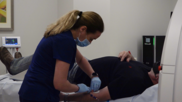
patient undergoing CCTA exam
Share on Twitter Share on Facebook Share on Linkedin

Building a CCTA program: Imaging expert to share key recommendations

Share on Twitter Share on Facebook Share on Linkedin
patient undergoing CCTA exam
The rise of CCTA continues to be one of modern medicine's biggest stories. An upcoming webinar will explore what cardiologists, executives and other stakeholders need to know about building and growing a productive CCTA program in 2026 and beyond.
READ MORE >

Weightlifters do significant heart damage when taking anabolic steroids—but there is hope

Steroid users can undo at least some of the damage if they simply stop taking them. 

READ MORE >
gym
Share on Twitter Share on Facebook Share on Linkedin

Weightlifters do significant heart damage when taking anabolic steroids—but there is hope

Share on Twitter Share on Facebook Share on Linkedin
gym
Steroid users can undo at least some of the damage if they simply stop taking them. 
READ MORE >

Featured Articles

CT-Guided PCI: Extending the Value of CCTA into the Cath Lab

Sponsored by Philips Healthcare

Traditionally, the interventional cardiologist first visualizes the coronary anatomy in detail when contrast is injected in the catheterization laboratory. For many patients, however, that anatomy has already been captured, often in considerable detail, by coronary CT angiography (CCTA) performed earlier in the clinical pathway. This article considers how this dataset can be used to plan the procedure, an approach referred to as CT-guided PCI.

READ MORE >
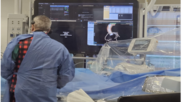
Prof. Elad Maor uses synchronized 3D CCTA anatomy
Share on Twitter Share on Facebook Share on Linkedin

CT-Guided PCI: Extending the Value of CCTA into the Cath Lab

Sponsored by Philips Healthcare

Share on Twitter Share on Facebook Share on Linkedin
Prof. Elad Maor uses synchronized 3D CCTA anatomy
Traditionally, the interventional cardiologist first visualizes the coronary anatomy in detail when contrast is injected in the catheterization laboratory. For many patients, however, that anatomy has already been captured, often in considerable detail, by coronary CT angiography (CCTA) performed earlier in the clinical pathway. This article considers how this dataset can be used to plan the procedure, an approach referred to as CT-guided PCI.
READ MORE >

Safer, faster, more effective: Why cardiac PET should be the primary nuclear modality

Rick Snyder, MD, president of the Cardiac PET Alliance, says PET offers better images than SPECT and is associated with much less radiation.

READ MORE >
Rick Snyder, MD, FACC, president of the Cardiac PET Alliance, president of HeartPlace and chief physician executive at U.S. Heart and Vascular, spoke with Cardiovascular Business in the above video interview. He said the organization is working with lawmakers and healthcare systems to expand access to cardiac PET. The effort also aims to educate government and commercial payers about the technology's potential to improve patient care while reducing overall healthcare costs.
Share on Twitter Share on Facebook Share on Linkedin

Safer, faster, more effective: Why cardiac PET should be the primary nuclear modality

Share on Twitter Share on Facebook Share on Linkedin
Rick Snyder, MD, FACC, president of the Cardiac PET Alliance, president of HeartPlace and chief physician executive at U.S. Heart and Vascular, spoke with Cardiovascular Business in the above video interview. He said the organization is working with lawmakers and healthcare systems to expand access to cardiac PET. The effort also aims to educate government and commercial payers about the technology's potential to improve patient care while reducing overall healthcare costs.
Rick Snyder, MD, president of the Cardiac PET Alliance, says PET offers better images than SPECT and is associated with much less radiation.
READ MORE >

What private practices, hospitals and investors should know about the M&A market in cardiology

William Holding, a veteran healthcare consultant, spoke to Cardiovascular Business about the ever-changing cardiology industry. Should private practices seek a deal or stay independent? How has private equity impacted the market? He answered those questions and many more. 

READ MORE >
business people
Share on Twitter Share on Facebook Share on Linkedin

What private practices, hospitals and investors should know about the M&A market in cardiology

Share on Twitter Share on Facebook Share on Linkedin
business people
William Holding, a veteran healthcare consultant, spoke to Cardiovascular Business about the ever-changing cardiology industry. Should private practices seek a deal or stay independent? How has private equity impacted the market? He answered those questions and many more. 
READ MORE >

Physicians support Medicare coverage for TAVR in patients with aortic regurgitation

The ACC, SCAI and STS have shared early support for expanding Medicare coverage to include TAVR in patients with native AR. The groups emphasized that CED requirements and multidisciplinary heart team meetings are necessary to ensure patients receive the best possible care going forward.

READ MORE >
A majority of medical devices involved in Class I recalls were never required by the U.S. Food and Drug Administration (FDA) to undergo premarket or postmarket clinical testing, according to new research published in Annals of Internal Medicine.[1]
Share on Twitter Share on Facebook Share on Linkedin

Physicians support Medicare coverage for TAVR in patients with aortic regurgitation

Share on Twitter Share on Facebook Share on Linkedin
A majority of medical devices involved in Class I recalls were never required by the U.S. Food and Drug Administration (FDA) to undergo premarket or postmarket clinical testing, according to new research published in Annals of Internal Medicine.[1]
The ACC, SCAI and STS have shared early support for expanding Medicare coverage to include TAVR in patients with native AR. The groups emphasized that CED requirements and multidisciplinary heart team meetings are necessary to ensure patients receive the best possible care going forward.
READ MORE >

In Case You Missed It

Semaglutide is improving the heart health of millions—but how? Experts are stumped

“Our analyses could not fully ascribe the effects of semaglutide on cardiovascular disease to known risk factors with any certainty,” one researcher said after exploring years of data. "These results suggest that semaglutide should be considered as a cardiovascular disease reduction drug and not just as a weight loss drug." 

READ MORE >
obesity semaglutide tirzepatide GLP-1 drugs weight loss
Share on Twitter Share on Facebook Share on Linkedin

Semaglutide is improving the heart health of millions—but how? Experts are stumped

Share on Twitter Share on Facebook Share on Linkedin
obesity semaglutide tirzepatide GLP-1 drugs weight loss
“Our analyses could not fully ascribe the effects of semaglutide on cardiovascular disease to known risk factors with any certainty,” one researcher said after exploring years of data. "These results suggest that semaglutide should be considered as a cardiovascular disease reduction drug and not just as a weight loss drug." 
READ MORE >

Will AI replace cardiologists?

AI-based tools are here to stay, but one expert does not see them replacing cardiologists anytime soon. Look at recent trends in radiology, he says, to get a better idea of what cardiology's future may look like.

READ MORE >
Sanjiv Narayan, MD, MBChB, MSc, FRCP, an American Heart Association volunteer, director of the electrophysiology research and atrial fibrillation program, and co-founder of the Stanford Arrhythmia Center at Stanford Medicine, sees AI at a major inflection point in cardiology, enabling cardiologists to become more efficient, gain more detailed insights into their patients' risk factors, better answers to clinical questions and help in navigating procedures. But, he said AI will not replace cardiologists.
Share on Twitter Share on Facebook Share on Linkedin

Will AI replace cardiologists?

Share on Twitter Share on Facebook Share on Linkedin
Sanjiv Narayan, MD, MBChB, MSc, FRCP, an American Heart Association volunteer, director of the electrophysiology research and atrial fibrillation program, and co-founder of the Stanford Arrhythmia Center at Stanford Medicine, sees AI at a major inflection point in cardiology, enabling cardiologists to become more efficient, gain more detailed insights into their patients' risk factors, better answers to clinical questions and help in navigating procedures. But, he said AI will not replace cardiologists.
AI-based tools are here to stay, but one expert does not see them replacing cardiologists anytime soon. Look at recent trends in radiology, he says, to get a better idea of what cardiology's future may look like.
READ MORE >

Oral hormone replacement therapy increases blood clot risk

In addition, higher doses of oral HRT may slightly increase a woman's risk of experiencing a heart attack or stroke. 

READ MORE >
older female patient and doctor
Share on Twitter Share on Facebook Share on Linkedin

Oral hormone replacement therapy increases blood clot risk

Share on Twitter Share on Facebook Share on Linkedin
older female patient and doctor
In addition, higher doses of oral HRT may slightly increase a woman's risk of experiencing a heart attack or stroke. 
READ MORE >

In Other News

Study identifies gaps in sustainable use of iodinated contrast

New survey results, published in Insights Into Imaging, explore global knowledge, attitudes and practices related to contrast media sustainability,

READ MORE >
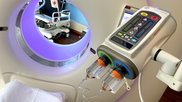
CT scanner and iodine contrast injection system at Wellstar Kennestone Hospital. Photo by Dave Fornell
Share on Twitter Share on Facebook Share on Linkedin

Study identifies gaps in sustainable use of iodinated contrast

Share on Twitter Share on Facebook Share on Linkedin
CT scanner and iodine contrast injection system at Wellstar Kennestone Hospital. Photo by Dave Fornell
New survey results, published in Insights Into Imaging, explore global knowledge, attitudes and practices related to contrast media sustainability,
READ MORE >

AI matches radiologists at prostate cancer detection via MRI

A lack of generalizability in the early days of AI development was one of the biggest caveats attached to the technology.

READ MORE >
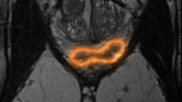
AI performs on par with radiologists at prostate cancer detection across diverse MRI datasets
Share on Twitter Share on Facebook Share on Linkedin

AI matches radiologists at prostate cancer detection via MRI

Share on Twitter Share on Facebook Share on Linkedin
AI performs on par with radiologists at prostate cancer detection across diverse MRI datasets
A lack of generalizability in the early days of AI development was one of the biggest caveats attached to the technology.
READ MORE >

Innovate Healthcare thanks our partners for supporting our newsletters.
Sponsorship has no influence on editorial content.

Interested in reaching our audiences, contact our team

*|LIST:ADDRESSLINE|*

You received this email because you signed up for newsletters from Innovate Healthcare.
Change your preferences or unsubscribe here

Contact Us  |  Unsubscribe from all  |  Privacy Policy

© Innovate Healthcare, a TriMed Media brand
Innovate Healthcare

Recent Newsletters

AI is gaining ground, but clinicians run the show | Siemens Healthineers doubles down | Electrophysiologist compensation
News Alert: FDA shares warning about heart valve tech after patient death
Cardiologist pay & productivity are up | FDA clears PE thrombectomy devices | Cardiology tech in spotlight | Gore's new approval
Cardiology salaries on the rise | The climbing costs of care | M&A trends | Siemens Healthineers, J&J make big business moves
Major MRI trends | Blood thinner recalled | When to perform PCI before TAVR | How to build a CCTA program | Steroids & the heart
CMS boosts coverage for heart failure tech | FDA approves CardioMEMS updates | LVADs linked to strokes, other risks
M&A activity in cardiology: Exploring key trends | Cardiac PET vs. SPECT | Doctors support Medicare covering TAVR for AR
Newsletter archive
  • Home
  • News
  • Article Archive
  • Custom Content
  • Webinars
  • Press Releases
  • Content Studio
  • Advertising
  • Submit Press Release
  • Contact Us
  • Terms of Use
  • Privacy Policy
  • Cardiovascular Business
  • HealthExec
  • Radiology Business
  • Press Releases
  • Submit Press Release
© 2026 Innovate Healthcare | All Rights Reserved. | Terms of Use | Privacy Policy
Design by Adaptive Theme
Trimed Popup