• Clinical
      |Clinical
    • Acute Coronary Syndromes
    • Cardiac Surgery
    • Covid-19
    • Heart Failure
    • Heart Health
    • Heart Rhythm
    • Hypertension
    • Interventional Cardiology
    • Mitral Valve
    • Pharmaceutics
    • Structural Heart Disease
    • TAVR
    • Tricuspid Valve
    • Vascular & Endovascular
  • Management
      |Management
    • Chest Pain Guidelines
    • Compensation
    • Economics
    • Education & Training
    • Legal News
    • Patient Care
    • Policy & Regulations
    • Professional Associations
    • Quality
    • Revenue
    • Staffing
  • Technology
      |Technology
    • AI
    • Cardiac Imaging
    • Cath Lab
    • CT
    • CVIS
    • ECG
    • Echo
    • EP Lab
    • Informatics
    • MRI
    • Nuclear Cardiology
    • Remote Monitoring
  • Videos
  • Conferences
      |Conferences
    • ACC
    • AHA
    • ASE
    • ASNC
    • ESC
    • EuroPCR
    • HFSA
    • HRS
    • SCAI
    • SCCT
    • SIIM
    • SNMMI
    • STS
    • TCT
    • VIVA
  • Custom Content
      |Custom Content
    • Experience Stories
    • Webinars & Videos
  • Subscribe
  • Forty Under 40 Award
      |Forty Under 40 Award
    • Class of 2026
    • Class of 2025

Search form

Home

Researchers in Spain make a key discovery | The pandemic's long-term impact | The cost of dapagliflozin

News You Need to Know Today
Researchers in Spain make a key discovery | The pandemic's long-term impact | The cost of dapagliflozin
Friday, May 28, 2021
Link to Twitter Link to Facebook Link to Linkedin Link to Vimeo

Today's News and Trends

Landmark discovery provides clinicians with a ‘valuable clinical tool’ for diagnosing myocarditis

Researchers believe they have found the first blood biomarker for diagnosing myocarditis, sharing their findings in the New England Journal of Medicine.

READ MORE >
pilar_martin.jpg
Share on Twitter Share on Facebook Share on Linkedin

Landmark discovery provides clinicians with a ‘valuable clinical tool’ for diagnosing myocarditis

Share on Twitter Share on Facebook Share on Linkedin
pilar_martin.jpg
Researchers believe they have found the first blood biomarker for diagnosing myocarditis, sharing their findings in the New England Journal of Medicine.
READ MORE >

Cardiac arrest numbers highlight the pandemic’s long-term impact on patient care

Researchers will be tracking COVID-19's impact on healthcare for many years to come.

READ MORE >
American Heart Association and Joint Commission launch new Comprehensive Heart Attack Center certification.
Share on Twitter Share on Facebook Share on Linkedin

Cardiac arrest numbers highlight the pandemic’s long-term impact on patient care

Share on Twitter Share on Facebook Share on Linkedin
American Heart Association and Joint Commission launch new Comprehensive Heart Attack Center certification.
Researchers will be tracking COVID-19's impact on healthcare for many years to come.
READ MORE >

Dapagliflozin a cost-effective treatment for HFrEF at its current price point

Researchers found that the SGLT2 inhibitor had similar value among patients with and without diabetes, sharing their findings in JAMA Cardiology.

READ MORE >
Old doctor
Share on Twitter Share on Facebook Share on Linkedin

Dapagliflozin a cost-effective treatment for HFrEF at its current price point

Share on Twitter Share on Facebook Share on Linkedin
Old doctor
Researchers found that the SGLT2 inhibitor had similar value among patients with and without diabetes, sharing their findings in JAMA Cardiology.
READ MORE >

Featured Articles

Cardiologist shares a warning fish oil can no longer be considered harmless

After studying the latest research, a veteran cardiologist is no longer recommending fish oil supplements to his patients.

READ MORE >
Fish oil supplements are used to reduce cardiovascular disease risk, but can actually increase the risk of atrial fibrillation in some patients.
Share on Twitter Share on Facebook Share on Linkedin

Cardiologist shares a warning fish oil can no longer be considered harmless

Share on Twitter Share on Facebook Share on Linkedin
Fish oil supplements are used to reduce cardiovascular disease risk, but can actually increase the risk of atrial fibrillation in some patients.
After studying the latest research, a veteran cardiologist is no longer recommending fish oil supplements to his patients.
READ MORE >

Cancer patients after PCI: Key statistics every cardiologist should know

Researchers examined data from nearly 1,200 PCI patients, sharing their findings in JACC: Cardiovascular Interventions.

READ MORE >
Share on Twitter Share on Facebook Share on Linkedin

Cancer patients after PCI: Key statistics every cardiologist should know

Share on Twitter Share on Facebook Share on Linkedin
Researchers examined data from nearly 1,200 PCI patients, sharing their findings in JACC: Cardiovascular Interventions.
READ MORE >

Eating plant-based meals late in the day lowers risk of cardiovascular disease by 10%

It's not necessarily that people should never eat meat—but eating it for breakfast instead of dinner, for example, can make a significant difference. 

READ MORE >
Following a plant-based diet can significantly lower a person’s risk of developing cardiovascular disease (CVD) or dying from cardiovascular causes, according to new research published in BMJ Nutrition, Prevention and Health.[1] The study’s authors emphasized that a person can still occasionally eat meat, fish or dairy products and still see substantial benefits—the key is to keep such things to a minimum and embrace fruits, vegetables, nuts, legumes, teas and coffees.
Share on Twitter Share on Facebook Share on Linkedin

Eating plant-based meals late in the day lowers risk of cardiovascular disease by 10%

Share on Twitter Share on Facebook Share on Linkedin
Following a plant-based diet can significantly lower a person’s risk of developing cardiovascular disease (CVD) or dying from cardiovascular causes, according to new research published in BMJ Nutrition, Prevention and Health.[1] The study’s authors emphasized that a person can still occasionally eat meat, fish or dairy products and still see substantial benefits—the key is to keep such things to a minimum and embrace fruits, vegetables, nuts, legumes, teas and coffees.
It's not necessarily that people should never eat meat—but eating it for breakfast instead of dinner, for example, can make a significant difference. 
READ MORE >

13% of TAVR patients develop acute kidney injury, increasing their risk of in-hospital mortality

Chronic kidney disease, congestive heart failure and liver disease are just some of the comorbidities associated with a greater risk of AKI. 

READ MORE >
Share on Twitter Share on Facebook Share on Linkedin

13% of TAVR patients develop acute kidney injury, increasing their risk of in-hospital mortality

Share on Twitter Share on Facebook Share on Linkedin
Chronic kidney disease, congestive heart failure and liver disease are just some of the comorbidities associated with a greater risk of AKI. 
READ MORE >

Radial access outperforms femoral access for complex PCI, but questions persist

The findings could represent a significant change in patient care, specialists wrote, but "femoral believers" may not be swayed until additional data can be reviewed. 

READ MORE >
Doctor patient
Share on Twitter Share on Facebook Share on Linkedin

Radial access outperforms femoral access for complex PCI, but questions persist

Share on Twitter Share on Facebook Share on Linkedin
Doctor patient
The findings could represent a significant change in patient care, specialists wrote, but "femoral believers" may not be swayed until additional data can be reviewed. 
READ MORE >

From the Magazine

Better Together? An Integrated Market for Calcium-modification Strategies

Rather than a binary choice—atherectomy or lithotripsy—the market for treating severely calcified lesions seems likely to evolve into a mixture of both technologies. 

READ MORE >
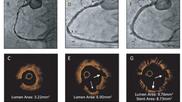
 (OCT) intravascular images (bottom).
Share on Twitter Share on Facebook Share on Linkedin

Better Together? An Integrated Market for Calcium-modification Strategies

Share on Twitter Share on Facebook Share on Linkedin
 (OCT) intravascular images (bottom).
Rather than a binary choice—atherectomy or lithotripsy—the market for treating severely calcified lesions seems likely to evolve into a mixture of both technologies. 
READ MORE >

ENJOY THE GLIDE More Retirement Glide-paths Means Wins for Everyone

Some cardiologists vow to go out with their scrubs on, says St. Vincent Heart Center’s Mary Norine Walsh, MD, as she recalls an interventional cardiologist who declared that when he left the cath lab, he’d be gone for good, not doing “office work.”

READ MORE >
Enjoy The Glide
Share on Twitter Share on Facebook Share on Linkedin

ENJOY THE GLIDE More Retirement Glide-paths Means Wins for Everyone

Share on Twitter Share on Facebook Share on Linkedin
Enjoy The Glide
Some cardiologists vow to go out with their scrubs on, says St. Vincent Heart Center’s Mary Norine Walsh, MD, as she recalls an interventional cardiologist who declared that when he left the cath lab, he’d be gone for good, not doing “office work.”
READ MORE >

In Other News

AI impressive as a second set of eyes in colonoscopy

When the network interpreted complete videos from 42 consecutive patients, it boosted detection rates by as much as 50% over physician-alone reads.

READ MORE >
Share on Twitter Share on Facebook Share on Linkedin

AI impressive as a second set of eyes in colonoscopy

Share on Twitter Share on Facebook Share on Linkedin
When the network interpreted complete videos from 42 consecutive patients, it boosted detection rates by as much as 50% over physician-alone reads.
READ MORE >

FDA approves first commercially available PSMA PET imaging agent for prostate cancer

Pylarify is a F 18-labeled, prostate-specific membrane antigen targeted PET agent used to pinpoint suspected metastasis or recurrence of the disease. 

READ MORE >
scan of prostate
Share on Twitter Share on Facebook Share on Linkedin

FDA approves first commercially available PSMA PET imaging agent for prostate cancer

Share on Twitter Share on Facebook Share on Linkedin
scan of prostate
Pylarify is a F 18-labeled, prostate-specific membrane antigen targeted PET agent used to pinpoint suspected metastasis or recurrence of the disease. 
READ MORE >

Innovate Healthcare thanks our partners for supporting our newsletters.
Sponsorship has no influence on editorial content.

Interested in reaching our audiences, contact our team

*|LIST:ADDRESSLINE|*

You received this email because you signed up for newsletters from Innovate Healthcare.
Change your preferences or unsubscribe here

Contact Us  |  Unsubscribe from all  |  Privacy Policy

© Innovate Healthcare, a TriMed Media brand
Innovate Healthcare

Recent Newsletters

TV star's family awarded $13M in malpractice case | Helping patients with ‘broken hearts’ | Cardiac amyloidosis in the spotlight
CMS proposes major TAVR changes | The real impact of RVU cuts in electrophysiology | Girl’s heart valve implanted upside down
News Alert: CMS proposes major TAVR changes
Cath lab kits recalled | Looking ahead to the future of FFR-CT | Medtronic completes major acquisition
FDA sees potential in heart failure software | SCCT & SCAI take on CT-derived FFR | Predicting long-term stroke risk
Abbott recalls heart monitoring tech | Redo TAVR with balloon-expandable valves | FDA clears new clot-removing device
Week in Review: Star Trek star's family awarded $13M | AI for cardiac amyloidosis | TAVR concerns | New CKM syndrome guidelines

Pagination

    • Current page 1
    • Page 2
    • Page 3
    • Page 4
    • Page 5
    • Page 6
    • Page 7
    • Page 8
    • Page 9 …
    • Next page ››
    • Last page Last »
  • Home
  • News
  • Article Archive
  • Custom Content
  • Webinars
  • Press Releases
  • Content Studio
  • Advertising
  • Submit Press Release
  • Contact Us
  • Terms of Use
  • Privacy Policy
  • Cardiovascular Business
  • HealthExec
  • Radiology Business
 
© 2026 Innovate Healthcare | All Rights Reserved. | Terms of Use | Privacy Policy
 
Design by Adaptive Theme