• Clinical
      |Clinical
    • Acute Coronary Syndromes
    • Cardiac Surgery
    • Covid-19
    • Heart Failure
    • Heart Health
    • Heart Rhythm
    • Hypertension
    • Interventional Cardiology
    • Mitral Valve
    • Pharmaceutics
    • Structural Heart Disease
    • TAVR
    • Tricuspid Valve
    • Vascular & Endovascular
  • Management
      |Management
    • Chest Pain Guidelines
    • Compensation
    • Economics
    • Education & Training
    • Legal News
    • Patient Care
    • Policy & Regulations
    • Professional Associations
    • Quality
    • Revenue
    • Staffing
  • Technology
      |Technology
    • AI
    • Cardiac Imaging
    • Cath Lab
    • CT
    • CVIS
    • ECG
    • Echo
    • EP Lab
    • Informatics
    • MRI
    • Nuclear Cardiology
    • Remote Monitoring
  • Videos
  • Conferences
      |Conferences
    • ACC
    • AHA
    • ASE
    • ASNC
    • ESC
    • EuroPCR
    • HFSA
    • HRS
    • HRS
    • SCAI
    • SCCT
    • SIIM
    • SNMMI
    • STS
    • TCT
    • VIVA
  • Custom Content
      |Custom Content
    • Experience Stories
    • Webinars & Videos
  • Subscribe
  • Forty Under 40 Award
      |Forty Under 40 Award
    • Class of 2026
    • Class of 2025

Search form

Home

News You Need to Know Today
Cardiac hospitals in Ukraine still treating patients | A new look at bioprosthetic aortic valves | CHD & COVID-19
Tuesday, March 8, 2022
Link to Twitter Link to Facebook Link to Linkedin Link to Vimeo

Today's News and Trends

Cardiac hospitals still treating patients as war in Ukraine continues

Despite the Russian invasion, many Ukrainian cardiologists are staying behind to treat patients.

READ MORE >
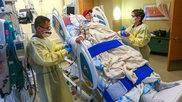
The cardiac surgery post-op recovery area in the basement of Heart Institute hospital in Kyiv. Cardiac surgeon Igor Mokryk MD, said clinical operations were moved into the hospital's bomb shelter shortly after the launch of the Russian invasion of Ukraine, but they are still treating patients.
Share on Twitter Share on Facebook Share on Linkedin

Cardiac hospitals still treating patients as war in Ukraine continues

Share on Twitter Share on Facebook Share on Linkedin
The cardiac surgery post-op recovery area in the basement of Heart Institute hospital in Kyiv. Cardiac surgeon Igor Mokryk MD, said clinical operations were moved into the hospital's bomb shelter shortly after the launch of the Russian invasion of Ukraine, but they are still treating patients.
Despite the Russian invasion, many Ukrainian cardiologists are staying behind to treat patients.
READ MORE >

Life after heart surgery: Tracking the long-term performance of several bioprosthetic aortic valves

The study's authors examined data from multiple bioprosthetic aortic valves — and one popular solution consistently came out on top. 

READ MORE >
Doctor patient
Share on Twitter Share on Facebook Share on Linkedin

Life after heart surgery: Tracking the long-term performance of several bioprosthetic aortic valves

Share on Twitter Share on Facebook Share on Linkedin
Doctor patient
The study's authors examined data from multiple bioprosthetic aortic valves — and one popular solution consistently came out on top. 
READ MORE >

Congenital heart disease increases risk of poor COVID-19 outcomes, including death

Researchers examined data from more than 235,000 hospitalized patients treated in the United States.

READ MORE >
Doctor patient with masks
Share on Twitter Share on Facebook Share on Linkedin

Congenital heart disease increases risk of poor COVID-19 outcomes, including death

Share on Twitter Share on Facebook Share on Linkedin
Doctor patient with masks
Researchers examined data from more than 235,000 hospitalized patients treated in the United States.
READ MORE >

Distal radial access consistently lowers risk of artery occlusion during PCI

The new meta-analysis, published in the American Journal of Cardiology, includes data from 16 different studies. 

READ MORE >
While a vast majority of heart transplants in the United States are successful, unplanned hospitalizations after the procedures are still incredibly common. Top 10 reasons for readmission after heart transplant.
Share on Twitter Share on Facebook Share on Linkedin

Distal radial access consistently lowers risk of artery occlusion during PCI

Share on Twitter Share on Facebook Share on Linkedin
While a vast majority of heart transplants in the United States are successful, unplanned hospitalizations after the procedures are still incredibly common. Top 10 reasons for readmission after heart transplant.
The new meta-analysis, published in the American Journal of Cardiology, includes data from 16 different studies. 
READ MORE >

Featured Articles

Pig heart transplant patient doing well weeks after procedure—he even watched the Super Bowl

The 57-year-old patient is working with physical therapists on a daily basis, according to a recent update from the University of Maryland Medical Center. 

READ MORE >
David Bennett with two of his physical therapists at the University of Maryland Medical Center. #pigheart #pighearttransplant #heartfailure
Share on Twitter Share on Facebook Share on Linkedin

Pig heart transplant patient doing well weeks after procedure—he even watched the Super Bowl

Share on Twitter Share on Facebook Share on Linkedin
David Bennett with two of his physical therapists at the University of Maryland Medical Center. #pigheart #pighearttransplant #heartfailure
The 57-year-old patient is working with physical therapists on a daily basis, according to a recent update from the University of Maryland Medical Center. 
READ MORE >

CT a low-risk imaging alternative to invasive coronary angiography for suspected CAD

The new analysis focused on data from 16 different European countries. 

READ MORE >
An example of a noninvasive coronary CT scan on the left and an invasive angiogram of the same patient on the right from a recent RSNA study. The CT shows more information on the calcified nature of the plaque and shows more anatomical information beyond what the angiogram provides.
Share on Twitter Share on Facebook Share on Linkedin

CT a low-risk imaging alternative to invasive coronary angiography for suspected CAD

Share on Twitter Share on Facebook Share on Linkedin
An example of a noninvasive coronary CT scan on the left and an invasive angiogram of the same patient on the right from a recent RSNA study. The CT shows more information on the calcified nature of the plaque and shows more anatomical information beyond what the angiogram provides.
The new analysis focused on data from 16 different European countries. 
READ MORE >

In Case You Missed It

FDA approves empagliflozin for reducing risk of cardiovascular death, hospitalization among adult HFpEF patients

The SGLT2 inhibitor, already approved for some high-risk heart failure patients, has now received a much wider approval. 

READ MORE >
approved approval safe
Share on Twitter Share on Facebook Share on Linkedin

FDA approves empagliflozin for reducing risk of cardiovascular death, hospitalization among adult HFpEF patients

Share on Twitter Share on Facebook Share on Linkedin
approved approval safe
The SGLT2 inhibitor, already approved for some high-risk heart failure patients, has now received a much wider approval. 
READ MORE >

In Other News

MRIs show how even modest alcohol consumption can impact the brain

Experts analyzed more than 36,000 brain MRIs to determine how modest alcohol intake impacts brain volume and aging.

READ MORE >
Alcoholic drinks. Drinking alcohol on a regular basis is associated with a heightened risk of hypertension, according to a new meta-analysis published in Hypertension.
Share on Twitter Share on Facebook Share on Linkedin

MRIs show how even modest alcohol consumption can impact the brain

Share on Twitter Share on Facebook Share on Linkedin
Alcoholic drinks. Drinking alcohol on a regular basis is associated with a heightened risk of hypertension, according to a new meta-analysis published in Hypertension.
Experts analyzed more than 36,000 brain MRIs to determine how modest alcohol intake impacts brain volume and aging.
READ MORE >

Innovate Healthcare thanks our partners for supporting our newsletters.
Sponsorship has no influence on editorial content.

Interested in reaching our audiences, contact our team

*|LIST:ADDRESSLINE|*

You received this email because you signed up for newsletters from Innovate Healthcare.
Change your preferences or unsubscribe here

Contact Us  |  Unsubscribe from all  |  Privacy Policy

© Innovate Healthcare, a TriMed Media brand
Innovate Healthcare

Recent Newsletters

AI is gaining ground, but clinicians run the show | Siemens Healthineers doubles down | Electrophysiologist compensation
News Alert: FDA shares warning about heart valve tech after patient death
Cardiologist pay & productivity are up | FDA clears PE thrombectomy devices | Cardiology tech in spotlight | Gore's new approval
Cardiology salaries on the rise | The climbing costs of care | M&A trends | Siemens Healthineers, J&J make big business moves
Major MRI trends | Blood thinner recalled | When to perform PCI before TAVR | How to build a CCTA program | Steroids & the heart
CMS boosts coverage for heart failure tech | FDA approves CardioMEMS updates | LVADs linked to strokes, other risks
M&A activity in cardiology: Exploring key trends | Cardiac PET vs. SPECT | Doctors support Medicare covering TAVR for AR
Newsletter archive
  • Home
  • News
  • Article Archive
  • Custom Content
  • Webinars
  • Press Releases
  • Content Studio
  • Advertising
  • Submit Press Release
  • Contact Us
  • Terms of Use
  • Privacy Policy
  • Cardiovascular Business
  • HealthExec
  • Radiology Business
  • Press Releases
  • Submit Press Release
© 2026 Innovate Healthcare | All Rights Reserved. | Terms of Use | Privacy Policy
Design by Adaptive Theme