• Clinical
      |Clinical
    • Acute Coronary Syndromes
    • Cardiac Surgery
    • Covid-19
    • Heart Failure
    • Heart Health
    • Heart Rhythm
    • Hypertension
    • Interventional Cardiology
    • Mitral Valve
    • Pharmaceutics
    • Structural Heart Disease
    • TAVR
    • Tricuspid Valve
    • Vascular & Endovascular
  • Management
      |Management
    • Chest Pain Guidelines
    • Compensation
    • Economics
    • Education & Training
    • Legal News
    • Patient Care
    • Policy & Regulations
    • Professional Associations
    • Quality
    • Revenue
    • Staffing
  • Technology
      |Technology
    • AI
    • Cardiac Imaging
    • Cath Lab
    • CT
    • CVIS
    • ECG
    • Echo
    • EP Lab
    • Informatics
    • MRI
    • Nuclear Cardiology
    • Remote Monitoring
  • Videos
  • Conferences
      |Conferences
    • ACC
    • AHA
    • ASE
    • ASNC
    • ESC
    • EuroPCR
    • HFSA
    • HRS
    • SCAI
    • SCCT
    • SIIM
    • SNMMI
    • STS
    • TCT
    • VIVA
  • Custom Content
      |Custom Content
    • Experience Stories
    • Webinars & Videos
  • Subscribe
  • Forty Under 40 Award
      |Forty Under 40 Award
    • Class of 2026
    • Class of 2025

Search form

Home

News You Need to Know Today
The first human data on a new interventional procedure for HFpEF | Video interviews from ACC.22
Friday, April 8, 2022
Link to Twitter Link to Facebook Link to Linkedin Link to Vimeo

Today's News and Trends

Researchers share first human data on new interventional shunt procedure for HFpEF

The first-in-man study, completed by a team of cardiologists in China, included 10 patients presenting with HFpEF. 

READ MORE >
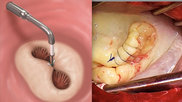
Researchers are using an intra-atrial shunt to lower pressures between the upper chambers of the heart to relieve symptoms in HFpEF heart failure patients. The novel Noya device uses an RF ablation to cut a hole into the septum and then enlarge it using a stent that can then be removed from the body after the procedure. 
Share on Twitter Share on Facebook Share on Linkedin

Researchers share first human data on new interventional shunt procedure for HFpEF

Share on Twitter Share on Facebook Share on Linkedin
Researchers are using an intra-atrial shunt to lower pressures between the upper chambers of the heart to relieve symptoms in HFpEF heart failure patients. The novel Noya device uses an RF ablation to cut a hole into the septum and then enlarge it using a stent that can then be removed from the body after the procedure. 
The first-in-man study, completed by a team of cardiologists in China, included 10 patients presenting with HFpEF. 
READ MORE >

VIDEO: MitraClip vs. surgical mitral valve replacement

Joanna Chikwe, MD, founding chair of the department of cardiac surgery at Cedars-Sinai Hospital, compares transcatheter edge-to-edge repair (TEER) to mitral valve surgery for primary mitral regurgitation.

READ MORE >
MitraClip vs mitral valve edge to edge repair (TEER).
Share on Twitter Share on Facebook Share on Linkedin

VIDEO: MitraClip vs. surgical mitral valve replacement

Share on Twitter Share on Facebook Share on Linkedin
MitraClip vs mitral valve edge to edge repair (TEER).
Joanna Chikwe, MD, founding chair of the department of cardiac surgery at Cedars-Sinai Hospital, compares transcatheter edge-to-edge repair (TEER) to mitral valve surgery for primary mitral regurgitation.
READ MORE >

COVID-19 linked to greater risk of deep vein thrombosis, pulmonary embolism and bleeding events long after recovery

The increased risk of deep vein thrombosis lasts for up to three months, researchers found. 

READ MORE >
Blood leg clotting thrombosis ultrasound
Share on Twitter Share on Facebook Share on Linkedin

COVID-19 linked to greater risk of deep vein thrombosis, pulmonary embolism and bleeding events long after recovery

Share on Twitter Share on Facebook Share on Linkedin
Blood leg clotting thrombosis ultrasound
The increased risk of deep vein thrombosis lasts for up to three months, researchers found. 
READ MORE >

VIDEO: Use of mRNA drug to lower lipoprotein(a) by up to 98%

Steven E. Nissen, MD, chief academic officer of the Sydell and Arnold Miller Family Heart, Vascular and Thoracic Institute at the Cleveland Clinic, was the lead author on the Apollo Trial, a late-breaking ACC.22 study evaluating the effectiveness of an mRNA drug to suppress lipoprotein(a).

READ MORE >
Steven Nissen, MD, Cleveland Clinic, explains an ACC.22 late-breaking trials that uses an mRNA drug to greatly reduce lipoprotein A. #ACC22
Share on Twitter Share on Facebook Share on Linkedin

VIDEO: Use of mRNA drug to lower lipoprotein(a) by up to 98%

Share on Twitter Share on Facebook Share on Linkedin
Steven Nissen, MD, Cleveland Clinic, explains an ACC.22 late-breaking trials that uses an mRNA drug to greatly reduce lipoprotein A. #ACC22
Steven E. Nissen, MD, chief academic officer of the Sydell and Arnold Miller Family Heart, Vascular and Thoracic Institute at the Cleveland Clinic, was the lead author on the Apollo Trial, a late-breaking ACC.22 study evaluating the effectiveness of an mRNA drug to suppress lipoprotein(a).
READ MORE >

Featured Articles

Renal denervation linked to significant blood pressure reductions after 3 years

An updated look at patients treated with Medtronic's renal denervation system was presented at ACC.22 and simultaneously published in The Lancet. 

READ MORE >
The Medtronic Symplicity Spyral Renal Denervation system uses a catheter that curls in the renal artery to place radiofrequency electrodes against the vessel wall to ablate the nerves that control vasodilation, so the artery can be propped in the fully open position.
Share on Twitter Share on Facebook Share on Linkedin

Renal denervation linked to significant blood pressure reductions after 3 years

Share on Twitter Share on Facebook Share on Linkedin
The Medtronic Symplicity Spyral Renal Denervation system uses a catheter that curls in the renal artery to place radiofrequency electrodes against the vessel wall to ablate the nerves that control vasodilation, so the artery can be propped in the fully open position.
An updated look at patients treated with Medtronic's renal denervation system was presented at ACC.22 and simultaneously published in The Lancet. 
READ MORE >

Photo Gallery: ACC 2022 in pictures

Click through a wide variety of snapshots from ACC.22 in Washington, D.C. 

READ MORE >
The mitral valve visualized by a a GE NuVision 4D intra-cardiac echo (ICE) catheter a life-like surgical rendering technology on the Vivid E95 cardiac ultrasound system. The catheter was co-developed with Biosense Webster to perform EP procedures. It also can be used in place of TEE in structural heart procedures to eliminate the need for an interventional echocardiography.  #ACC22
Share on Twitter Share on Facebook Share on Linkedin

Photo Gallery: ACC 2022 in pictures

Share on Twitter Share on Facebook Share on Linkedin
The mitral valve visualized by a a GE NuVision 4D intra-cardiac echo (ICE) catheter a life-like surgical rendering technology on the Vivid E95 cardiac ultrasound system. The catheter was co-developed with Biosense Webster to perform EP procedures. It also can be used in place of TEE in structural heart procedures to eliminate the need for an interventional echocardiography.  #ACC22
Click through a wide variety of snapshots from ACC.22 in Washington, D.C. 
READ MORE >

AI model able to ID early signs of type 2 diabetes on imaging results

The authors hope their findings could lead to earlier diagnoses and improvements in patient care. 

READ MORE >
CT pancreas diabetes.jpg
Share on Twitter Share on Facebook Share on Linkedin

AI model able to ID early signs of type 2 diabetes on imaging results

Share on Twitter Share on Facebook Share on Linkedin
CT pancreas diabetes.jpg
The authors hope their findings could lead to earlier diagnoses and improvements in patient care. 
READ MORE >

In Other News

Men treated for prostate cancer have increased fracture risk, yet few complete DXA screening

Out of 50,000 men included in the study, 17.5% sustained a fracture after beginning prostate cancer treatment, but only 7.9% received such scans.

READ MORE >
Share on Twitter Share on Facebook Share on Linkedin

Men treated for prostate cancer have increased fracture risk, yet few complete DXA screening

Share on Twitter Share on Facebook Share on Linkedin
Out of 50,000 men included in the study, 17.5% sustained a fracture after beginning prostate cancer treatment, but only 7.9% received such scans.
READ MORE >

Researchers cite safety concerns after uncovering 'harmful behavior' of fracture-detecting AI model

A study in Lancet Digital Health reports that a previously validated, high performing AI model committed troublesome errors when confronted with atypical anatomy.

READ MORE >
hip dysplasia joint socket
Share on Twitter Share on Facebook Share on Linkedin

Researchers cite safety concerns after uncovering 'harmful behavior' of fracture-detecting AI model

Share on Twitter Share on Facebook Share on Linkedin
hip dysplasia joint socket
A study in Lancet Digital Health reports that a previously validated, high performing AI model committed troublesome errors when confronted with atypical anatomy.
READ MORE >

Innovate Healthcare thanks our partners for supporting our newsletters.
Sponsorship has no influence on editorial content.

Interested in reaching our audiences, contact our team

*|LIST:ADDRESSLINE|*

You received this email because you signed up for newsletters from Innovate Healthcare.
Change your preferences or unsubscribe here

Contact Us  |  Unsubscribe from all  |  Privacy Policy

© Innovate Healthcare, a TriMed Media brand
Innovate Healthcare

Recent Newsletters

Week in Review: Americans keep poisoning themselves | Device recalled over safety concerns | ACC takes on antiplatelet therapies
AI works behind the scenes | CCTA scan delivers wake-up call | The future of FFR-CT | Subtle heart changes linked to cancer risk
Looking Back: Is coffee bad for the heart? | Procedure kit recalls | Cardiologist gets wake-up call | TAVR policy changes
Compensation still on the rise | Procedure kits recalled | A new definition of heart failure | Cardiologist named AHA president
New antiplatelet recommendations | Heart failure drug recalled | Imaging tech makes US debut | Conavi Medical's good news
Safety concerns lead to new recall | FDA approves surgical device | Parents in jail after obese son's death | A fraud warning
AI making an impact behind the scenes | New EARLY TAVR data | Americans keep poisoning themselves with semaglutide

Pagination

    • Current page 1
    • Page 2
    • Page 3
    • Page 4
    • Page 5
    • Page 6
    • Page 7
    • Page 8
    • Page 9 …
    • Next page ››
    • Last page Last »
  • Home
  • News
  • Article Archive
  • Custom Content
  • Webinars
  • Press Releases
  • Content Studio
  • Advertising
  • Submit Press Release
  • Contact Us
  • Terms of Use
  • Privacy Policy
  • Cardiovascular Business
  • HealthExec
  • Radiology Business
 
© 2026 Innovate Healthcare | All Rights Reserved. | Terms of Use | Privacy Policy
 
Design by Adaptive Theme