• Clinical
      |Clinical
    • Acute Coronary Syndromes
    • Cardiac Surgery
    • Covid-19
    • Heart Failure
    • Heart Health
    • Heart Rhythm
    • Hypertension
    • Interventional Cardiology
    • Mitral Valve
    • Pharmaceutics
    • Structural Heart Disease
    • TAVR
    • Tricuspid Valve
    • Vascular & Endovascular
  • Management
      |Management
    • Chest Pain Guidelines
    • Compensation
    • Economics
    • Education & Training
    • Legal News
    • Patient Care
    • Policy & Regulations
    • Professional Associations
    • Quality
    • Revenue
    • Staffing
  • Technology
      |Technology
    • AI
    • Cardiac Imaging
    • Cath Lab
    • CT
    • CVIS
    • ECG
    • Echo
    • EP Lab
    • Informatics
    • MRI
    • Nuclear Cardiology
    • Remote Monitoring
  • Videos
  • Conferences
      |Conferences
    • ACC
    • AHA
    • ASE
    • ASNC
    • ESC
    • EuroPCR
    • HFSA
    • HRS
    • HRS
    • SCAI
    • SCCT
    • SIIM
    • SNMMI
    • STS
    • TCT
    • VIVA
  • Custom Content
      |Custom Content
    • Experience Stories
    • Webinars & Videos
  • Subscribe
  • Forty Under 40 Award
      |Forty Under 40 Award
    • Class of 2026
    • Class of 2025

Search form

Home

News You Need to Know Today
Cardiac Imaging: Why physicians are choosing cardiac CT for CAD | AI IDs diabetes on imaging results
Monday, April 25, 2022
Link to Twitter Link to Facebook Link to Linkedin Link to Vimeo

Editor's Choice: Cardiac Imaging

Why cardiologists and radiologists are choosing cardiac CT over invasive angiography for suspected CAD

"A CT-first strategy allows physicians to provide relevant findings without the need for an invasive procedure," one radiologist explained. 

READ MORE >
Cardiac computed tomography (CCT) is an accurate, noninvasive imaging test that should be a first-line tool when treating patients with obstructive coronary artery disease (CAD), rather than cath lab angiography angiograms, according to new findings published in the New England Journal of Medicine.[1]
Share on Twitter Share on Facebook Share on Linkedin

Why cardiologists and radiologists are choosing cardiac CT over invasive angiography for suspected CAD

Share on Twitter Share on Facebook Share on Linkedin
Cardiac computed tomography (CCT) is an accurate, noninvasive imaging test that should be a first-line tool when treating patients with obstructive coronary artery disease (CAD), rather than cath lab angiography angiograms, according to new findings published in the New England Journal of Medicine.[1]
"A CT-first strategy allows physicians to provide relevant findings without the need for an invasive procedure," one radiologist explained. 
READ MORE >

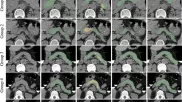
AI model able to ID early signs of type 2 diabetes on imaging results

The authors hope their findings could lead to earlier diagnoses and improvements in patient care. 

READ MORE >
CT pancreas diabetes.jpg
Share on Twitter Share on Facebook Share on Linkedin

AI model able to ID early signs of type 2 diabetes on imaging results

Share on Twitter Share on Facebook Share on Linkedin
CT pancreas diabetes.jpg
The authors hope their findings could lead to earlier diagnoses and improvements in patient care. 
READ MORE >

Researchers share first human data on new interventional shunt procedure for HFpEF

The first-in-man study, completed by a team of cardiologists in China, included 10 patients presenting with HFpEF. 

READ MORE >
Researchers are using an intra-atrial shunt to lower pressures between the upper chambers of the heart to relieve symptoms in HFpEF heart failure patients. The novel Noya device uses an RF ablation to cut a hole into the septum and then enlarge it using a stent that can then be removed from the body after the procedure. 
Share on Twitter Share on Facebook Share on Linkedin

Researchers share first human data on new interventional shunt procedure for HFpEF

Share on Twitter Share on Facebook Share on Linkedin
Researchers are using an intra-atrial shunt to lower pressures between the upper chambers of the heart to relieve symptoms in HFpEF heart failure patients. The novel Noya device uses an RF ablation to cut a hole into the septum and then enlarge it using a stent that can then be removed from the body after the procedure. 
The first-in-man study, completed by a team of cardiologists in China, included 10 patients presenting with HFpEF. 
READ MORE >

Photo Gallery: ACC 2022 in pictures

Click through a wide variety of snapshots from ACC.22 in Washington, D.C. 

READ MORE >
The mitral valve visualized by a a GE NuVision 4D intra-cardiac echo (ICE) catheter a life-like surgical rendering technology on the Vivid E95 cardiac ultrasound system. The catheter was co-developed with Biosense Webster to perform EP procedures. It also can be used in place of TEE in structural heart procedures to eliminate the need for an interventional echocardiography.  #ACC22
Share on Twitter Share on Facebook Share on Linkedin

Photo Gallery: ACC 2022 in pictures

Share on Twitter Share on Facebook Share on Linkedin
The mitral valve visualized by a a GE NuVision 4D intra-cardiac echo (ICE) catheter a life-like surgical rendering technology on the Vivid E95 cardiac ultrasound system. The catheter was co-developed with Biosense Webster to perform EP procedures. It also can be used in place of TEE in structural heart procedures to eliminate the need for an interventional echocardiography.  #ACC22
Click through a wide variety of snapshots from ACC.22 in Washington, D.C. 
READ MORE >

AI distinguishes between a heart attack and takotsubo syndrome more accurately than cardiologists

The advanced AI model outperformed a team of cardiologists, delivering a better AUC and overall accuracy. 

READ MORE >
As artificial intelligence (AI) adoption expands in radiology, there is growing concern that AI algorithms needs to undergo quality assurance (QA) reviews. How to validate radiology AI? How can you validate medical imaging AI?
Share on Twitter Share on Facebook Share on Linkedin

AI distinguishes between a heart attack and takotsubo syndrome more accurately than cardiologists

Share on Twitter Share on Facebook Share on Linkedin
As artificial intelligence (AI) adoption expands in radiology, there is growing concern that AI algorithms needs to undergo quality assurance (QA) reviews. How to validate radiology AI? How can you validate medical imaging AI?
The advanced AI model outperformed a team of cardiologists, delivering a better AUC and overall accuracy. 
READ MORE >

In Other News

VIDEO: Imaging societies ask Congress to repeal appropriate use decision support mandate

Randall Thompson, MD, immediate past president of the American Society of Nuclear Cardiology (ASNC), explains the current ASNC lobbying efforts.

READ MORE >
The American Society of Nuclear Cardiology (ASNC) is asking Congress to repeal the appropriate use software provision mandate, which physicians say is an obstacle to efficient care. American Society of Nuclear Cardiology is asking Congress now in June 2024 to officially repeal the appropriate use criteria requirement for admined medical imaging in a letter to Congress. Medicare rescinded the provision in 2024 Medicare Physician Fee Schedule, but the law remains on the books. 
Share on Twitter Share on Facebook Share on Linkedin

VIDEO: Imaging societies ask Congress to repeal appropriate use decision support mandate

Share on Twitter Share on Facebook Share on Linkedin
The American Society of Nuclear Cardiology (ASNC) is asking Congress to repeal the appropriate use software provision mandate, which physicians say is an obstacle to efficient care. American Society of Nuclear Cardiology is asking Congress now in June 2024 to officially repeal the appropriate use criteria requirement for admined medical imaging in a letter to Congress. Medicare rescinded the provision in 2024 Medicare Physician Fee Schedule, but the law remains on the books. 
Randall Thompson, MD, immediate past president of the American Society of Nuclear Cardiology (ASNC), explains the current ASNC lobbying efforts.
READ MORE >

Links to 20 new and revised American College of Radiology appropriate use criteria

The American College of Radiology (ACR) released the latest edition of the ACR Appropriateness Criteria

READ MORE >
A medical professional trained to manage contrast reactions should be on-site at any imaging facilities doing contrast studies to maintain patient safety, according to a an updated statement from the American College of Radiology. The ACR has released the latest edition of the ACR Appropriateness Criteria, which includes 221 diagnostic imaging and interventional radiology topics with more than 1,050 clinical variants covering 2,900 clinical scenarios. #ACR #AUC #appropriateuse
Share on Twitter Share on Facebook Share on Linkedin

Links to 20 new and revised American College of Radiology appropriate use criteria

Share on Twitter Share on Facebook Share on Linkedin
A medical professional trained to manage contrast reactions should be on-site at any imaging facilities doing contrast studies to maintain patient safety, according to a an updated statement from the American College of Radiology. The ACR has released the latest edition of the ACR Appropriateness Criteria, which includes 221 diagnostic imaging and interventional radiology topics with more than 1,050 clinical variants covering 2,900 clinical scenarios. #ACR #AUC #appropriateuse
The American College of Radiology (ACR) released the latest edition of the ACR Appropriateness Criteria
READ MORE >

Innovate Healthcare thanks our partners for supporting our newsletters.
Sponsorship has no influence on editorial content.

Interested in reaching our audiences, contact our team

*|LIST:ADDRESSLINE|*

You received this email because you signed up for newsletters from Innovate Healthcare.
Change your preferences or unsubscribe here

Contact Us  |  Unsubscribe from all  |  Privacy Policy

© Innovate Healthcare, a TriMed Media brand
Innovate Healthcare

Recent Newsletters

AI is gaining ground, but clinicians run the show | Siemens Healthineers doubles down | Electrophysiologist compensation
News Alert: FDA shares warning about heart valve tech after patient death
Cardiologist pay & productivity are up | FDA clears PE thrombectomy devices | Cardiology tech in spotlight | Gore's new approval
Cardiology salaries on the rise | The climbing costs of care | M&A trends | Siemens Healthineers, J&J make big business moves
Major MRI trends | Blood thinner recalled | When to perform PCI before TAVR | How to build a CCTA program | Steroids & the heart
CMS boosts coverage for heart failure tech | FDA approves CardioMEMS updates | LVADs linked to strokes, other risks
M&A activity in cardiology: Exploring key trends | Cardiac PET vs. SPECT | Doctors support Medicare covering TAVR for AR
Newsletter archive
  • Home
  • News
  • Article Archive
  • Custom Content
  • Webinars
  • Press Releases
  • Content Studio
  • Advertising
  • Submit Press Release
  • Contact Us
  • Terms of Use
  • Privacy Policy
  • Cardiovascular Business
  • HealthExec
  • Radiology Business
  • Press Releases
  • Submit Press Release
© 2026 Innovate Healthcare | All Rights Reserved. | Terms of Use | Privacy Policy
Design by Adaptive Theme