• Clinical
      |Clinical
    • Acute Coronary Syndromes
    • Cardiac Surgery
    • Covid-19
    • Heart Failure
    • Heart Health
    • Heart Rhythm
    • Hypertension
    • Interventional Cardiology
    • Mitral Valve
    • Pharmaceutics
    • Structural Heart Disease
    • TAVR
    • Tricuspid Valve
    • Vascular & Endovascular
  • Management
      |Management
    • Chest Pain Guidelines
    • Compensation
    • Economics
    • Education & Training
    • Legal News
    • Patient Care
    • Policy & Regulations
    • Professional Associations
    • Quality
    • Revenue
    • Staffing
  • Technology
      |Technology
    • AI
    • Cardiac Imaging
    • Cath Lab
    • CT
    • CVIS
    • ECG
    • Echo
    • EP Lab
    • Informatics
    • MRI
    • Nuclear Cardiology
    • Remote Monitoring
  • Videos
  • Conferences
      |Conferences
    • ACC
    • AHA
    • ASE
    • ASNC
    • ESC
    • EuroPCR
    • HFSA
    • HRS
    • HRS
    • SCAI
    • SCCT
    • SIIM
    • SNMMI
    • STS
    • TCT
    • VIVA
  • Custom Content
      |Custom Content
    • Experience Stories
    • Webinars & Videos
  • Subscribe
  • Forty Under 40 Award
      |Forty Under 40 Award
    • Class of 2026
    • Class of 2025

Search form

Home

News You Need to Know Today
Week in Review: A historic TAVR case | Salaries & job satisfaction in cardiology | CT-FFR before TAVR
Saturday, May 14, 2022
Link to Twitter Link to Facebook Link to Linkedin Link to Vimeo

This Week’s News

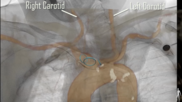
Cardiologists and surgeons perform first TAVR using CT imaging guidance on HF patient with blood clot

“We believe this case is potentially groundbreaking," one interventional cardiologist said. 

READ MORE >
transcatheter aortic valve replacement (TAVR) procedure guided by CT fusion imaging on a patient with heart failure and a blood clot. CT fusion imaging-guided deployment of the Sentinel Cerebral Protection System during a TAVR procedure. Image courtesy of Vasudev et al.
Share on Twitter Share on Facebook Share on Linkedin

Cardiologists and surgeons perform first TAVR using CT imaging guidance on HF patient with blood clot

Share on Twitter Share on Facebook Share on Linkedin
transcatheter aortic valve replacement (TAVR) procedure guided by CT fusion imaging on a patient with heart failure and a blood clot. CT fusion imaging-guided deployment of the Sentinel Cerebral Protection System during a TAVR procedure. Image courtesy of Vasudev et al.
“We believe this case is potentially groundbreaking," one interventional cardiologist said. 
READ MORE >

State of the industry: 7 big takeaways from a new report on salaries and job satisfaction in cardiology

With physician burnout on the rise and a massive physician shortage on the way, it’s more important now than ever to keep a close eye on how the country’s cardiologists—and their colleagues—are being paid. 

READ MORE >
Salary Survey Photo #2 (1).png
Share on Twitter Share on Facebook Share on Linkedin

State of the industry: 7 big takeaways from a new report on salaries and job satisfaction in cardiology

Share on Twitter Share on Facebook Share on Linkedin
Salary Survey Photo #2 (1).png
With physician burnout on the rise and a massive physician shortage on the way, it’s more important now than ever to keep a close eye on how the country’s cardiologists—and their colleagues—are being paid. 
READ MORE >

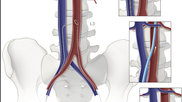
Transcaval TAVR outperforms transaxillary TAVR when femoral access is not an option

Transcaval TAVR was linked to a much lower stroke rate and fewer bleeding complications. 

READ MORE >
The steps involved to gain transcaval access between the inferior vena cava and the aorta to avoid problematic anatomical areas that would have otherwise disqualified a patient for a femoral access TAVR procedure. Illustration of the NIH
Share on Twitter Share on Facebook Share on Linkedin

Transcaval TAVR outperforms transaxillary TAVR when femoral access is not an option

Share on Twitter Share on Facebook Share on Linkedin
The steps involved to gain transcaval access between the inferior vena cava and the aorta to avoid problematic anatomical areas that would have otherwise disqualified a patient for a femoral access TAVR procedure. Illustration of the NIH
Transcaval TAVR was linked to a much lower stroke rate and fewer bleeding complications. 
READ MORE >

Cardiologist charged with 4 additional counts of sexual assault after more patients come forward

The 66-year-old cardiologist was first charged with sexual assault in 2022 after a patient accused him of touching her inappropriately. Now, more patients have stepped forward with similar stories. 

READ MORE >
A gavel and a stethoscope
Share on Twitter Share on Facebook Share on Linkedin

Cardiologist charged with 4 additional counts of sexual assault after more patients come forward

Share on Twitter Share on Facebook Share on Linkedin
A gavel and a stethoscope
The 66-year-old cardiologist was first charged with sexual assault in 2022 after a patient accused him of touching her inappropriately. Now, more patients have stepped forward with similar stories. 
READ MORE >

Mediterranean diet outperforms low-fat diet for cardiovascular disease prevention

“Our results are relevant to clinical practice, supporting the use of the Mediterranean diet in secondary prevention," researchers wrote. 

READ MORE >
Mediterranean diet
Share on Twitter Share on Facebook Share on Linkedin

Mediterranean diet outperforms low-fat diet for cardiovascular disease prevention

Share on Twitter Share on Facebook Share on Linkedin
Mediterranean diet
“Our results are relevant to clinical practice, supporting the use of the Mediterranean diet in secondary prevention," researchers wrote. 
READ MORE >

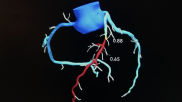
CT-FFR before TAVR improves detection of coronary artery disease, limits invasive imaging exams

CT-FFR, which recently got a boost from the 2021 AHA/ACC chest pain guidelines, could play a key role for clinicians hoping to screen TAVR patients for coronary heart disease. 

READ MORE >
Performing CT-derived fractional flow reserve (CT-FFR) before transcatheter aortic valve replacement (TAVR) improves the accuracy of coronary CT angiography (CCTA) and helps limit unneeded invasive coronary angiography (ICA), according to a new study published in JACC: Cardiovascular Interventions. Heartflow
Share on Twitter Share on Facebook Share on Linkedin

CT-FFR before TAVR improves detection of coronary artery disease, limits invasive imaging exams

Share on Twitter Share on Facebook Share on Linkedin
Performing CT-derived fractional flow reserve (CT-FFR) before transcatheter aortic valve replacement (TAVR) improves the accuracy of coronary CT angiography (CCTA) and helps limit unneeded invasive coronary angiography (ICA), according to a new study published in JACC: Cardiovascular Interventions. Heartflow
CT-FFR, which recently got a boost from the 2021 AHA/ACC chest pain guidelines, could play a key role for clinicians hoping to screen TAVR patients for coronary heart disease. 
READ MORE >

Is TAVR a sensible choice for patients with moderate, symptomatic aortic stenosis? Medtronic aims to find out

The trial is expected to enroll up to 650 patients from as many as 100 different facilities throughout the world.

READ MORE >
TAVR Medtronic Evolut EXPAND TAVR II Pivotal Trial will study the use of T AVR in patients with moderate, symptomatic aortic stenosis.
Share on Twitter Share on Facebook Share on Linkedin

Is TAVR a sensible choice for patients with moderate, symptomatic aortic stenosis? Medtronic aims to find out

Share on Twitter Share on Facebook Share on Linkedin
TAVR Medtronic Evolut EXPAND TAVR II Pivotal Trial will study the use of T AVR in patients with moderate, symptomatic aortic stenosis.
The trial is expected to enroll up to 650 patients from as many as 100 different facilities throughout the world.
READ MORE >

How did the pig heart transplant patient die? A preventable infection may be to blame

The genetically modified pig heart appears to have been infected with a porcine virus, according to the surgeon who performed the initial transplant. 

READ MORE >
David Bennett
Share on Twitter Share on Facebook Share on Linkedin

How did the pig heart transplant patient die? A preventable infection may be to blame

Share on Twitter Share on Facebook Share on Linkedin
David Bennett
The genetically modified pig heart appears to have been infected with a porcine virus, according to the surgeon who performed the initial transplant. 
READ MORE >

Links to all the SCAI 2022 late-breaking clinical research

The Society for Cardiovascular Angiography and Interventions (SCAI) has announced its late-breaking study presentations at its 2022 Scientific Sessions. 

READ MORE >
Simpsons Interventions, a California-based healthcare technology company, has received the FDA’s breakthrough device designation for its Acolyte Image Guided Crossing and Re-Entry Catheter System. SCAI released the list of its late-breaking clinical study trials at its 2022 annual meeting. #SCAI #SCAI22 #SCAI2022
Share on Twitter Share on Facebook Share on Linkedin

Links to all the SCAI 2022 late-breaking clinical research

Share on Twitter Share on Facebook Share on Linkedin
Simpsons Interventions, a California-based healthcare technology company, has received the FDA’s breakthrough device designation for its Acolyte Image Guided Crossing and Re-Entry Catheter System. SCAI released the list of its late-breaking clinical study trials at its 2022 annual meeting. #SCAI #SCAI22 #SCAI2022
The Society for Cardiovascular Angiography and Interventions (SCAI) has announced its late-breaking study presentations at its 2022 Scientific Sessions. 
READ MORE >

A key update: 1 year later, no signs of long-term heart damage among college athletes who had COVID-19

More than 3,500 college athletes with a confirmed COVID-19 diagnosis were included in the new study. The median follow-up period was more than one full year. 

READ MORE >
Share on Twitter Share on Facebook Share on Linkedin

A key update: 1 year later, no signs of long-term heart damage among college athletes who had COVID-19

Share on Twitter Share on Facebook Share on Linkedin
More than 3,500 college athletes with a confirmed COVID-19 diagnosis were included in the new study. The median follow-up period was more than one full year. 
READ MORE >

Innovate Healthcare thanks our partners for supporting our newsletters.
Sponsorship has no influence on editorial content.

Interested in reaching our audiences, contact our team

*|LIST:ADDRESSLINE|*

You received this email because you signed up for newsletters from Innovate Healthcare.
Change your preferences or unsubscribe here

Contact Us  |  Unsubscribe from all  |  Privacy Policy

© Innovate Healthcare, a TriMed Media brand
Innovate Healthcare

Recent Newsletters

Medtech giant makes big move | The world’s top hospitals for heart surgery | New CPT codes | PET vs. SPECT | TAVR tech recalled
AI is gaining ground, but clinicians run the show | Siemens Healthineers doubles down | Electrophysiologist compensation
News Alert: FDA shares warning about heart valve tech after patient death
Cardiologist pay & productivity are up | FDA clears PE thrombectomy devices | Cardiology tech in spotlight | Gore's new approval
Cardiology salaries on the rise | The climbing costs of care | M&A trends | Siemens Healthineers, J&J make big business moves
Major MRI trends | Blood thinner recalled | When to perform PCI before TAVR | How to build a CCTA program | Steroids & the heart
CMS boosts coverage for heart failure tech | FDA approves CardioMEMS updates | LVADs linked to strokes, other risks
Newsletter archive
  • Home
  • News
  • Article Archive
  • Custom Content
  • Webinars
  • Press Releases
  • Content Studio
  • Advertising
  • Submit Press Release
  • Contact Us
  • Terms of Use
  • Privacy Policy
  • Cardiovascular Business
  • HealthExec
  • Radiology Business
  • Press Releases
  • Submit Press Release
© 2026 Innovate Healthcare | All Rights Reserved. | Terms of Use | Privacy Policy
Design by Adaptive Theme