• Clinical
      |Clinical
    • Acute Coronary Syndromes
    • Cardiac Surgery
    • Covid-19
    • Heart Failure
    • Heart Health
    • Heart Rhythm
    • Hypertension
    • Interventional Cardiology
    • Mitral Valve
    • Pharmaceutics
    • Structural Heart Disease
    • TAVR
    • Tricuspid Valve
    • Vascular & Endovascular
  • Management
      |Management
    • Chest Pain Guidelines
    • Compensation
    • Economics
    • Education & Training
    • Legal News
    • Patient Care
    • Policy & Regulations
    • Professional Associations
    • Quality
    • Revenue
    • Staffing
  • Technology
      |Technology
    • AI
    • Cardiac Imaging
    • Cath Lab
    • CT
    • CVIS
    • ECG
    • Echo
    • EP Lab
    • Informatics
    • MRI
    • Nuclear Cardiology
    • Remote Monitoring
  • Videos
  • Conferences
      |Conferences
    • ACC
    • AHA
    • ASE
    • ASNC
    • ESC
    • EuroPCR
    • HFSA
    • HRS
    • HRS
    • SCAI
    • SCCT
    • SIIM
    • SNMMI
    • STS
    • TCT
    • VIVA
  • Custom Content
      |Custom Content
    • Experience Stories
    • Webinars & Videos
  • Subscribe
  • Forty Under 40 Award
      |Forty Under 40 Award
    • Class of 2026
    • Class of 2025

Search form

Home

News You Need to Know Today
TAVR patients with CAD | FDA's MitraClip warning | SAVR after TAVR | More news from the last week
Saturday, September 10, 2022
Link to Twitter Link to Facebook Link to Linkedin Link to Vimeo

This Week’s News

Aspartame, other artificial sweeteners linked to significant heart problems

These findings, researchers wrote, suggest that artificial sweeteners "should not be considered a healthy and safe alternative to sugar."

READ MORE >
Artificial sweeteners may be associated with a higher risk of cardiovascular disease (CVD), according to new research published in The BMJ. Aspartame intake was linked to a greater risk of cerebrovascular events and acesulfame potassium and sucralose were linked to a greater risk of coronary heart disease.
Share on Twitter Share on Facebook Share on Linkedin

Aspartame, other artificial sweeteners linked to significant heart problems

Share on Twitter Share on Facebook Share on Linkedin
Artificial sweeteners may be associated with a higher risk of cardiovascular disease (CVD), according to new research published in The BMJ. Aspartame intake was linked to a greater risk of cerebrovascular events and acesulfame potassium and sucralose were linked to a greater risk of coronary heart disease.
These findings, researchers wrote, suggest that artificial sweeteners "should not be considered a healthy and safe alternative to sugar."
READ MORE >

TAVR patients with CAD face a greater risk of death—is PCI the answer?

All-cause mortality after five years is much more likely if a TAVR patient presents with CAD, according to a new analysis published in JACC: Cardiovascular Interventions.

READ MORE >
A TAVR procedure being performed at Northwestern Medicine in Chicago.
Share on Twitter Share on Facebook Share on Linkedin

TAVR patients with CAD face a greater risk of death—is PCI the answer?

Share on Twitter Share on Facebook Share on Linkedin
A TAVR procedure being performed at Northwestern Medicine in Chicago.
All-cause mortality after five years is much more likely if a TAVR patient presents with CAD, according to a new analysis published in JACC: Cardiovascular Interventions.
READ MORE >

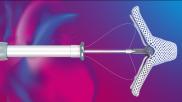
FDA warns of a new malfunction risk with Abbott’s MitraClip devices

When these malfunctions occur, the FDA explained, it leads to an increased risk of additional interventions.

READ MORE >
The Abbott MitraClip is the primary structural heart device used in transcatheter edge-to-edge repairs (TEER) of the mitral valve leaflets. The results of the COAPT trial dropped like a thunderclap Sunday at the Transcatheter Cardiovascular Therapeutics (TCT) annual meeting, with several cardiologists predicting the MitraClip device will have a swift and lasting impact on the treatment of heart failure patients.
Share on Twitter Share on Facebook Share on Linkedin

FDA warns of a new malfunction risk with Abbott’s MitraClip devices

Share on Twitter Share on Facebook Share on Linkedin
The Abbott MitraClip is the primary structural heart device used in transcatheter edge-to-edge repairs (TEER) of the mitral valve leaflets. The results of the COAPT trial dropped like a thunderclap Sunday at the Transcatheter Cardiovascular Therapeutics (TCT) annual meeting, with several cardiologists predicting the MitraClip device will have a swift and lasting impact on the treatment of heart failure patients.
When these malfunctions occur, the FDA explained, it leads to an increased risk of additional interventions.
READ MORE >

SAVR after TAVR is rare, but linked to a high mortality risk

Researchers tracked data from more than 2,000 patients, noting that surgical bailout, infective endocarditis and paravalvular leak were the most common reasons for surgery to be required after TAVR. The full study was published in the American Journal of Cardiology.

READ MORE >
surgery.jpg
Share on Twitter Share on Facebook Share on Linkedin

SAVR after TAVR is rare, but linked to a high mortality risk

Share on Twitter Share on Facebook Share on Linkedin
surgery.jpg
Researchers tracked data from more than 2,000 patients, noting that surgical bailout, infective endocarditis and paravalvular leak were the most common reasons for surgery to be required after TAVR. The full study was published in the American Journal of Cardiology.
READ MORE >

Cardiologists identify a potential new side effect of monkeypox: acute myocarditis

A 31-year-old patient developed acute myocarditis shortly after the onset of monkeypox symptoms. The team that treated him shared their story in a new case study.

READ MORE >
monkey_pox_nih_image.png
Share on Twitter Share on Facebook Share on Linkedin

Cardiologists identify a potential new side effect of monkeypox: acute myocarditis

Share on Twitter Share on Facebook Share on Linkedin
monkey_pox_nih_image.png
A 31-year-old patient developed acute myocarditis shortly after the onset of monkeypox symptoms. The team that treated him shared their story in a new case study.
READ MORE >

DOACs after TAVR may put some patients at risk, new meta-analysis suggests

The new study, based on data from nearly 3,000 patients, compared DOACs such as rivaroxaban, apixaban and edoxaban with single and dual antiplatelet therapy. 

READ MORE >
Same-day discharge after TAVR is safe for low-risk patients, leads to considerable cost savings
Share on Twitter Share on Facebook Share on Linkedin

DOACs after TAVR may put some patients at risk, new meta-analysis suggests

Share on Twitter Share on Facebook Share on Linkedin
Same-day discharge after TAVR is safe for low-risk patients, leads to considerable cost savings
The new study, based on data from nearly 3,000 patients, compared DOACs such as rivaroxaban, apixaban and edoxaban with single and dual antiplatelet therapy. 
READ MORE >

VIDEO: Previewing TCT 2022 in Boston with Juan Granada

Juan F. Granada, MD, president and chief executive officer of the Cardiovascular Research Foundation, previewed TCT 2022 for us, detailing what attendees can expect to see at the big show in Boston. 

READ MORE >
Juan F. Granada, MD, president and chief executive officer of the Cardiovascular Research Foundation (CRF) and assistant professor of medicine at Columbia University College of Physicians and Surgeons, explains some of the highlights of the upcoming 2022 Transcatheter Cardiovascular Therapies (TCT) conference sponsored by CRF. #TCT #TCT2022
Share on Twitter Share on Facebook Share on Linkedin

VIDEO: Previewing TCT 2022 in Boston with Juan Granada

Share on Twitter Share on Facebook Share on Linkedin
Juan F. Granada, MD, president and chief executive officer of the Cardiovascular Research Foundation (CRF) and assistant professor of medicine at Columbia University College of Physicians and Surgeons, explains some of the highlights of the upcoming 2022 Transcatheter Cardiovascular Therapies (TCT) conference sponsored by CRF. #TCT #TCT2022
Juan F. Granada, MD, president and chief executive officer of the Cardiovascular Research Foundation, previewed TCT 2022 for us, detailing what attendees can expect to see at the big show in Boston. 
READ MORE >

Innovate Healthcare thanks our partners for supporting our newsletters.
Sponsorship has no influence on editorial content.

Interested in reaching our audiences, contact our team

*|LIST:ADDRESSLINE|*

You received this email because you signed up for newsletters from Innovate Healthcare.
Change your preferences or unsubscribe here

Contact Us  |  Unsubscribe from all  |  Privacy Policy

© Innovate Healthcare, a TriMed Media brand
Innovate Healthcare

Recent Newsletters

AI is gaining ground, but clinicians run the show | Siemens Healthineers doubles down | Electrophysiologist compensation
News Alert: FDA shares warning about heart valve tech after patient death
Cardiologist pay & productivity are up | FDA clears PE thrombectomy devices | Cardiology tech in spotlight | Gore's new approval
Cardiology salaries on the rise | The climbing costs of care | M&A trends | Siemens Healthineers, J&J make big business moves
Major MRI trends | Blood thinner recalled | When to perform PCI before TAVR | How to build a CCTA program | Steroids & the heart
CMS boosts coverage for heart failure tech | FDA approves CardioMEMS updates | LVADs linked to strokes, other risks
M&A activity in cardiology: Exploring key trends | Cardiac PET vs. SPECT | Doctors support Medicare covering TAVR for AR
Newsletter archive
  • Home
  • News
  • Article Archive
  • Custom Content
  • Webinars
  • Press Releases
  • Content Studio
  • Advertising
  • Submit Press Release
  • Contact Us
  • Terms of Use
  • Privacy Policy
  • Cardiovascular Business
  • HealthExec
  • Radiology Business
  • Press Releases
  • Submit Press Release
© 2026 Innovate Healthcare | All Rights Reserved. | Terms of Use | Privacy Policy
Design by Adaptive Theme