• Clinical
      |Clinical
    • Acute Coronary Syndromes
    • Cardiac Surgery
    • Covid-19
    • Heart Failure
    • Heart Health
    • Heart Rhythm
    • Hypertension
    • Interventional Cardiology
    • Mitral Valve
    • Pharmaceutics
    • Structural Heart Disease
    • TAVR
    • Tricuspid Valve
    • Vascular & Endovascular
  • Management
      |Management
    • Chest Pain Guidelines
    • Compensation
    • Economics
    • Education & Training
    • Legal News
    • Patient Care
    • Policy & Regulations
    • Professional Associations
    • Quality
    • Revenue
    • Staffing
  • Technology
      |Technology
    • AI
    • Cardiac Imaging
    • Cath Lab
    • CT
    • CVIS
    • ECG
    • Echo
    • EP Lab
    • Informatics
    • MRI
    • Nuclear Cardiology
    • Remote Monitoring
  • Videos
  • Conferences
      |Conferences
    • ACC
    • AHA
    • ASE
    • ASNC
    • ESC
    • EuroPCR
    • HFSA
    • HRS
    • HRS
    • SCAI
    • SCCT
    • SIIM
    • SNMMI
    • STS
    • TCT
    • VIVA
  • Custom Content
      |Custom Content
    • Experience Stories
    • Webinars & Videos
  • Subscribe
  • Forty Under 40 Award
      |Forty Under 40 Award
    • Class of 2026
    • Class of 2025

Search form

Home

News You Need to Know Today
Predicting HF hospitalizations after TAVR | FDA grants fast track designation to tirzepatide for treating obesity
Friday, October 7, 2022
Link to Twitter Link to Facebook Link to Linkedin Link to Vimeo

Today's News and Trends

5 key predictors of heart failure hospitalizations after TAVR

Diabetes and atrial fibrillation are just some of the factors that can increase a patient's risk of being hospitalized for heart failure within one year of undergoing a successful TAVR procedure.

READ MORE >
hospital ward
Share on Twitter Share on Facebook Share on Linkedin

5 key predictors of heart failure hospitalizations after TAVR

Share on Twitter Share on Facebook Share on Linkedin
hospital ward
Diabetes and atrial fibrillation are just some of the factors that can increase a patient's risk of being hospitalized for heart failure within one year of undergoing a successful TAVR procedure.
READ MORE >

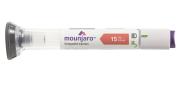
FDA grants fast track designation to tirzepatide, Eli Lilly’s new type 2 diabetes drug, for treating obesity

Back in May, tirzepatide was approved by the FDA for improving glycemic control among adults with type 2 diabetes.

READ MORE >
The FDA has cleared tirzepatide (Mounjaro) from Eli Lilly, a once-weekly injectable dual glucose-dependent insulinotropic polypeptide (GIP) and glucagon-like peptide receptor agonist (GLP-1) for improving glycemic control among adults with type 2 diabetes.
Share on Twitter Share on Facebook Share on Linkedin

FDA grants fast track designation to tirzepatide, Eli Lilly’s new type 2 diabetes drug, for treating obesity

Share on Twitter Share on Facebook Share on Linkedin
The FDA has cleared tirzepatide (Mounjaro) from Eli Lilly, a once-weekly injectable dual glucose-dependent insulinotropic polypeptide (GIP) and glucagon-like peptide receptor agonist (GLP-1) for improving glycemic control among adults with type 2 diabetes.
Back in May, tirzepatide was approved by the FDA for improving glycemic control among adults with type 2 diabetes.
READ MORE >

Can strength and endurance training help heart failure patients live longer?

Researchers have received a five-year grant worth $30 million to study how a new-look physical rehab program impacts outcomes among older HFpEF patients.

READ MORE >
Wake Forest University School of Medicine has received a five-year grant worth $30 million from the National Institute of Aging, part of the National Institutes of Health, to study the potential benefits of a new-look rehabilitation program on patients who are hospitalized with heart failure with preserved ejection fraction (HFpEF).
Share on Twitter Share on Facebook Share on Linkedin

Can strength and endurance training help heart failure patients live longer?

Share on Twitter Share on Facebook Share on Linkedin
Wake Forest University School of Medicine has received a five-year grant worth $30 million from the National Institute of Aging, part of the National Institutes of Health, to study the potential benefits of a new-look rehabilitation program on patients who are hospitalized with heart failure with preserved ejection fraction (HFpEF).
Researchers have received a five-year grant worth $30 million to study how a new-look physical rehab program impacts outcomes among older HFpEF patients.
READ MORE >

In Other News

P2Y12 inhibitor monotherapy after PCI similar to prolonged DAPT, new 3-year analysis confirms

Researchers have shared an updated analysis of the SMART-CHOICE study, focusing on major adverse cardiac and cerebrovascular events—as well as bleeding events—among PCI patients after three years. 

READ MORE >
Interventional cardiologists performing PCI
Share on Twitter Share on Facebook Share on Linkedin

P2Y12 inhibitor monotherapy after PCI similar to prolonged DAPT, new 3-year analysis confirms

Share on Twitter Share on Facebook Share on Linkedin
Interventional cardiologists performing PCI
Researchers have shared an updated analysis of the SMART-CHOICE study, focusing on major adverse cardiac and cerebrovascular events—as well as bleeding events—among PCI patients after three years. 
READ MORE >

VIDEO: Medicare cuts could devastate the field of electrophysiology

"By imposing a 35%-42% cut, [CMS] has essentially created a scenario where it is going to destroy electrophysiology as a field," explained Dhanunjaya "DJ" Lakkireddy, MD.

READ MORE >
Dhanunjaya "DJ" Lakkireddy, MD, executive medical director for the Kansas City Heart Rhythm Institute at HCA Midwest Health, professor of medicine at the University of Missouri, Columbia, deputy editor for the the Journal of Atrial Fibrillation, and serves on the HRS Board of Trustees and section steering committee chair for the ACC, explains the potentially devastating impact of Medicare cuts on electrophysiology (EP) and patient care.
Share on Twitter Share on Facebook Share on Linkedin

VIDEO: Medicare cuts could devastate the field of electrophysiology

Share on Twitter Share on Facebook Share on Linkedin
Dhanunjaya "DJ" Lakkireddy, MD, executive medical director for the Kansas City Heart Rhythm Institute at HCA Midwest Health, professor of medicine at the University of Missouri, Columbia, deputy editor for the the Journal of Atrial Fibrillation, and serves on the HRS Board of Trustees and section steering committee chair for the ACC, explains the potentially devastating impact of Medicare cuts on electrophysiology (EP) and patient care.
"By imposing a 35%-42% cut, [CMS] has essentially created a scenario where it is going to destroy electrophysiology as a field," explained Dhanunjaya "DJ" Lakkireddy, MD.
READ MORE >

Researchers awarded $37M to see if Apple Watch can lower stroke risk among AFib patients

Could wearables help AFib patients take fewer blood-thinning medications and reduce their risk of stroke? The team behind a new seven-year analysis hopes to find out. 

READ MORE >
Share on Twitter Share on Facebook Share on Linkedin

Researchers awarded $37M to see if Apple Watch can lower stroke risk among AFib patients

Share on Twitter Share on Facebook Share on Linkedin
Could wearables help AFib patients take fewer blood-thinning medications and reduce their risk of stroke? The team behind a new seven-year analysis hopes to find out. 
READ MORE >

In Case You Missed It

VIDEO: Gaps in the access to atrial fibrillation care

Interview with Dhanunjaya Lakkireddy, MD, executive medical director for the Kansas City Heart Rhythm Institute at HCA Midwest Health, on the need to speed access to electrophysiologists when a patient presents with atrial fibrillation.

READ MORE >
Dhanunjaya "DJ" Lakkireddy, MD, executive medical director for the Kansas City Heart Rhythm Institute at HCA Midwest Health, a professor of medicine at the University of Missouri, Columbia, and serves as deputy editor for the the Journal of Atrial Fibrillation, and serves on the HRS Board of Trustees, section steering committee chair for the ACC. He explains there is a big need to speed access to electrophysiologists (EPs) when a patient presents with atrial fibrillation (AFib). #AFibawareness
Share on Twitter Share on Facebook Share on Linkedin

VIDEO: Gaps in the access to atrial fibrillation care

Share on Twitter Share on Facebook Share on Linkedin
Dhanunjaya "DJ" Lakkireddy, MD, executive medical director for the Kansas City Heart Rhythm Institute at HCA Midwest Health, a professor of medicine at the University of Missouri, Columbia, and serves as deputy editor for the the Journal of Atrial Fibrillation, and serves on the HRS Board of Trustees, section steering committee chair for the ACC. He explains there is a big need to speed access to electrophysiologists (EPs) when a patient presents with atrial fibrillation (AFib). #AFibawareness
Interview with Dhanunjaya Lakkireddy, MD, executive medical director for the Kansas City Heart Rhythm Institute at HCA Midwest Health, on the need to speed access to electrophysiologists when a patient presents with atrial fibrillation.
READ MORE >

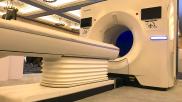
New recommendations for cardiac CT in cardio-oncology imaging

The statement was written to fill gaps in recommendations from prior consensus statements and guidelines in regards to the use of CCT in cardio-oncology, including use of calcium scoring and ruling out coronary disease when cardiac function is impaired.

READ MORE >
GE Revolution Apex CT CTA scanner_SCCT_2022_DFjpeg.jpeg
Share on Twitter Share on Facebook Share on Linkedin

New recommendations for cardiac CT in cardio-oncology imaging

Share on Twitter Share on Facebook Share on Linkedin
GE Revolution Apex CT CTA scanner_SCCT_2022_DFjpeg.jpeg
The statement was written to fill gaps in recommendations from prior consensus statements and guidelines in regards to the use of CCT in cardio-oncology, including use of calcium scoring and ruling out coronary disease when cardiac function is impaired.
READ MORE >

Featured Articles

FDA approves AI analysis of high-grade gliomas

An AI startup in the neuro-oncology space has received the government’s go-ahead to market software for analyzing certain fast-growing brain tumors on MRI.

READ MORE >
Female Medical Research Scientist Working with Brain Scans
Share on Twitter Share on Facebook Share on Linkedin

FDA approves AI analysis of high-grade gliomas

Share on Twitter Share on Facebook Share on Linkedin
Female Medical Research Scientist Working with Brain Scans
An AI startup in the neuro-oncology space has received the government’s go-ahead to market software for analyzing certain fast-growing brain tumors on MRI.
READ MORE >

Innovate Healthcare thanks our partners for supporting our newsletters.
Sponsorship has no influence on editorial content.

Interested in reaching our audiences, contact our team

*|LIST:ADDRESSLINE|*

You received this email because you signed up for newsletters from Innovate Healthcare.
Change your preferences or unsubscribe here

Contact Us  |  Unsubscribe from all  |  Privacy Policy

© Innovate Healthcare, a TriMed Media brand
Innovate Healthcare

Recent Newsletters

AI is gaining ground, but clinicians run the show | Siemens Healthineers doubles down | Electrophysiologist compensation
News Alert: FDA shares warning about heart valve tech after patient death
Cardiologist pay & productivity are up | FDA clears PE thrombectomy devices | Cardiology tech in spotlight | Gore's new approval
Cardiology salaries on the rise | The climbing costs of care | M&A trends | Siemens Healthineers, J&J make big business moves
Major MRI trends | Blood thinner recalled | When to perform PCI before TAVR | How to build a CCTA program | Steroids & the heart
CMS boosts coverage for heart failure tech | FDA approves CardioMEMS updates | LVADs linked to strokes, other risks
M&A activity in cardiology: Exploring key trends | Cardiac PET vs. SPECT | Doctors support Medicare covering TAVR for AR
Newsletter archive
  • Home
  • News
  • Article Archive
  • Custom Content
  • Webinars
  • Press Releases
  • Content Studio
  • Advertising
  • Submit Press Release
  • Contact Us
  • Terms of Use
  • Privacy Policy
  • Cardiovascular Business
  • HealthExec
  • Radiology Business
  • Press Releases
  • Submit Press Release
© 2026 Innovate Healthcare | All Rights Reserved. | Terms of Use | Privacy Policy
Design by Adaptive Theme