• Clinical
      |Clinical
    • Acute Coronary Syndromes
    • Cardiac Surgery
    • Covid-19
    • Heart Failure
    • Heart Health
    • Heart Rhythm
    • Hypertension
    • Interventional Cardiology
    • Mitral Valve
    • Pharmaceutics
    • Structural Heart Disease
    • TAVR
    • Tricuspid Valve
    • Vascular & Endovascular
  • Management
      |Management
    • Chest Pain Guidelines
    • Compensation
    • Economics
    • Education & Training
    • Legal News
    • Patient Care
    • Policy & Regulations
    • Professional Associations
    • Quality
    • Revenue
    • Staffing
  • Technology
      |Technology
    • AI
    • Cardiac Imaging
    • Cath Lab
    • CT
    • CVIS
    • ECG
    • Echo
    • EP Lab
    • Informatics
    • MRI
    • Nuclear Cardiology
    • Remote Monitoring
  • Videos
  • Conferences
      |Conferences
    • ACC
    • AHA
    • ASE
    • ASNC
    • ESC
    • EuroPCR
    • HFSA
    • HRS
    • HRS
    • SCAI
    • SCCT
    • SIIM
    • SNMMI
    • STS
    • TCT
    • VIVA
  • Custom Content
      |Custom Content
    • Experience Stories
    • Webinars & Videos
  • Subscribe
  • Forty Under 40 Award
      |Forty Under 40 Award
    • Class of 2026
    • Class of 2025

Search form

Home

News You Need to Know Today
One-year data on transcatheter tricuspid valve replacement | New research on salt intake & CVD
Tuesday, November 29, 2022
Link to Twitter Link to Facebook Link to Linkedin Link to Vimeo

Today's News and Trends

Edwards shares new one-year data on transcatheter tricuspid valve replacement

The new findings, presented at the PCR London Valves 2022 conference, focused on mortality and heart failure hospitalization rates. 

READ MORE >
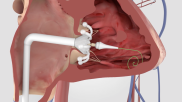
Edwards Lifesciences Corporation has shared new one-year data on the safety and effectiveness of its Evoque transcatheter tricuspid valve replacement (TTVR) system among patients with tricuspid regurgitation (TR)
Share on Twitter Share on Facebook Share on Linkedin

Edwards shares new one-year data on transcatheter tricuspid valve replacement

Share on Twitter Share on Facebook Share on Linkedin
Edwards Lifesciences Corporation has shared new one-year data on the safety and effectiveness of its Evoque transcatheter tricuspid valve replacement (TTVR) system among patients with tricuspid regurgitation (TR)
The new findings, presented at the PCR London Valves 2022 conference, focused on mortality and heart failure hospitalization rates. 
READ MORE >

Adding extra salt to your food at the table associated with a greater risk of CVD, heart failure

Yes, even a little additional salt can make a big impact on a person's cardiovascular health. The full analysis was published in the Journal of the American College of Cardiology.

READ MORE >
Salt substitutes are associated with a reduced risk of high blood pressure without increasing the risk of low blood pressure, according to new findings published in the Journal of the American College of Cardiology.[1]
Share on Twitter Share on Facebook Share on Linkedin

Adding extra salt to your food at the table associated with a greater risk of CVD, heart failure

Share on Twitter Share on Facebook Share on Linkedin
Salt substitutes are associated with a reduced risk of high blood pressure without increasing the risk of low blood pressure, according to new findings published in the Journal of the American College of Cardiology.[1]
Yes, even a little additional salt can make a big impact on a person's cardiovascular health. The full analysis was published in the Journal of the American College of Cardiology.
READ MORE >

Featured Articles

FDA approves world’s most expensive drug, a hemophilia B treatment expected to cost $3.5M

The single-dose gene therapy can help patients reduce their risk of bleeding events and discontinue factor IX prophylaxis therapy.

READ MORE >
Money dollar investments
Share on Twitter Share on Facebook Share on Linkedin

FDA approves world’s most expensive drug, a hemophilia B treatment expected to cost $3.5M

Share on Twitter Share on Facebook Share on Linkedin
Money dollar investments
The single-dose gene therapy can help patients reduce their risk of bleeding events and discontinue factor IX prophylaxis therapy.
READ MORE >

ADHD medications and CVD: Lessons learned from a new meta-analysis of nearly 4 million patients

The new study, published in JAMA Network Open, should help ease any concerns patients may have about regularly taking ADHD medications. 

READ MORE >
middle age patient and doctor
Share on Twitter Share on Facebook Share on Linkedin

ADHD medications and CVD: Lessons learned from a new meta-analysis of nearly 4 million patients

Share on Twitter Share on Facebook Share on Linkedin
middle age patient and doctor
The new study, published in JAMA Network Open, should help ease any concerns patients may have about regularly taking ADHD medications. 
READ MORE >

The power of AI: Advanced algorithm IDs heart issues using Apple Watch data

A team of Mayo Clinic specialists led the analysis, sharing their findings in Nature Medicine.

READ MORE >
Share on Twitter Share on Facebook Share on Linkedin

The power of AI: Advanced algorithm IDs heart issues using Apple Watch data

Share on Twitter Share on Facebook Share on Linkedin
A team of Mayo Clinic specialists led the analysis, sharing their findings in Nature Medicine.
READ MORE >

PHOTO GALLERY: AHA 2022

A photo essay from the American Heart Association (AHA) 2022 Scientific Sessions Nov. 5-7 in Chicago.

READ MORE >
Example of fractional flow reserve (FFR) calculated using AI and assessment of the plaque in the vessel on a CT scan of the coronaries. This new type of FFR-CT was shown as a work-in-progress by the vendor Elucid. It was shown for the first time at AHA 2022.
Share on Twitter Share on Facebook Share on Linkedin

PHOTO GALLERY: AHA 2022

Share on Twitter Share on Facebook Share on Linkedin
Example of fractional flow reserve (FFR) calculated using AI and assessment of the plaque in the vessel on a CT scan of the coronaries. This new type of FFR-CT was shown as a work-in-progress by the vendor Elucid. It was shown for the first time at AHA 2022.
A photo essay from the American Heart Association (AHA) 2022 Scientific Sessions Nov. 5-7 in Chicago.
READ MORE >

In Case You Missed It

Higher copayments lowered adherence for pulmonary artery hypertension medications 

The more a patient has to pay for medications, the less likely they are to take them. This was the finding of a new study showing how copayments may be a barrier to drugs to treat pulmonary arterial hypertension.

READ MORE >
Pulmonary hypertension (PAH) is usually treated with medication, but the more a patient has to pay for medications, the less likely they are to take them and become noncompliant. This was the finding of a new study showing how copayments may be a barrier to patients taking prostanoids and combination therapy for PAH.
Share on Twitter Share on Facebook Share on Linkedin

Higher copayments lowered adherence for pulmonary artery hypertension medications 

Share on Twitter Share on Facebook Share on Linkedin
Pulmonary hypertension (PAH) is usually treated with medication, but the more a patient has to pay for medications, the less likely they are to take them and become noncompliant. This was the finding of a new study showing how copayments may be a barrier to patients taking prostanoids and combination therapy for PAH.
The more a patient has to pay for medications, the less likely they are to take them. This was the finding of a new study showing how copayments may be a barrier to drugs to treat pulmonary arterial hypertension.
READ MORE >

FDA Commissioner Robert Califf calls on cardiology to address health inequities and combat misinformation

FDA Commissioner Robert Califf, MD, who is a cardiologist, spoke at the opening session of the American Heart Association about the need to step up and address two major problems in the American healthcare system. 

READ MORE >
U.S. Food and Drug Administration Commissioner Robert Califf, MD, who is a cardiologist, spoke at the opening session of the American Heart Association (AHA) last week about the need for doctors and health systems to step up to address two major problems - misinformation and health disparities.
Share on Twitter Share on Facebook Share on Linkedin

FDA Commissioner Robert Califf calls on cardiology to address health inequities and combat misinformation

Share on Twitter Share on Facebook Share on Linkedin
U.S. Food and Drug Administration Commissioner Robert Califf, MD, who is a cardiologist, spoke at the opening session of the American Heart Association (AHA) last week about the need for doctors and health systems to step up to address two major problems - misinformation and health disparities.
FDA Commissioner Robert Califf, MD, who is a cardiologist, spoke at the opening session of the American Heart Association about the need to step up and address two major problems in the American healthcare system. 
READ MORE >

In Other News

Veteran radiologist Matthew A. Mauro, MD, named RSNA's new president

“The RSNA will maintain our position as the great convener for all those who interact with our members to advance the fields of diagnostic radiology, interventional radiology, radiation oncology and medical physics," Mauro said.

READ MORE >
Matthew A. Mauro, MD RSNA
Share on Twitter Share on Facebook Share on Linkedin

Veteran radiologist Matthew A. Mauro, MD, named RSNA's new president

Share on Twitter Share on Facebook Share on Linkedin
Matthew A. Mauro, MD RSNA
“The RSNA will maintain our position as the great convener for all those who interact with our members to advance the fields of diagnostic radiology, interventional radiology, radiation oncology and medical physics," Mauro said.
READ MORE >

WHO renames monkeypox disease

Human monkeypox disease was given its name in 1970, before WHO established best practices for naming diseases in 2015.

READ MORE >
Share on Twitter Share on Facebook Share on Linkedin

WHO renames monkeypox disease

Share on Twitter Share on Facebook Share on Linkedin
Human monkeypox disease was given its name in 1970, before WHO established best practices for naming diseases in 2015.
READ MORE >

Innovate Healthcare thanks our partners for supporting our newsletters.
Sponsorship has no influence on editorial content.

Interested in reaching our audiences, contact our team

*|LIST:ADDRESSLINE|*

You received this email because you signed up for newsletters from Innovate Healthcare.
Change your preferences or unsubscribe here

Contact Us  |  Unsubscribe from all  |  Privacy Policy

© Innovate Healthcare, a TriMed Media brand
Innovate Healthcare

Recent Newsletters

AI is gaining ground, but clinicians run the show | Siemens Healthineers doubles down | Electrophysiologist compensation
News Alert: FDA shares warning about heart valve tech after patient death
Cardiologist pay & productivity are up | FDA clears PE thrombectomy devices | Cardiology tech in spotlight | Gore's new approval
Cardiology salaries on the rise | The climbing costs of care | M&A trends | Siemens Healthineers, J&J make big business moves
Major MRI trends | Blood thinner recalled | When to perform PCI before TAVR | How to build a CCTA program | Steroids & the heart
CMS boosts coverage for heart failure tech | FDA approves CardioMEMS updates | LVADs linked to strokes, other risks
M&A activity in cardiology: Exploring key trends | Cardiac PET vs. SPECT | Doctors support Medicare covering TAVR for AR
Newsletter archive
  • Home
  • News
  • Article Archive
  • Custom Content
  • Webinars
  • Press Releases
  • Content Studio
  • Advertising
  • Submit Press Release
  • Contact Us
  • Terms of Use
  • Privacy Policy
  • Cardiovascular Business
  • HealthExec
  • Radiology Business
  • Press Releases
  • Submit Press Release
© 2026 Innovate Healthcare | All Rights Reserved. | Terms of Use | Privacy Policy
Design by Adaptive Theme