• Clinical
      |Clinical
    • Acute Coronary Syndromes
    • Cardiac Surgery
    • Covid-19
    • Heart Failure
    • Heart Health
    • Heart Rhythm
    • Hypertension
    • Interventional Cardiology
    • Mitral Valve
    • Pharmaceutics
    • Structural Heart Disease
    • TAVR
    • Tricuspid Valve
    • Vascular & Endovascular
  • Management
      |Management
    • Chest Pain Guidelines
    • Compensation
    • Economics
    • Education & Training
    • Legal News
    • Patient Care
    • Policy & Regulations
    • Professional Associations
    • Quality
    • Revenue
    • Staffing
  • Technology
      |Technology
    • AI
    • Cardiac Imaging
    • Cath Lab
    • CT
    • CVIS
    • ECG
    • Echo
    • EP Lab
    • Informatics
    • MRI
    • Nuclear Cardiology
    • Remote Monitoring
  • Videos
  • Conferences
      |Conferences
    • ACC
    • AHA
    • ASE
    • ASNC
    • ESC
    • EuroPCR
    • HFSA
    • HRS
    • HRS
    • SCAI
    • SCCT
    • SIIM
    • SNMMI
    • STS
    • TCT
    • VIVA
  • Custom Content
      |Custom Content
    • Experience Stories
    • Webinars & Videos
  • Subscribe
  • Forty Under 40 Award
      |Forty Under 40 Award
    • Class of 2026
    • Class of 2025

Search form

Home

News You Need to Know Today
The Year in Review: Looking back at 2022's biggest stories
Thursday, January 5, 2023
Link to Twitter Link to Facebook Link to Linkedin Link to Vimeo

The Year in Review

Editor's Note:

Thank you so much for making Cardiovascular Business a part of your daily lives in 2022. It was truly a year to remember!

Many of the year’s biggest stories were focused on critical recalls, but the interest in Survivor winner Mike Gabler shows that readers also appreciate news with a happy ending. One key trend in 2022 was the rising influence of cardiac CT as a tool for evaluating patients with suspected coronary artery disease. Look for this to be a topic that only grows more and more important as time goes on. Two other trends we are focused on right now are workflow improvements and advances in heart valve technology. What else should we be covering in 2023 and beyond? Feel free to reach out and let us know.

As always, thank you for reading. I have a feeling 2023 is going to be a special year. - Michael Walter, Editor

Editor's Note:

Thank you so much for making Cardiovascular Business a part of your daily lives in 2022. It was truly a year to remember! Many of the year’s biggest stories were focused on critical recalls, but the interest in Survivor winner Mike Gabler shows that readers also appreciate news with a happy ending. One key trend in 2022 was the rising influence of cardiac CT as a tool for evaluating patients with suspected coronary artery disease. Look for this to be a topic that only grows more and more important as time goes on. Two other trends we are focused on right now are workflow improvements and advances in heart valve technology. What else should we be covering in 2023 and beyond? Feel free to reach out and let us know. As always, thank you for reading. I have a feeling 2023 is going to be a special year. - Michael Walter, Editor

Cardiologist says COVID-19 vaccinations ‘must stop’ due to the risk of adverse events—scientists and doctors push back

A well-known cardiologist who once fully supported COVID-19 vaccines is now saying he thinks they have done more harm than good. Online, as one might expect, people on both sides of this particular debate have been quick to respond. 

READ MORE >
Anthony Fauci receiving his first dose of the Moderna COVID-19 vaccine in December 2020. Photo by Nihchiachi Chang
Share on Twitter Share on Facebook Share on Linkedin

Cardiologist says COVID-19 vaccinations ‘must stop’ due to the risk of adverse events—scientists and doctors push back

Share on Twitter Share on Facebook Share on Linkedin
Anthony Fauci receiving his first dose of the Moderna COVID-19 vaccine in December 2020. Photo by Nihchiachi Chang
A well-known cardiologist who once fully supported COVID-19 vaccines is now saying he thinks they have done more harm than good. Online, as one might expect, people on both sides of this particular debate have been quick to respond. 
READ MORE >

VIDEO: Gender differences in women with cardiovascular disease and implications for imagers

Erin D. Michos, MD, co-editor in chief of the American Journal of Preventive Cardiology, discusses gender differences in heart disease presentations.

READ MORE >
Erin D. Michos, MD, associate director of preventive cardiology, division of cardiology, Johns Hopkins University School of Medicine, and co-editor in chief of the American Journal of Preventive Cardiology, discusses gender differences in heart disease presentations. Woman Heart Attack
Share on Twitter Share on Facebook Share on Linkedin

VIDEO: Gender differences in women with cardiovascular disease and implications for imagers

Share on Twitter Share on Facebook Share on Linkedin
Erin D. Michos, MD, associate director of preventive cardiology, division of cardiology, Johns Hopkins University School of Medicine, and co-editor in chief of the American Journal of Preventive Cardiology, discusses gender differences in heart disease presentations. Woman Heart Attack
Erin D. Michos, MD, co-editor in chief of the American Journal of Preventive Cardiology, discusses gender differences in heart disease presentations.
READ MORE >

FDA announces new recall of blood pressure medication due to potential cancer risk

Patients impacted by this recall are advised to speak with a physician about how to proceed. 

READ MORE >
Recall | Product recall
Share on Twitter Share on Facebook Share on Linkedin

FDA announces new recall of blood pressure medication due to potential cancer risk

Share on Twitter Share on Facebook Share on Linkedin
Recall | Product recall
Patients impacted by this recall are advised to speak with a physician about how to proceed. 
READ MORE >

Cardiologists make history, becoming first to use FDA-cleared retrieval device to remove a heart tumor

The historic procedure took approximately 30 minutes, and the patient went home that same day. 

READ MORE >
Interventional cardiologists at the University of Washington (UW) have used the new Ōnocor catheter-delivered retrieval device to remove a benign tumor from a patient’s heart. This is the first time such a device has ever been used to remove a heart tumor.
Share on Twitter Share on Facebook Share on Linkedin

Cardiologists make history, becoming first to use FDA-cleared retrieval device to remove a heart tumor

Share on Twitter Share on Facebook Share on Linkedin
Interventional cardiologists at the University of Washington (UW) have used the new Ōnocor catheter-delivered retrieval device to remove a benign tumor from a patient’s heart. This is the first time such a device has ever been used to remove a heart tumor.
The historic procedure took approximately 30 minutes, and the patient went home that same day. 
READ MORE >

The top 25 U.S. hospitals for cardiology and heart surgery

The annual rankings from U.S. News are here, with some familiar names making the top of the list. Did your facility make the cut? 

READ MORE >
older male patient and doctor
Share on Twitter Share on Facebook Share on Linkedin

The top 25 U.S. hospitals for cardiology and heart surgery

Share on Twitter Share on Facebook Share on Linkedin
older male patient and doctor
The annual rankings from U.S. News are here, with some familiar names making the top of the list. Did your facility make the cut? 
READ MORE >

Caffeine, energy drinks and other natural supplements can cause heart damage, cardiologists warn

Abusing these supplements, a practice often seen in athletics, can lead to significant health issues. 

READ MORE >
energy drink
Share on Twitter Share on Facebook Share on Linkedin

Caffeine, energy drinks and other natural supplements can cause heart damage, cardiologists warn

Share on Twitter Share on Facebook Share on Linkedin
energy drink
Abusing these supplements, a practice often seen in athletics, can lead to significant health issues. 
READ MORE >

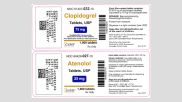
FDA announces recall of 2 cardiovascular medications due to labeling mix-up

Patients face a risk of adverse events if they mistakenly take the wrong medication, according to a new warning from the FDA. 

READ MORE >
FDA recall. The medications involved are atenolol, which treats hypertension, and the antiplatelet agent clopidogrel, which reduces the risk of an acute myocardial infarction (AMI) or stroke among patients with a history of AMI, severe chest pain or circulation problems.
Share on Twitter Share on Facebook Share on Linkedin

FDA announces recall of 2 cardiovascular medications due to labeling mix-up

Share on Twitter Share on Facebook Share on Linkedin
FDA recall. The medications involved are atenolol, which treats hypertension, and the antiplatelet agent clopidogrel, which reduces the risk of an acute myocardial infarction (AMI) or stroke among patients with a history of AMI, severe chest pain or circulation problems.
Patients face a risk of adverse events if they mistakenly take the wrong medication, according to a new warning from the FDA. 
READ MORE >

Why cardiologists and radiologists are choosing cardiac CT over invasive angiography for suspected CAD

"A CT-first strategy allows physicians to provide relevant findings without the need for an invasive procedure," one radiologist explained. 

READ MORE >
Cardiac computed tomography (CCT) is an accurate, noninvasive imaging test that should be a first-line tool when treating patients with obstructive coronary artery disease (CAD), rather than cath lab angiography angiograms, according to new findings published in the New England Journal of Medicine.[1]
Share on Twitter Share on Facebook Share on Linkedin

Why cardiologists and radiologists are choosing cardiac CT over invasive angiography for suspected CAD

Share on Twitter Share on Facebook Share on Linkedin
Cardiac computed tomography (CCT) is an accurate, noninvasive imaging test that should be a first-line tool when treating patients with obstructive coronary artery disease (CAD), rather than cath lab angiography angiograms, according to new findings published in the New England Journal of Medicine.[1]
"A CT-first strategy allows physicians to provide relevant findings without the need for an invasive procedure," one radiologist explained. 
READ MORE >

FDA announces recall of nearly 88,000 implantable cardiac devices due to risk of serious injury or death

The recall is related to short circuit protection (SCP) alerts that were causing the devices to send reduced-energy electric shocks. There have been 27 customer complaints about the issue so far.

READ MORE >
Product Recall
Share on Twitter Share on Facebook Share on Linkedin

FDA announces recall of nearly 88,000 implantable cardiac devices due to risk of serious injury or death

Share on Twitter Share on Facebook Share on Linkedin
Product Recall
The recall is related to short circuit protection (SCP) alerts that were causing the devices to send reduced-energy electric shocks. There have been 27 customer complaints about the issue so far.
READ MORE >

FDA announces a new recall for extended-release metformin due to contamination

The FDA first announced the detection of high levels of NDMA, a contaminant associated with cancer, in extended-release metformin products back in May 2020. 

READ MORE >
medicine-4097308_960_720.jpg
Share on Twitter Share on Facebook Share on Linkedin

FDA announces a new recall for extended-release metformin due to contamination

Share on Twitter Share on Facebook Share on Linkedin
medicine-4097308_960_720.jpg
The FDA first announced the detection of high levels of NDMA, a contaminant associated with cancer, in extended-release metformin products back in May 2020. 
READ MORE >

How taking blood pressure medication can lead to kidney damage

The study's authors noted that patients should keep taking their medications as normal. However, they see a definite need for more research in this area.

READ MORE >
Kidney image. About 80% of chronic kidney disease patients actually die from cardiovascular complications. Although the link between these diseases is well established, the actual biological mechanism involved has not been fully understood. But researchers at Temple University recently uncovered a key piece to this connection, where chronic kidney disease and high-fat diets combine to trigger blood vessel inflammation. Their findings are published online in Redox Biology.[1]
Share on Twitter Share on Facebook Share on Linkedin

How taking blood pressure medication can lead to kidney damage

Share on Twitter Share on Facebook Share on Linkedin
Kidney image. About 80% of chronic kidney disease patients actually die from cardiovascular complications. Although the link between these diseases is well established, the actual biological mechanism involved has not been fully understood. But researchers at Temple University recently uncovered a key piece to this connection, where chronic kidney disease and high-fat diets combine to trigger blood vessel inflammation. Their findings are published online in Redox Biology.[1]
The study's authors noted that patients should keep taking their medications as normal. However, they see a definite need for more research in this area.
READ MORE >

Mike Gabler, a heart valve specialist with Edwards Lifesciences, wins Survivor—and donates his $1M prize

Gabler, a Texas native, has two decades of experience in the cardiology space, spending the last 11 years with Edwards Lifesciences. He has also previously worked for both Medtronic and Boston Scientific.

READ MORE >
Gabler Survivor Heart Valve Specialist TAVR
Share on Twitter Share on Facebook Share on Linkedin

Mike Gabler, a heart valve specialist with Edwards Lifesciences, wins Survivor—and donates his $1M prize

Share on Twitter Share on Facebook Share on Linkedin
Gabler Survivor Heart Valve Specialist TAVR
Gabler, a Texas native, has two decades of experience in the cardiology space, spending the last 11 years with Edwards Lifesciences. He has also previously worked for both Medtronic and Boston Scientific.
READ MORE >

Innovate Healthcare thanks our partners for supporting our newsletters.
Sponsorship has no influence on editorial content.

Interested in reaching our audiences, contact our team

*|LIST:ADDRESSLINE|*

You received this email because you signed up for newsletters from Innovate Healthcare.
Change your preferences or unsubscribe here

Contact Us  |  Unsubscribe from all  |  Privacy Policy

© Innovate Healthcare, a TriMed Media brand
Innovate Healthcare

Recent Newsletters

AI is gaining ground, but clinicians run the show | Siemens Healthineers doubles down | Electrophysiologist compensation
News Alert: FDA shares warning about heart valve tech after patient death
Cardiologist pay & productivity are up | FDA clears PE thrombectomy devices | Cardiology tech in spotlight | Gore's new approval
Cardiology salaries on the rise | The climbing costs of care | M&A trends | Siemens Healthineers, J&J make big business moves
Major MRI trends | Blood thinner recalled | When to perform PCI before TAVR | How to build a CCTA program | Steroids & the heart
CMS boosts coverage for heart failure tech | FDA approves CardioMEMS updates | LVADs linked to strokes, other risks
M&A activity in cardiology: Exploring key trends | Cardiac PET vs. SPECT | Doctors support Medicare covering TAVR for AR
Newsletter archive
  • Home
  • News
  • Article Archive
  • Custom Content
  • Webinars
  • Press Releases
  • Content Studio
  • Advertising
  • Submit Press Release
  • Contact Us
  • Terms of Use
  • Privacy Policy
  • Cardiovascular Business
  • HealthExec
  • Radiology Business
  • Press Releases
  • Submit Press Release
© 2026 Innovate Healthcare | All Rights Reserved. | Terms of Use | Privacy Policy
Design by Adaptive Theme