• Clinical
      |Clinical
    • Acute Coronary Syndromes
    • Cardiac Surgery
    • Covid-19
    • Heart Failure
    • Heart Health
    • Heart Rhythm
    • Hypertension
    • Interventional Cardiology
    • Mitral Valve
    • Pharmaceutics
    • Structural Heart Disease
    • TAVR
    • Tricuspid Valve
    • Vascular & Endovascular
  • Management
      |Management
    • Chest Pain Guidelines
    • Compensation
    • Economics
    • Education & Training
    • Legal News
    • Patient Care
    • Policy & Regulations
    • Professional Associations
    • Quality
    • Revenue
    • Staffing
  • Technology
      |Technology
    • AI
    • Cardiac Imaging
    • Cath Lab
    • CT
    • CVIS
    • ECG
    • Echo
    • EP Lab
    • Informatics
    • MRI
    • Nuclear Cardiology
    • Remote Monitoring
  • Videos
  • Conferences
      |Conferences
    • ACC
    • AHA
    • ASE
    • ASNC
    • ESC
    • EuroPCR
    • HFSA
    • HRS
    • HRS
    • SCAI
    • SCCT
    • SIIM
    • SNMMI
    • STS
    • TCT
    • VIVA
  • Custom Content
      |Custom Content
    • Experience Stories
    • Webinars & Videos
  • Subscribe
  • Forty Under 40 Award
      |Forty Under 40 Award
    • Class of 2026
    • Class of 2025

Search form

Home

News You Need to Know Today
CABG bests PCI for multivessel CAD | Early mortality after transvenous lead removal | Treating TIAs
Monday, January 23, 2023
Link to Twitter Link to Facebook Link to Linkedin Link to Vimeo

Today's News and Trends

CABG bests PCI for multivessel CAD, large new study confirms

"The singular message to the public is that the optimal treatment for multivessel coronary artery disease—to improve not only long-term survival but also lower your risk of complications—is coronary artery bypass surgery," one specialist said in a statement. 

READ MORE >
A study that analyzed patient outcomes in coronary artery bypass grafting (CABG) in veterans showed outcomes for on-pump and off-pump procedures over 10 years to be similar. Photo by Jim Lennon
Share on Twitter Share on Facebook Share on Linkedin

CABG bests PCI for multivessel CAD, large new study confirms

Share on Twitter Share on Facebook Share on Linkedin
A study that analyzed patient outcomes in coronary artery bypass grafting (CABG) in veterans showed outcomes for on-pump and off-pump procedures over 10 years to be similar. Photo by Jim Lennon
"The singular message to the public is that the optimal treatment for multivessel coronary artery disease—to improve not only long-term survival but also lower your risk of complications—is coronary artery bypass surgery," one specialist said in a statement. 
READ MORE >

Infection, heart failure the most common reasons for early mortality after transvenous lead removal

Early mortality specifically related to complications during the TLR procedure was quite rare. 

READ MORE >
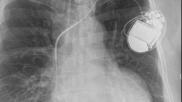
An example if an implantable cardioverter defibrillator (ICD and its leads connected to the heart. As the leads or deveice wears out, there are recommendations to remove the leads and put in new ones. The most common causes of mortality during transvenous lead removal (TLR) in patients with cardiac implantable electronic devices (CIEDs) are infection and decompensated heart failure, according to new research published in JACC: Clinical Electrophysiology.Image courtesy of RSNA
Share on Twitter Share on Facebook Share on Linkedin

Infection, heart failure the most common reasons for early mortality after transvenous lead removal

Share on Twitter Share on Facebook Share on Linkedin
An example if an implantable cardioverter defibrillator (ICD and its leads connected to the heart. As the leads or deveice wears out, there are recommendations to remove the leads and put in new ones. The most common causes of mortality during transvenous lead removal (TLR) in patients with cardiac implantable electronic devices (CIEDs) are infection and decompensated heart failure, according to new research published in JACC: Clinical Electrophysiology.Image courtesy of RSNA
Early mortality specifically related to complications during the TLR procedure was quite rare. 
READ MORE >

AHA: ‘Mini strokes’ need emergency assessment, may require hospitalization

Even if symptoms disappear quickly, a transient ischemic attack can be a major short-term risk indicator.

READ MORE >
Share on Twitter Share on Facebook Share on Linkedin

AHA: ‘Mini strokes’ need emergency assessment, may require hospitalization

Share on Twitter Share on Facebook Share on Linkedin
Even if symptoms disappear quickly, a transient ischemic attack can be a major short-term risk indicator.
READ MORE >

Featured Articles

Cardiologist Martha Gulati named chair of women’s cardiovascular medicine and research at Cedars-Sinai

Gulati, an award-winning cardiologist and author, first joined Cedars-Sinai in 2022. She is also the president of the American Society for Preventive Cardiology.

READ MORE >
Cardiologist Martha Gulati, MD, who specializes in both preventive cardiology and cardiovascular disease in women, has been named the Anita Dann Friedman Endowed Chair in Women’s Cardiovascular Medicine and Research at Cedars-Sinai in Los Angeles.
Share on Twitter Share on Facebook Share on Linkedin

Cardiologist Martha Gulati named chair of women’s cardiovascular medicine and research at Cedars-Sinai

Share on Twitter Share on Facebook Share on Linkedin
Cardiologist Martha Gulati, MD, who specializes in both preventive cardiology and cardiovascular disease in women, has been named the Anita Dann Friedman Endowed Chair in Women’s Cardiovascular Medicine and Research at Cedars-Sinai in Los Angeles.
Gulati, an award-winning cardiologist and author, first joined Cedars-Sinai in 2022. She is also the president of the American Society for Preventive Cardiology.
READ MORE >

An updated look at surgically repairing the mitral valve due to mitral regurgitation

A team of cardiologists and cardiac surgeons collaborated on the new analysis, reviewing data from more than 50,000 patients and developing a new risk model for clinicians.  

READ MORE >
A mitral valve open heart surgical repair.
Share on Twitter Share on Facebook Share on Linkedin

An updated look at surgically repairing the mitral valve due to mitral regurgitation

Share on Twitter Share on Facebook Share on Linkedin
A mitral valve open heart surgical repair.
A team of cardiologists and cardiac surgeons collaborated on the new analysis, reviewing data from more than 50,000 patients and developing a new risk model for clinicians.  
READ MORE >

PCSK9 inhibition may reduce risk of death for patients with severe COVID-19

A JACC pilot study suggests possible benefits for patients with severe cases of COVID-19 infection. 

READ MORE >
covid-19 coronavirus
Share on Twitter Share on Facebook Share on Linkedin

PCSK9 inhibition may reduce risk of death for patients with severe COVID-19

Share on Twitter Share on Facebook Share on Linkedin
covid-19 coronavirus
A JACC pilot study suggests possible benefits for patients with severe cases of COVID-19 infection. 
READ MORE >

In Case You Missed It

Q&A: Discussing TAVR trends with cardiologist Samir Kapadia of Cleveland Clinic

What's next for TAVR? What trends should clinicians be focused on as time goes on? Kapadia shared his perspective in a new interview. 

READ MORE >
Samir Kapadia, MD, Cleveland Clinic, discusses trends and unanswered questions in transcatheter aortic valve replacement (TAVR).
Share on Twitter Share on Facebook Share on Linkedin

Q&A: Discussing TAVR trends with cardiologist Samir Kapadia of Cleveland Clinic

Share on Twitter Share on Facebook Share on Linkedin
Samir Kapadia, MD, Cleveland Clinic, discusses trends and unanswered questions in transcatheter aortic valve replacement (TAVR).
What's next for TAVR? What trends should clinicians be focused on as time goes on? Kapadia shared his perspective in a new interview. 
READ MORE >

VIDEO: Why does COVID-19 damage vascular beds?

Peter Libby, MD, a cardiovascular medicine specialist at Brigham and Women’s Hospital, explains his research into COVID-19 and how it damages the endothelium of blood vessels. 

READ MORE >
Peter Libby, MD, a cardiovascular medicine specialist, Brigham and Women’s Hospital, and Mallinckrodt Professor of Medicine, Harvard Medical School, explains his research into COVID and how damages the endothelium on blood vessels. #AHA #AHA22 #SARSCoV2 #Coronavirus #COVID
Share on Twitter Share on Facebook Share on Linkedin

VIDEO: Why does COVID-19 damage vascular beds?

Share on Twitter Share on Facebook Share on Linkedin
Peter Libby, MD, a cardiovascular medicine specialist, Brigham and Women’s Hospital, and Mallinckrodt Professor of Medicine, Harvard Medical School, explains his research into COVID and how damages the endothelium on blood vessels. #AHA #AHA22 #SARSCoV2 #Coronavirus #COVID
Peter Libby, MD, a cardiovascular medicine specialist at Brigham and Women’s Hospital, explains his research into COVID-19 and how it damages the endothelium of blood vessels. 
READ MORE >

In Other News

Healthcare workers are unhappy with their pay

Just over half of healthcare workers believe they are paid fairly for their work.

READ MORE >
The Anesthesia Patient Safety Foundation (APSF), a related organization of the American Society of Anesthesiologists (ASA), this week released a statement on the criminalization of medical errors. The APSF said criminal prosecution is unjust and counterproductive is healthcare organizations want to find ways to mitigate errors by understanding how they happen and create protocols or IT systems can can help prevent future errors. The criminal trial of nurse RaDonda Vaught was counterproductive to safety.
Share on Twitter Share on Facebook Share on Linkedin

Healthcare workers are unhappy with their pay

Share on Twitter Share on Facebook Share on Linkedin
The Anesthesia Patient Safety Foundation (APSF), a related organization of the American Society of Anesthesiologists (ASA), this week released a statement on the criminalization of medical errors. The APSF said criminal prosecution is unjust and counterproductive is healthcare organizations want to find ways to mitigate errors by understanding how they happen and create protocols or IT systems can can help prevent future errors. The criminal trial of nurse RaDonda Vaught was counterproductive to safety.
Just over half of healthcare workers believe they are paid fairly for their work.
READ MORE >

Most radiology residents want more AI training, but few are getting it

The majority of radiology trainees have expressed interest in furthering their knowledge of artificial intelligence applications in the field, yet few are offered the opportunity to do so during the course of their education, according to new survey data.

READ MORE >
Share on Twitter Share on Facebook Share on Linkedin

Most radiology residents want more AI training, but few are getting it

Share on Twitter Share on Facebook Share on Linkedin
The majority of radiology trainees have expressed interest in furthering their knowledge of artificial intelligence applications in the field, yet few are offered the opportunity to do so during the course of their education, according to new survey data.
READ MORE >

Innovate Healthcare thanks our partners for supporting our newsletters.
Sponsorship has no influence on editorial content.

Interested in reaching our audiences, contact our team

*|LIST:ADDRESSLINE|*

You received this email because you signed up for newsletters from Innovate Healthcare.
Change your preferences or unsubscribe here

Contact Us  |  Unsubscribe from all  |  Privacy Policy

© Innovate Healthcare, a TriMed Media brand
Innovate Healthcare

Recent Newsletters

AI is gaining ground, but clinicians run the show | Siemens Healthineers doubles down | Electrophysiologist compensation
News Alert: FDA shares warning about heart valve tech after patient death
Cardiologist pay & productivity are up | FDA clears PE thrombectomy devices | Cardiology tech in spotlight | Gore's new approval
Cardiology salaries on the rise | The climbing costs of care | M&A trends | Siemens Healthineers, J&J make big business moves
Major MRI trends | Blood thinner recalled | When to perform PCI before TAVR | How to build a CCTA program | Steroids & the heart
CMS boosts coverage for heart failure tech | FDA approves CardioMEMS updates | LVADs linked to strokes, other risks
M&A activity in cardiology: Exploring key trends | Cardiac PET vs. SPECT | Doctors support Medicare covering TAVR for AR
Newsletter archive
  • Home
  • News
  • Article Archive
  • Custom Content
  • Webinars
  • Press Releases
  • Content Studio
  • Advertising
  • Submit Press Release
  • Contact Us
  • Terms of Use
  • Privacy Policy
  • Cardiovascular Business
  • HealthExec
  • Radiology Business
  • Press Releases
  • Submit Press Release
© 2026 Innovate Healthcare | All Rights Reserved. | Terms of Use | Privacy Policy
Design by Adaptive Theme