• Clinical
      |Clinical
    • Acute Coronary Syndromes
    • Cardiac Surgery
    • Covid-19
    • Heart Failure
    • Heart Health
    • Heart Rhythm
    • Hypertension
    • Interventional Cardiology
    • Mitral Valve
    • Pharmaceutics
    • Structural Heart Disease
    • TAVR
    • Tricuspid Valve
    • Vascular & Endovascular
  • Management
      |Management
    • Chest Pain Guidelines
    • Compensation
    • Economics
    • Education & Training
    • Legal News
    • Patient Care
    • Policy & Regulations
    • Professional Associations
    • Quality
    • Revenue
    • Staffing
  • Technology
      |Technology
    • AI
    • Cardiac Imaging
    • Cath Lab
    • CT
    • CVIS
    • ECG
    • Echo
    • EP Lab
    • Informatics
    • MRI
    • Nuclear Cardiology
    • Remote Monitoring
  • Videos
  • Conferences
      |Conferences
    • ACC
    • AHA
    • ASE
    • ASNC
    • ESC
    • EuroPCR
    • HFSA
    • HRS
    • HRS
    • SCAI
    • SCCT
    • SIIM
    • SNMMI
    • STS
    • TCT
    • VIVA
  • Custom Content
      |Custom Content
    • Experience Stories
    • Webinars & Videos
  • Subscribe
  • Forty Under 40 Award
      |Forty Under 40 Award
    • Class of 2026
    • Class of 2025

Search form

Home

News You Need to Know Today
Imaging Highlights: Heart inflammation & long COVID | Cardiac POCUS in pediatric patients
Tuesday, March 21, 2023
Link to Twitter Link to Facebook Link to Linkedin Link to Vimeo

Editor's Choice: Cardiac Imaging

Heart inflammation remains 2 months later in some patients with COVID-19 vaccine-related myocarditis

A team of cardiologists and radiologists collaborated on the study, using advanced imaging to take a closer look at the long-term impact of vaccination. 

READ MORE >
COVID-19 vaccine vaccination myocarditis heart damage inflammation RSNA imaging radiology cardiology
Share on Twitter Share on Facebook Share on Linkedin

Heart inflammation remains 2 months later in some patients with COVID-19 vaccine-related myocarditis

Share on Twitter Share on Facebook Share on Linkedin
COVID-19 vaccine vaccination myocarditis heart damage inflammation RSNA imaging radiology cardiology
A team of cardiologists and radiologists collaborated on the study, using advanced imaging to take a closer look at the long-term impact of vaccination. 
READ MORE >

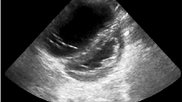
New ASE guidance examines cardiac POCUS in children

The recommendations were developed by a writing group comprised of experts from different specialties, offering an array of perspectives and approaches.

READ MORE >
A figure from the ASE pediatric POCUS guidelines showing parasternal short-axis view demonstrating RV dilatation with bowing of the septum into the left ventricle, indicating pulmonary hypertension in this child with shock and pertussis.
Share on Twitter Share on Facebook Share on Linkedin

New ASE guidance examines cardiac POCUS in children

Share on Twitter Share on Facebook Share on Linkedin
A figure from the ASE pediatric POCUS guidelines showing parasternal short-axis view demonstrating RV dilatation with bowing of the septum into the left ventricle, indicating pulmonary hypertension in this child with shock and pertussis.
The recommendations were developed by a writing group comprised of experts from different specialties, offering an array of perspectives and approaches.
READ MORE >

PHOTO GALLERY: ACC.23 in New Orleans

Browse a selection of photos from the American College of Cardiology's annual meeting in New Orleans. The pictures highlight key moments, new technologies and much more from the big show. 

READ MORE >
Example of an FFR-angio image-derived hemodynamic flow model performed tableside in the cath lab reconstructed using three different C-arm contract image acquisitions. This technology from CathWorks, which was recently acquired by Medtronic, can eliminate the need for pressure wires and adenosine to assess FFR pressures. These measurements are used to determine the hemodynamic significance of a stenosis and determine if a stent is necessary or if a patient can be treated medically.
Share on Twitter Share on Facebook Share on Linkedin

PHOTO GALLERY: ACC.23 in New Orleans

Share on Twitter Share on Facebook Share on Linkedin
Example of an FFR-angio image-derived hemodynamic flow model performed tableside in the cath lab reconstructed using three different C-arm contract image acquisitions. This technology from CathWorks, which was recently acquired by Medtronic, can eliminate the need for pressure wires and adenosine to assess FFR pressures. These measurements are used to determine the hemodynamic significance of a stenosis and determine if a stent is necessary or if a patient can be treated medically.
Browse a selection of photos from the American College of Cardiology's annual meeting in New Orleans. The pictures highlight key moments, new technologies and much more from the big show. 
READ MORE >

Regulatory Roundup: FDA clears 2 new solutions, declines to approve omecamtiv mecarbil for HFrEF

Read our monthly recap of FDA-related news items from the world of cardiovascular medicine. 

READ MORE >
The Millipede 088 Access Catheter. Image courtesy of Perfuze. FDA clearance.
Share on Twitter Share on Facebook Share on Linkedin

Regulatory Roundup: FDA clears 2 new solutions, declines to approve omecamtiv mecarbil for HFrEF

Share on Twitter Share on Facebook Share on Linkedin
The Millipede 088 Access Catheter. Image courtesy of Perfuze. FDA clearance.
Read our monthly recap of FDA-related news items from the world of cardiovascular medicine. 
READ MORE >

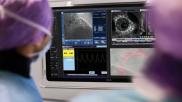
ACC urges all interventional cardiologists to use intravascular imaging during PCI

New recommendations from the American College of Cardiology detail how intravascular imaging can help clinicians before, during and after PCI procedures. 

READ MORE >
The ACC released a new guideline asking interventional cardiologists to use intravascular imaging to improve outcomes in percutaneous coronary intervention (PCI). Intravascular ultrasound (IVUS) is a catheter-based imaging technology that allows physicians to visualize blood vessels from the inside out. Image courtesy of Philips. 
Share on Twitter Share on Facebook Share on Linkedin

ACC urges all interventional cardiologists to use intravascular imaging during PCI

Share on Twitter Share on Facebook Share on Linkedin
The ACC released a new guideline asking interventional cardiologists to use intravascular imaging to improve outcomes in percutaneous coronary intervention (PCI). Intravascular ultrasound (IVUS) is a catheter-based imaging technology that allows physicians to visualize blood vessels from the inside out. Image courtesy of Philips. 
New recommendations from the American College of Cardiology detail how intravascular imaging can help clinicians before, during and after PCI procedures. 
READ MORE >

In Case You Missed It

Cardiac imagers need to understand AI as it enters clinical use and ACC guidelines

Most FDA-cleared AI algorithms are related to radiology and cardiology, meaning radiologists and cardiologists need to make an effort to learn how these technologies work.

READ MORE >
Ed Nicol, MD, consultant cardiologist and honorary senior clinical lecturer with Kings College London and president-elect of the Society of Cardiovascular Computed Tomography (SCCT), explained artificial intelligence (AI) in cardiac CT is here to stay and its use is expanding. He noted that one AI-based algorithm is already included in recent cardiology guidelines and more will likely follow. #SCCT
Share on Twitter Share on Facebook Share on Linkedin

Cardiac imagers need to understand AI as it enters clinical use and ACC guidelines

Share on Twitter Share on Facebook Share on Linkedin
Ed Nicol, MD, consultant cardiologist and honorary senior clinical lecturer with Kings College London and president-elect of the Society of Cardiovascular Computed Tomography (SCCT), explained artificial intelligence (AI) in cardiac CT is here to stay and its use is expanding. He noted that one AI-based algorithm is already included in recent cardiology guidelines and more will likely follow. #SCCT
Most FDA-cleared AI algorithms are related to radiology and cardiology, meaning radiologists and cardiologists need to make an effort to learn how these technologies work.
READ MORE >

Can intracardiac echo replace TEE during structural heart procedures?

TEE has been used to guide most transcatheter structural heart cases over the past decade, but 3D ICE is changing how some centers image those patients. 

READ MORE >
A 3D intracardiac echo (ICE) view of a surgical mitral valve using the NuVision ultrasound catheter developed by Biosense Webster in partnership with GE Healthcare.
Share on Twitter Share on Facebook Share on Linkedin

Can intracardiac echo replace TEE during structural heart procedures?

Share on Twitter Share on Facebook Share on Linkedin
A 3D intracardiac echo (ICE) view of a surgical mitral valve using the NuVision ultrasound catheter developed by Biosense Webster in partnership with GE Healthcare.
TEE has been used to guide most transcatheter structural heart cases over the past decade, but 3D ICE is changing how some centers image those patients. 
READ MORE >

Innovate Healthcare thanks our partners for supporting our newsletters.
Sponsorship has no influence on editorial content.

Interested in reaching our audiences, contact our team

*|LIST:ADDRESSLINE|*

You received this email because you signed up for newsletters from Innovate Healthcare.
Change your preferences or unsubscribe here

Contact Us  |  Unsubscribe from all  |  Privacy Policy

© Innovate Healthcare, a TriMed Media brand
Innovate Healthcare

Recent Newsletters

AI is gaining ground, but clinicians run the show | Siemens Healthineers doubles down | Electrophysiologist compensation
News Alert: FDA shares warning about heart valve tech after patient death
Cardiologist pay & productivity are up | FDA clears PE thrombectomy devices | Cardiology tech in spotlight | Gore's new approval
Cardiology salaries on the rise | The climbing costs of care | M&A trends | Siemens Healthineers, J&J make big business moves
Major MRI trends | Blood thinner recalled | When to perform PCI before TAVR | How to build a CCTA program | Steroids & the heart
CMS boosts coverage for heart failure tech | FDA approves CardioMEMS updates | LVADs linked to strokes, other risks
M&A activity in cardiology: Exploring key trends | Cardiac PET vs. SPECT | Doctors support Medicare covering TAVR for AR
Newsletter archive
  • Home
  • News
  • Article Archive
  • Custom Content
  • Webinars
  • Press Releases
  • Content Studio
  • Advertising
  • Submit Press Release
  • Contact Us
  • Terms of Use
  • Privacy Policy
  • Cardiovascular Business
  • HealthExec
  • Radiology Business
  • Press Releases
  • Submit Press Release
© 2026 Innovate Healthcare | All Rights Reserved. | Terms of Use | Privacy Policy
Design by Adaptive Theme