• Clinical
      |Clinical
    • Acute Coronary Syndromes
    • Cardiac Surgery
    • Covid-19
    • Heart Failure
    • Heart Health
    • Heart Rhythm
    • Hypertension
    • Interventional Cardiology
    • Mitral Valve
    • Pharmaceutics
    • Structural Heart Disease
    • TAVR
    • Tricuspid Valve
    • Vascular & Endovascular
  • Management
      |Management
    • Chest Pain Guidelines
    • Compensation
    • Economics
    • Education & Training
    • Legal News
    • Patient Care
    • Policy & Regulations
    • Professional Associations
    • Quality
    • Revenue
    • Staffing
  • Technology
      |Technology
    • AI
    • Cardiac Imaging
    • Cath Lab
    • CT
    • CVIS
    • ECG
    • Echo
    • EP Lab
    • Informatics
    • MRI
    • Nuclear Cardiology
    • Remote Monitoring
  • Videos
  • Conferences
      |Conferences
    • ACC
    • AHA
    • ASE
    • ASNC
    • ESC
    • EuroPCR
    • HFSA
    • HRS
    • HRS
    • SCAI
    • SCCT
    • SIIM
    • SNMMI
    • STS
    • TCT
    • VIVA
  • Custom Content
      |Custom Content
    • Experience Stories
    • Webinars & Videos
  • Subscribe
  • Forty Under 40 Award
      |Forty Under 40 Award
    • Class of 2026
    • Class of 2025

Search form

Home

News You Need to Know Today
Safety a priority as care evolves | TAVR vs. SAVR | AHA registry makes an impact | CoreMap raises $37M | Assessing genetic risk
Friday, July 31, 2026
Link to Twitter Link to Facebook Link to Linkedin Link to Vimeo

Today's News and Trends

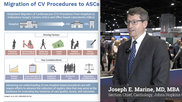
Safety a top priority as more heart procedures move to outpatient settings

The push to move certain procedures to ambulatory surgical centers is one of the biggest business trends in electrophysiology. Medical societies are watching this space closely to ensure high quality remains the goal.

READ MORE >
Video interview with Joseph E. Marine, MD, MBA, Vice-Director of Operations, Division of Cardiology, Section Chief of Cardiology, Johns Hopkins Community Physicians, and Professor of Medicine at Johns Hopkins University, explains the growing trend of using ambulatory surgical centers (ASCs) for cardiac and electrophysiology (EP) procedures.
Share on Twitter Share on Facebook Share on Linkedin

Safety a top priority as more heart procedures move to outpatient settings

Share on Twitter Share on Facebook Share on Linkedin
Video interview with Joseph E. Marine, MD, MBA, Vice-Director of Operations, Division of Cardiology, Section Chief of Cardiology, Johns Hopkins Community Physicians, and Professor of Medicine at Johns Hopkins University, explains the growing trend of using ambulatory surgical centers (ASCs) for cardiac and electrophysiology (EP) procedures.
The push to move certain procedures to ambulatory surgical centers is one of the biggest business trends in electrophysiology. Medical societies are watching this space closely to ensure high quality remains the goal.
READ MORE >

New PARTNER 3 update links TAVR to early benefits over SAVR

Low-risk patients face comparable outcomes after TAVR and SAVR, researchers wrote, making it important to highlight even the smallest differences between these two approaches. 

READ MORE >
elderly patient and doctor
Share on Twitter Share on Facebook Share on Linkedin

New PARTNER 3 update links TAVR to early benefits over SAVR

Share on Twitter Share on Facebook Share on Linkedin
elderly patient and doctor
Low-risk patients face comparable outcomes after TAVR and SAVR, researchers wrote, making it important to highlight even the smallest differences between these two approaches. 
READ MORE >

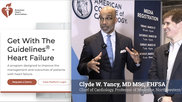
AHA heart failure registry making a major impact after 20 years

The registry has collected more than 1.6 million patient records from more than 800 hospitals. "We can do even better," one cardiologist said. "We have to treat heart failure with everything we've got."

READ MORE >
Video: Clyde W. Yancy, MD MSc, FHFSA, chief of cardiology and professor of medicine at Northwestern University, and Stephen Greene, MD, a heart failure cardiologist and professor of medicine at Duke University Medical Center, discuss the milestone of collecting 20 years of data from the American Heart Association (AHA) Get With the Guidelines for Heart Failure program.
Share on Twitter Share on Facebook Share on Linkedin

AHA heart failure registry making a major impact after 20 years

Share on Twitter Share on Facebook Share on Linkedin
Video: Clyde W. Yancy, MD MSc, FHFSA, chief of cardiology and professor of medicine at Northwestern University, and Stephen Greene, MD, a heart failure cardiologist and professor of medicine at Duke University Medical Center, discuss the milestone of collecting 20 years of data from the American Heart Association (AHA) Get With the Guidelines for Heart Failure program.
The registry has collected more than 1.6 million patient records from more than 800 hospitals. "We can do even better," one cardiologist said. "We have to treat heart failure with everything we've got."
READ MORE >

Medtronic leads $37M investment in CoreMap’s AFib mapping tech

The company's flagship technology was invented by Peter Spector, MD, a practicing electrophysiologist. It uses advanced electrodes to visualize details of AFib typically missed by other mapping systems.

READ MORE >
money capital dollar business loan funds
Share on Twitter Share on Facebook Share on Linkedin

Medtronic leads $37M investment in CoreMap’s AFib mapping tech

Share on Twitter Share on Facebook Share on Linkedin
money capital dollar business loan funds
The company's flagship technology was invented by Peter Spector, MD, a practicing electrophysiologist. It uses advanced electrodes to visualize details of AFib typically missed by other mapping systems.
READ MORE >

Cleerly and Allelica launch a new tool for assessing genetic risk in heart patients

The new test is designed to be used on its own or in tandem with Cleerly’s AI-powered CCTA evaluations. 

READ MORE >
A majority of medical devices involved in Class I recalls were never required by the U.S. Food and Drug Administration (FDA) to undergo premarket or postmarket clinical testing, according to new research published in Annals of Internal Medicine.[1]
Share on Twitter Share on Facebook Share on Linkedin

Cleerly and Allelica launch a new tool for assessing genetic risk in heart patients

Share on Twitter Share on Facebook Share on Linkedin
A majority of medical devices involved in Class I recalls were never required by the U.S. Food and Drug Administration (FDA) to undergo premarket or postmarket clinical testing, according to new research published in Annals of Internal Medicine.[1]
The new test is designed to be used on its own or in tandem with Cleerly’s AI-powered CCTA evaluations. 
READ MORE >

Featured Articles

Custom blood vessel grafts in minutes? Harvard engineers share vision of the future

Researchers have developed a new way to craft custom synthetic vascular grafts for patients in need of immediate care. The technique has shown early potential to be a game-changer for cardiovascular care. 

READ MORE >
Bioengineers from Harvard have developed a new way to craft custom synthetic vascular grafts in a matter of a minutes. The group shared its findings in Advanced Materials, highlighting the potential to provide on-demand care for patients in need.
Share on Twitter Share on Facebook Share on Linkedin

Custom blood vessel grafts in minutes? Harvard engineers share vision of the future

Share on Twitter Share on Facebook Share on Linkedin
Bioengineers from Harvard have developed a new way to craft custom synthetic vascular grafts in a matter of a minutes. The group shared its findings in Advanced Materials, highlighting the potential to provide on-demand care for patients in need.
Researchers have developed a new way to craft custom synthetic vascular grafts for patients in need of immediate care. The technique has shown early potential to be a game-changer for cardiovascular care. 
READ MORE >

Man who killed family in murder-suicide was a former American Heart Association employee

Authorities believe a 47-year-old Michigan man killed his wife and six children before taking his own life. "This is an unspeakable tragedy that we may never completely understand,” one official said. 

READ MORE >
Gunman kills 4, including his former doctor, in Oklahoma hospital shooting.
Share on Twitter Share on Facebook Share on Linkedin

Man who killed family in murder-suicide was a former American Heart Association employee

Share on Twitter Share on Facebook Share on Linkedin
Gunman kills 4, including his former doctor, in Oklahoma hospital shooting.
Authorities believe a 47-year-old Michigan man killed his wife and six children before taking his own life. "This is an unspeakable tragedy that we may never completely understand,” one official said. 
READ MORE >

FDA authorizes first AI tech for visualizing coronary inflammation in CT scans

Cardiac imaging experts have been excited about this technology for quite some time. The belief is that it could help transform how clinicians evaluate cardiovascular risk. 

READ MORE >
Fat attenuation index (FAI) CT imaging of coronary artery fat can show inflammation in the vessel walls and shows the residual risk of heart attacks.
Share on Twitter Share on Facebook Share on Linkedin

FDA authorizes first AI tech for visualizing coronary inflammation in CT scans

Share on Twitter Share on Facebook Share on Linkedin
Fat attenuation index (FAI) CT imaging of coronary artery fat can show inflammation in the vessel walls and shows the residual risk of heart attacks.
Cardiac imaging experts have been excited about this technology for quite some time. The belief is that it could help transform how clinicians evaluate cardiovascular risk. 
READ MORE >

Enzyme ratio could help cardiologists track risk of stroke, AFib after TAVR

The De Ritis ratio could be a new way to anticipate when TAVR patients may face certain short-term risks after treatment.

READ MORE >
Blood Test Lab. A multidisciplinary panel recently published recommendations in the Journal of Pediatrics to promote early identification of children living with familial hypercholesterolemia (FH) through blood testing to better detect and prevent early onset cardiovascular disease.
Share on Twitter Share on Facebook Share on Linkedin

Enzyme ratio could help cardiologists track risk of stroke, AFib after TAVR

Share on Twitter Share on Facebook Share on Linkedin
Blood Test Lab. A multidisciplinary panel recently published recommendations in the Journal of Pediatrics to promote early identification of children living with familial hypercholesterolemia (FH) through blood testing to better detect and prevent early onset cardiovascular disease.
The De Ritis ratio could be a new way to anticipate when TAVR patients may face certain short-term risks after treatment.
READ MORE >

In Case You Missed It

Does cannabis use cause heart disease? The evidence is mixed, but cardiologists urge caution

Data on the potential relationship between cannabis use and CVD remain mixed. For now, however, there is enough evidence available that heart patients should be careful. 

READ MORE >
Marijuana use among older adults is associated with a heightened risk of atrial and ventricular arrhythmias, according to new research published in the American Journal of Cardiology. “Marijuana use increases sympathetic nervous system activity and inhibits cardiac parasympathetic innervation, resulting in elevated heart rate, elevated blood pressure, and an increase in myocardial oxygen demand.
Share on Twitter Share on Facebook Share on Linkedin

Does cannabis use cause heart disease? The evidence is mixed, but cardiologists urge caution

Share on Twitter Share on Facebook Share on Linkedin
Marijuana use among older adults is associated with a heightened risk of atrial and ventricular arrhythmias, according to new research published in the American Journal of Cardiology. “Marijuana use increases sympathetic nervous system activity and inhibits cardiac parasympathetic innervation, resulting in elevated heart rate, elevated blood pressure, and an increase in myocardial oxygen demand.
Data on the potential relationship between cannabis use and CVD remain mixed. For now, however, there is enough evidence available that heart patients should be careful. 
READ MORE >

GLP-1 drugs linked to long-term benefits for PAD patients

PAD patients treated with GLP-1 receptor agonists lived longer, stayed out of the hospital more and experienced fewer amputations than those given metformin.

READ MORE >
Doctor patient
Share on Twitter Share on Facebook Share on Linkedin

GLP-1 drugs linked to long-term benefits for PAD patients

Share on Twitter Share on Facebook Share on Linkedin
Doctor patient
PAD patients treated with GLP-1 receptor agonists lived longer, stayed out of the hospital more and experienced fewer amputations than those given metformin.
READ MORE >

Acute kidney injury after TAVR: Simple biomarker helps cardiologists identify high-risk patients

The CALLY index, a biomarker that examines systemic inflammation, immune system activity and nutrition, could provide care teams with significant value.

READ MORE >
acute kidney injury after TAVR
Share on Twitter Share on Facebook Share on Linkedin

Acute kidney injury after TAVR: Simple biomarker helps cardiologists identify high-risk patients

Share on Twitter Share on Facebook Share on Linkedin
acute kidney injury after TAVR
The CALLY index, a biomarker that examines systemic inflammation, immune system activity and nutrition, could provide care teams with significant value.
READ MORE >

In Other News

Bill Gates-backed radiopharma company donates critical isotopes

The announcement comes just months after the company broke ground on what is soon to be the world’s largest manufacturing site of Ac-225.

READ MORE >
Share on Twitter Share on Facebook Share on Linkedin

Bill Gates-backed radiopharma company donates critical isotopes

Share on Twitter Share on Facebook Share on Linkedin
The announcement comes just months after the company broke ground on what is soon to be the world’s largest manufacturing site of Ac-225.
READ MORE >

Employment or autonomy? Comparing pathways and tradeoffs for PCPs

Primary care physicians who are on the payrolls of hospitals and health systems enjoy well-supported practice infrastructure and robust peer engagement. But they’re sometimes vexed by red tape and style-cramping oversight. Meanwhile independent PCPs … 

READ MORE >
primary care provider clinician physician doctor
Share on Twitter Share on Facebook Share on Linkedin

Employment or autonomy? Comparing pathways and tradeoffs for PCPs

Share on Twitter Share on Facebook Share on Linkedin
primary care provider clinician physician doctor
Primary care physicians who are on the payrolls of hospitals and health systems enjoy well-supported practice infrastructure and robust peer engagement. But they’re sometimes vexed by red tape and style-cramping oversight. Meanwhile independent PCPs … 
READ MORE >

Innovate Healthcare thanks our partners for supporting our newsletters.
Sponsorship has no influence on editorial content.

Interested in reaching our audiences, contact our team

*|LIST:ADDRESSLINE|*

You received this email because you signed up for newsletters from Innovate Healthcare.
Change your preferences or unsubscribe here

Contact Us  |  Unsubscribe from all  |  Privacy Policy

© Innovate Healthcare, a TriMed Media brand
Innovate Healthcare

Recent Newsletters

AI is gaining ground, but clinicians run the show | Siemens Healthineers doubles down | Electrophysiologist compensation
News Alert: FDA shares warning about heart valve tech after patient death
Cardiologist pay & productivity are up | FDA clears PE thrombectomy devices | Cardiology tech in spotlight | Gore's new approval
Cardiology salaries on the rise | The climbing costs of care | M&A trends | Siemens Healthineers, J&J make big business moves
Major MRI trends | Blood thinner recalled | When to perform PCI before TAVR | How to build a CCTA program | Steroids & the heart
CMS boosts coverage for heart failure tech | FDA approves CardioMEMS updates | LVADs linked to strokes, other risks
M&A activity in cardiology: Exploring key trends | Cardiac PET vs. SPECT | Doctors support Medicare covering TAVR for AR
Newsletter archive
  • Home
  • News
  • Article Archive
  • Custom Content
  • Webinars
  • Press Releases
  • Content Studio
  • Advertising
  • Submit Press Release
  • Contact Us
  • Terms of Use
  • Privacy Policy
  • Cardiovascular Business
  • HealthExec
  • Radiology Business
  • Press Releases
  • Submit Press Release
© 2026 Innovate Healthcare | All Rights Reserved. | Terms of Use | Privacy Policy
Design by Adaptive Theme
Trimed Popup