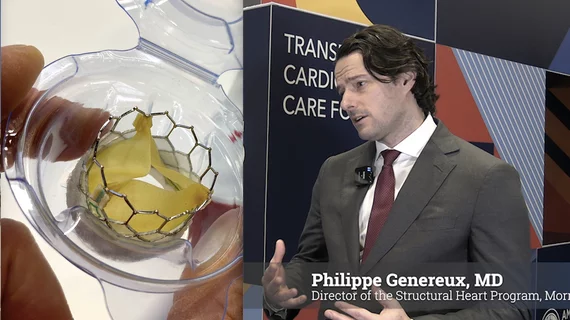
Philippe Genereux, MD, principal investigator of EARLY TAVR, presented new data at ACC.25 showing intervening early on crossover patients with asymptomatic severe aortic stenosis led to better outcomes and a reduced stroke rate.
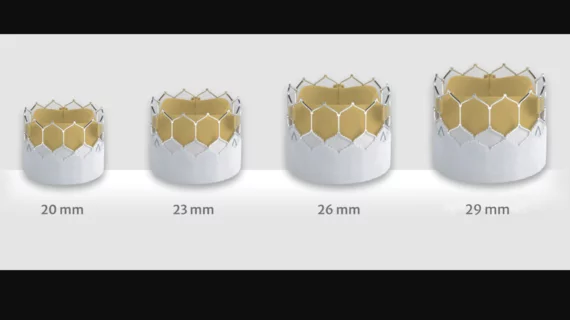
The Sapien 3 Ultra Resilia TAVR valve is available in multiple sizes. Images courtesy of Edwards Lifesciences.
The FDA has approved the balloon-expandable Sapien 3 TAVR platform from Edwards Lifesciences for treating asymptomatic severe aortic stenosis. This is the first time the agency has approved any TAVR technology to be used in asymptomatic patients.
Despite newly implemented tariffs, the manufacturer says it was profitable in Q1 of 2025, but a greater impact on its operations looms later this year.
The study's authors reviewed CCTA imaging results taken before and after radiotherapy, evaluating each image for signs of coronary calcification and inflammation.
Patient outcomes do not appear to be negatively impacted by these risks, researchers noted. The new data were presented at Heart Rhythm 2025 and published in JACC: Clinical Electrophysiology.
Researchers explored the potential impact of more than 100 risk factors on a person's risk of sudden cardiac arrest. Some of their findings were what you may expect, but others were much more surprising.
Partho Sengupta, MD, shared his perspective on the current state of artificial intelligence in cardiology. The technology continues to evolve, he said, though it does still face certain limitations.
New data published in JACC represents another big win for Bayer's finerenone. The drug has previously been linked to cardiovascular benefits for patients with CKD and heart failure, but its potential across the full CKM spectrum remained a bit of a mystery.