• Clinical
      |Clinical
    • Acute Coronary Syndromes
    • Cardiac Surgery
    • Covid-19
    • Heart Failure
    • Heart Health
    • Heart Rhythm
    • Hypertension
    • Interventional Cardiology
    • Mitral Valve
    • Pharmaceutics
    • Structural Heart Disease
    • TAVR
    • Tricuspid Valve
    • Vascular & Endovascular
  • Management
      |Management
    • Chest Pain Guidelines
    • Compensation
    • Economics
    • Education & Training
    • Legal News
    • Patient Care
    • Policy & Regulations
    • Professional Associations
    • Quality
    • Revenue
    • Staffing
  • Technology
      |Technology
    • AI
    • Cardiac Imaging
    • Cath Lab
    • CT
    • CVIS
    • ECG
    • Echo
    • EP Lab
    • Informatics
    • MRI
    • Nuclear Cardiology
    • Remote Monitoring
  • Videos
  • Conferences
      |Conferences
    • ACC
    • AHA
    • ASE
    • ASNC
    • ESC
    • EuroPCR
    • HFSA
    • HRS
    • HRS
    • SCAI
    • SCCT
    • SIIM
    • SNMMI
    • STS
    • TCT
    • VIVA
  • Custom Content
      |Custom Content
    • Experience Stories
    • Webinars & Videos
  • Subscribe
  • Forty Under 40 Award
      |Forty Under 40 Award
    • Class of 2026
    • Class of 2025

Search form

Home

Work-life balance chief concern among medical residents

Achieving an ideal work-life balance is the toughest challenge faced by medical residents, according to a Medscape survey featuring responses from more than 1,900 residents.

  • Read more about Work-life balance chief concern among medical residents

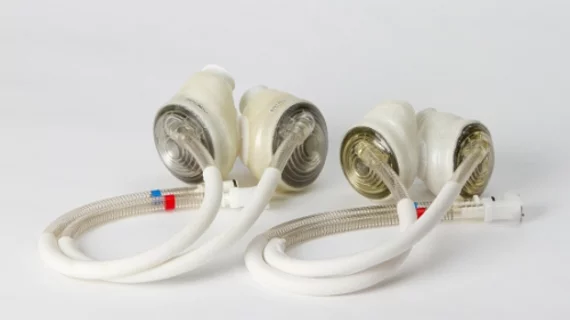
FDA: Temporary artificial heart linked to excess mortality, stroke risk

The FDA on Aug. 17 sent a letter warning cardiologists about high mortality and stroke rates associated with the Temporary Total Artificial Heart (TAH-t) Companion 2 Driver System during a post-approval study.

  • Read more about FDA: Temporary artificial heart linked to excess mortality, stroke risk

Blacks, women less likely to get recommended echocardiograms

Patients with valvular heart disease were significantly less likely to receive transthoracic echocardiograms (TTEs) within guideline-recommended timeframes if they were women, black, older or used Medicaid insurance, according to a single-center study published in JACC: Cardiovascular Imaging.

  • Read more about Blacks, women less likely to get recommended echocardiograms

Can grip strength predict a child’s future cardiovascular health?

childrens-health-doctors_thumb.jpg

A study published in Pediatrics suggests adolescent muscle weakness measured by grip strength is a predictor of unhealthy outcomes, including cardiovascular and metabolic diseases.

  • Read more about Can grip strength predict a child’s future cardiovascular health?

Stroke patients have better chances of survival at teaching hospitals

stroke

New research published in the Journal of the American Medical Association suggests stroke patients receive better care at teaching hospitals and have reduced rates of readmission during the early stages of their recovery.

  • Read more about Stroke patients have better chances of survival at teaching hospitals

NYU to offer full-tuition scholarships to all medical students

Manhattan, New York

New York University School of Medicine will cover tuition expenses for all new and current medical students, according to an Aug. 16 university release. The scholarship initiative, the first such program at a top-10 medical school, will cover $55,000 in costs for all students in the MD program.

  • Read more about NYU to offer full-tuition scholarships to all medical students

Hospitals—large and small—battle it out over TAVR

Transcatheter aortic valve replacement (TAVR) has provided relief to thousands of Americans who suffer from leaky heart valves and are too frail to undergo open-heart surgery. But policy and business considerations behind TAVR has large and small hospitals fighting over who will perform the procedures.

  • Read more about Hospitals—large and small—battle it out over TAVR

Researchers find 4 factors to predict continued bleeding after ICH

New research published in The Lancet Neurology suggests four factors can help physicians predict whether intracerebral hemorrhage (ICH) patients are likely to experience further bleeding.

  • Read more about Researchers find 4 factors to predict continued bleeding after ICH

Study: CVD in type 2 diabetics can be reduced or eliminated

Patients with type 2 diabetes (T2D), who met target ranges for five particular cardiovascular risk factors, appeared to have little or no excess risk of death, myocardial infarction (MI) or stroke, according to a new study published Aug. 16 in the New England Journal of Medicine.

  • Read more about Study: CVD in type 2 diabetics can be reduced or eliminated

Genetic aversion to metabolize fructose may ward off obesity, diabetes

doctor.jpg

People with essential fructosuria, a rare genetic mutation, don’t have the enzyme needed to metabolize fructose, found in honey, fruits and vegetables. The benefit? Little to no risk of developing obesity or type 2 diabetes, reports Bloomberg.

  • Read more about Genetic aversion to metabolize fructose may ward off obesity, diabetes

Pagination

    • First page « First
    • Previous page ‹ Previous
    • Page …748
    • Page 749
    • Page 750
    • Page 751
    • Current page 752
    • Page 753
    • Page 754
    • Page 755
    • Page 756 …
    • Next page Next ›
    • Last page Last »
Subscribe
  • Home
  • News
  • Article Archive
  • Custom Content
  • Webinars
  • Press Releases
  • Content Studio
  • Advertising
  • Submit Press Release
  • Contact Us
  • Terms of Use
  • Privacy Policy
  • Cardiovascular Business
  • HealthExec
  • Radiology Business
 
© 2026 Innovate Healthcare | All Rights Reserved. | Terms of Use | Privacy Policy
 
Design by Adaptive Theme