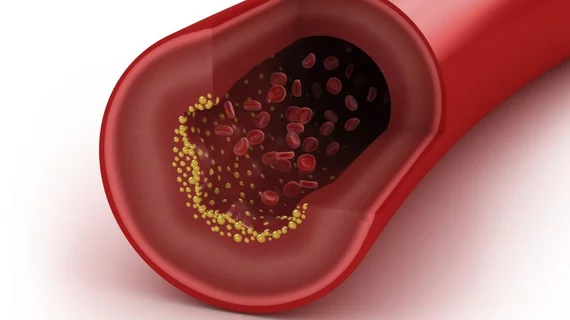
A new study published in the European Heart Journal suggests a particular quality of LDL cholesterol—not just the concentration of it—influences a patient’s risk of cardiovascular disease.
The more a person smokes, the greater the risk of developing a heart rhythm disorder, according to a new study published July 11 in the European Journal of Preventive Cardiology.
The FDA has approved the third generation of the MitraClip, which treats mitral regurgitation without open-heart surgery, device manufacturer Abbott announced July 12.
A new survey from University of Utah Health revealed that most physicians feel responsible for educating patients about the cost of care but don’t believe they should be held accountable for it.
For decades, cardiologists have insisted patients take it easy after a heart attack—but younger physicians believe in encouraging patients be active, and even run, because exercise decreases the chances of a subsequent cardiac event.
DUBLIN — July 12, 2018 — Medtronic plc (NYSE:MDT) today announced U.S. Food and Drug Administration (FDA) labeling expansion for the Medtronic SelectSecure(TM) MRI SureScan(TM) Model 3830 cardiac pacing lead to include stimulation of the bundle of His. It is the only pacing lead on the market approved for His-bundle pacing (HBP).
MIAMI, July 11, 2018 — Scientists from the Diabetes Research Institute (DRI) at the University of Miami Miller School of Medicine today announced the launch of a new clinical trial that will assess the impact of high-dose omega-3 fatty acids and vitamin D supplementation on halting the progression of type 1 diabetes (T1D).
The FDA has cleared a less-invasive implant approach for Medtronic’s HeartWare HVAD system, allowing the left ventricular assist device (LVAD) to be placed through a small incision between the ribs. It is the first LVAD approved in the U.S. to be inserted with this technique, according to Medtronic.
Valsartan, a common drug used to control hypertension and heart failure, is being recalled in 22 counties due to concerns its active pharmaceutical ingredient, N-Nitrosodimethylamine (NDMA), a known carcinogen, poses a cancer risk.
Quantitative flow ratio (QFR) allows for the functional assessment of stenosis on par with fractional flow reserve (FFR) but doesn’t require a guidewire, an international group of researchers reported in the Journal of the American Heart Association.