
AI helps TriStar Health advance care for pulmonary embolism patients
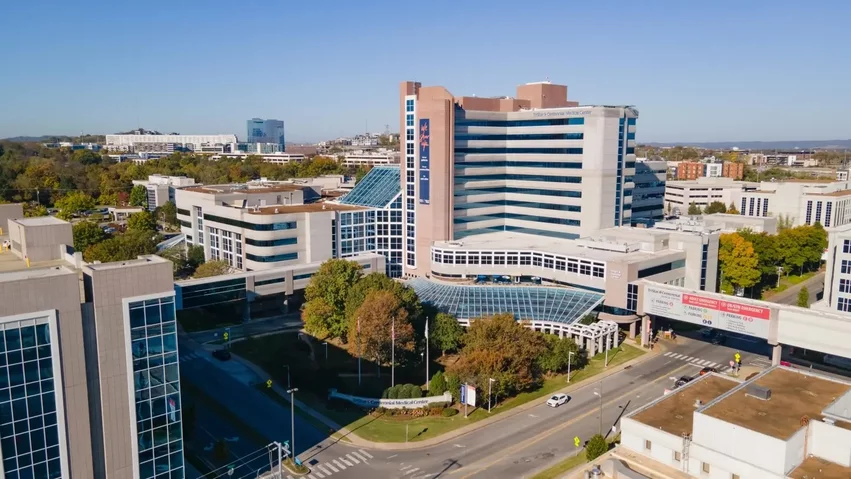
Pulmonary embolism (PE) remains one of the leading causes of cardiovascular death in the United States. TriStar Health, part of HCA Healthcare, has made PE a priority by bringing together a multidisciplinary team and adopting AI-enabled workflows to support timely diagnosis and treatment. This approach is designed to drive consistent, high-quality care – whether patients are seen at a large hospital or a community ER.
The importance of standardized care and speed
Samuel Horr, MD, an interventional cardiologist with TriStar Centennial Medical Center and physician director for HCA Healthcare in Nashville, Tennessee, says one of the first goals with PE care has been to ensure every patient receives the best care possible.
“Whether a patient is being seen at one of our large hospitals, a more rural community facility or even a freestanding emergency room (ER), we want to make sure they receive the same high level of care,” Horr says.
Time was another priority for the group. PE, Horr notes, can be an especially challenging condition to diagnose and manage due to the many moving parts involved.
“Time to anticoagulation is a very important predictor of outcomes, so we need to get that patient diagnosed quickly and start initiating the appropriate therapy.” Horr says. “And then we have to risk stratify the patient and get them evaluated by a multidisciplinary team to determine the best course of action. Finally, once the patient has received the care they need, it’s time to start planning outpatient therapy.”
Treating these patients is especially challenging with PE rates on the rise. In fact, Horr estimates PE diagnoses have grown by 1,000 patients per year across TriStar Health for the last four years. He chalks this up to several factors, including the area’s aging population and his group’s reputation as a mature, reliable destination for PE patients. Clinicians now have more awareness of PE treatment options, resulting in more referrals.
“The diagnosis of PE is receiving more attention at a national level,” Horr says. “With this attention, doctors better understand the seriousness of this condition. In addition, numerous clinical trials are underway focusing on the improvement of care for these patients”
AI enters the picture
The PE team at TriStar Health is always seeking new ways to innovate and improve care. With time to anticoagulation being so important, for example, Horr and his team wondered if advanced AI algorithms could provide some assistance.
After evaluating several candidates, the group chose the FDA-cleared AI platform developed by Viz.ai. The platform works by evaluating medical imaging scans as soon as they occur and then sending immediate alerts to that patient’s care team at the first signs of a potential PE. No matter where that patient is physically located, the PE team is then able to call their provider and coordinate care as necessary. AI sends high-risk patients to the top of the radiology queue, ensuring urgent cases receive a timely review. And once the radiologist confirms what AI has located, that patient’s care team is able to proceed as necessary, providing therapeutic anticoagulation or any other next steps right away.

“We’ve used AI to help with communication on the front end, when you’re trying to diagnose and triage the patient, as well as the back end, when you want to send feedback to providers to tell them how they did. We were able to do all that through this one platform.”
Samuel Horr, MD,
Interventional Cardiologist,
TriStar Centennial Medical
Center and Physician Director,
HCA Healthcare
Horr admits he was unsure at first what, exactly, AI could add to the team’s PE program.
“There was a healthy bit of skepticism,” he says. “We were already taking great care of our patients. I was skeptical that AI could really make things better.”
Once they started using the platform, however, Horr and his colleagues quickly realized that adding AI was the right decision. Multiple facilities saw decreases in the time from imaging order to anticoagulation therapy. For hospitals across the country, the time from imaging order to anticoagulation therapy is an opportunity for meaningful time reduction. Implementing AI helped everyone stay on the same page as well, ensuring providers who weren’t even in the same building were still working as one cohesive unit.
“We’ve used AI to help with communication on the front end, when you’re trying to diagnose and triage the patient, as well as the back end, when you want to send feedback to providers to tell them how they did,” Horr says. “We were able to do all that through this one platform. And this technology has a lot of potential—we are really just scratching the surface of what AI can do for our program.”
To highlight just how helpful AI can be when treating PE, Horr cites one patient who presented at a freestanding ER with a saddle PE. The patient was quite sick and in need of immediate relief.
“I happened to be on call that day and received the alert through the AI platform” he says. “Within 20 minutes of the patient undergoing an imaging exam, our multidisciplinary team had reviewed the patient’s health records and communicated our diagnosis to the ER. The patient was put on therapeutic anticoagulation right away and then quickly moved to one of our nearby hospitals, where they underwent mechanical thrombectomy. They were recovering from the comfort of home within 48 hours. It was a great example of the power of AI.”
A vision of the future
TriStar Health is part of HCA Healthcare, which has a long-standing strategic partnership with Viz.ai to utilize algorithms for timely patient care interventions in neurology, cardiology and pulmonary service lines. After the successful AI adoption at TriStar Centennial Medical Center, Horr and his team have started implementing AI across more TriStar Health facilities.
Looking ahead to the future, Horr envisions a time where every PE patient in the United States receives the same high level of care in an efficient, cost-effective manner. With the help of AI—and the hard work of heart teams all over the country—his vision may become a reality.
“We’re trying to take the lessons we learned here in Nashville and share them,” he says. “We want our work to help improve care for patients everywhere.”

Michael has more than 19 years of experience as a professional writer and editor. He has written at length about cardiology, radiology, artificial intelligence and other key healthcare topics.