
Simple, safe and efficient: Veteran cardiologist takes an IVL-first approach for all calcium types
Interventional cardiologist William C. Dixon, MD, has always been a bit skeptical about academics in healthcare. They may talk the talk, but can they really walk the walk?
“I’ve attended conferences where you can tell the people on stage don’t really use the devices they are talking about,” he explains. “If you want to know if a technology is any good, you should look to the people who are actually doing the work. They’ll tell you what works and what needs to improve.”
Dixon, a veteran interventional cardiologist with Southern Medical Group and Tallahassee Memorial HealthCare, walks the walk and has earned an online following with his outspoken, sometimes blunt perspective on modern healthcare. When he and like-minded cath lab veterans started posting on social media about a concept they called “blue-collar interventional cardiology,” it didn’t take long for other cardiologists to take notice. What started as a few LinkedIn posts eventually turned into a popular podcast.
“We needed a platform to vent and talk about what things are really like for interventional cardiologists,” he says. “We wanted to talk about what we do every day and how different it is from that polished meeting environment.”
Embracing the benefits of intravascular lithotripsy
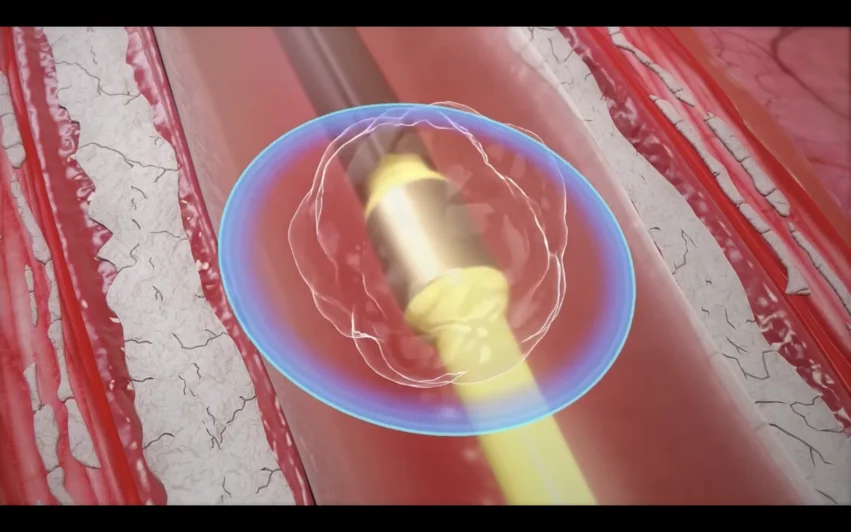
Dixon uses his new platform to share candid opinions about emerging trends, reality checks, medical devices and treatment techniques in interventional cardiology. One tool that has really impressed him in recent years is Shockwave Medical’s intravascular lithotripsy (IVL), which uses ultrasonic acoustic pressure waves to modify calcified plaques in the coronary and peripheral arteries.
“I’m a massive proponent of this technology,” Dixon says. “My approach to interventions is that I want to do the simplest, safest, most efficient procedure possible. I want to be safe, I want to get the vessel open and I don’t want to spend a long time doing it. IVL helps me achieve all of those things.”
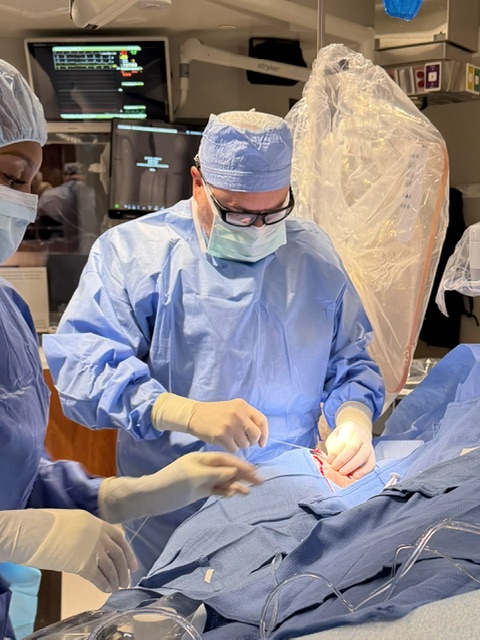
“The nice thing about IVL is that it works on all calcium types. It is agnostic to the kind of calcium it is treating. When I see calcium, I use IVL. Period.”
– William C. Dixon, MD | Interventional Cardiologist, Southern Medical Group
Dixon first saw IVL in action in 2017, before the technology had gained full U.S. Food and Drug Administration clearance. He says he could tell right away it had potential to be a game-changer for specialists performing percutaneous coronary intervention (PCI).
“I was blown away by IVL,” he recalls. “Calcium has been the Achilles’ heel of interventional cardiology forever. If you can’t get the artery open, you can’t get a good result. There’s a temptation to put in the stent anyway in those cases, but then you have a situation we call ‘stent regret’ where it still has a waist. We’ve had atherectomy and cutting balloons for modifying plaque for a long time now, but they can only do so much.”
Dixon has now been using IVL to break up plaques in the coronary and peripheral arteries for a number of years. He says the technology is both safe and effective, helping he and his fellow cardiologists open up arteries without putting vulnerable patients at risk. Another key benefit he appreciates is allowing specialists to feel more comfortable taking on more challenging patients.
“IVL gives people confidence,” he says. “If someone is reluctant to do an atherectomy because it makes them nervous, they are going to refer that patient out and send them elsewhere. IVL gives them confidence that they can treat a lot of these calcified lesions themselves with a safe device and get a great result.”
So how does IVL technology compare to atherectomy and cutting balloons?
With IVL gaining more and more attention, researchers have been comparing it to two other established treatments cardiologists use to modify plaques: atherectomy and cutting balloons. The ROLLING-STONE trial, for example, looked at data from more than 1,000 patients and found that Shockwave’s IVL technology outperformed atherectomy in terms of major adverse cardiac events. The intraprocedural complication rates and procedural success rates, meanwhile, were comparable for the two techniques.[1]
The Short-CUT trial, meanwhile, explored data on more than 400 patients randomized to be treated with either IVL or an FDA-approved cutting balloon prior to PCI.[2, 3] All patients presented with significant calcification and approximately one-half of the cohort underwent planned atherectomy in advance.
Overall, the trial found that a cutting balloon was noninferior to IVL in these patients with highly calcified lesions. Dixon says its good information to have, especially for cardiologists with limited access to Shockwave’s devices, but the data did not change his mind about the value of an IVL-first approach.
“This was a non-inferiority trial, so they were just trying to see if cutting balloons were a reasonable option compared to IVL,” he says. “I have no problem with that premise; if you really like cutting balloons, then more power to you. But I have never been much of a cutting balloon user myself. I find that the lesion is usually too tight to get the cutting balloon where it needs to go, so you have to do an atherectomy or something else before you even start. I would choose the simplicity, safety and effectiveness of IVL all day long.”
One takeaway from ShortCUT was that IVL achieved a larger minimum stent area than cutting balloons in nonatherectomy patients with nodular calcium, concentric calcium and calcium scores in the 2-4 range.[2] While he appreciates the insight, Dixon says these details may be making the subject more confusing for interventional cardiologists than it needs to be.
“Look, I don’t want to have to think through that many variables every time I treat a patient,” he says. “The nice thing about IVL is that it works on all calcium types. It is agnostic to the kind of calcium it is treating. When I see calcium, I use IVL. Period.”[4, 5]
Dixon also points to a few key details about ShortCUT. Approximately 50% of patients were treated with atherectomy, he says, a percentage unlike what cardiologists see in their day-to-day clinical practice. And he is surprised that highly tortuous vessels were excluded from the trial, immediately making the findings only applicable to a very specific patient population.
“You can’t get cutting balloons in those real tortuous vessels,” Dixon says. “That’s why they excluded them, I assume. They didn’t want to have all of these scenarios where a cutting balloon would be unable to be delivered.”
Dixon also notes that patient safety guides every decision. In ShortCUT, dissections were reported in 0.9% of IVL patients and 2.7% of cutting balloon patients. The safety profiles were comparable otherwise, but that one finding stands out in a big way.[2]
“It makes sense that you are going to see more dissections with cutting balloons because of the high pressure,” he says. “IVL is just incredibly safe. That has been borne out in all of the clinical trials and it’s what we are seeing in real life as well.”
Cardiologist sees IVL as the ‘gold standard’ for calcium modification
With all the data in mind, Dixon remains a believer in IVL. When he and other blue-collar interventional cardiologists enter the cath lab, their best option for calcium modification day in and day out is going to be Shockwave’s IVL systems. He points to the company’s recently launched C2 Aero Coronary IVL Catheter as yet another step forward for this important technology.
“I think IVL is probably the gold standard for treating calcified lesions,” he says. “If I can treat a lesion and get a great result without needing to do an atherectomy, I’m set. I don’t need to do anything complex or sexy. And IVL is not sexy in any way—it’s just a balloon, really, but one that has phenomenal science and engineering behind it.”
Disclaimer: William C. Dixon is a paid consultant of Shockwave Medical.
References:
1. Enrico Cerrato, et al. Intravascular Lithotripsy or Mechanical Debulking in Complex Calcified Coronary Arteries: Multicenter, Prospective ROLLING STONE Study. JACC: Cardiovascular Interventions. Jan. 29, 2026.
2. Suzanne J. Baron, MD, MSc. The ShortCUT Trial: Shockwave Lithotripsy Compared to Cutting Balloon Treatment in Calcified Coronary Artery Disease. TCT 2025. San Francisco, California.
3. Suzanne J. Baron, MD, MSc. Intravascular Lithotripsy vs. Cutting Balloon By Calcium Type. IVUS Study of the ShortCUT Trial. EuroPCR 2026. Paris, France.
4. Ali ZA et al. Impact of Calcium Eccentricity on the Safety and Effectiveness of Coronary Intravascular Lithotripsy: Pooled Analysis From the Disrupt CAD Studies. Circulation CV Interventions, 2023;16:e012898.
5. Ali ZA et al. Outcomes of coronary intravascular lithotripsy for the treatment of calcified nodules: a pooled analysis of the Disrupt CAD Studies. Eurointervention. 2024;20e1454-e1464.

Michael has more than 19 years of experience as a professional writer and editor. He has written at length about cardiology, radiology, artificial intelligence and other key healthcare topics.