
Recent data highlight TAVR’s long-term durability: What cardiologists need to know
Andy Morse, MD, the director of valvular and structural heart disease at Ascension Saint Thomas Hospital West in Nashville, leads a team that has performed more than 4,000 transcatheter aortic valve replacement (TAVR) procedures. He has watched with pride over the years as the relatively new structural heart facility has earned its place as a leading TAVR program in the United States.
During that time, Morse has seen firsthand just how happy patients are when they find out there is an alternative to surgery for their severe aortic stenosis (AS) and undergo a noninvasive procedure instead.
“When people come through our doors, if they have two treatment options with equivalent outcomes, they are always going to want the least invasive option,” Morse says. “That’s why TAVR has exploded in popularity over the years—for many patients, it can mean a hospital stay of just a day or two, allowing them to go home to their families and get back to normal activities within a week. That’s a game-changing, life-changing experience compared to the more invasive route of open surgery.”
Surgery has historically been the gold standard for treating severe AS, he adds, and clinicians will consider TAVR if they believe the short- and long-term clinical outcomes will be just as good as it would be with surgical aortic valve replacement (SAVR). This dedication to quality is why the landmark PARTNER 3 trial has been one of healthcare’s closely watched clinical trials for many years now. The trial, specifically developed to track the long-term durability of these devices, confirmed that the valves were still performing at a high level seven years after treatment.
“This question of long-term durability is slowly being answered. We want to know that any valves we implant are going to last a long time, and that’s exactly what these data are showing us.”
- Andy Morse, MD, Director of Valvular and Structural Heart Disease, Ascension Saint Thomas Hospital West
“Surgical valves are thought to have a very good track record when it comes to long-term valve durability,” Morse says. “We need to know the TAVR valves we implant are going to have that same level of success. That durability is especially important as more patients who are younger undergo TAVR. That first valve we implant really matters. We aren’t just thinking about the immediate future when we make treatment decisions, we are thinking about the lifetime management of these patients as well.”
Major takeaways from the PARTNER 3 Trial
While previous landmark trials had evaluated TAVR in high- and intermediate-risk patients, the PARTNER 3 trial focused on 1,000 low-risk patients randomized to either undergo TAVR or SAVR. All TAVR patients in the trial received a SAPIEN 3 transcatheter heart valve from Edwards Lifesciences, and SAVR patients received a surgical bioprosthetic valve.
In 2025, the team behind the PARTNER 3 trial published seven-year data from the trial in The New England Journal of Medicine.¹ The study’s primary endpoint, a composite of all-cause death, stroke and rehospitalization, was comparable after seven years. The second primary endpoint, a hierarchical composite of death, disabling stroke, nondisabling stroke and total rehospitalization days, was similar as well, confirming just how closely the two treatment options line up after all that time.
“The outcomes after seven years are pretty remarkable,” Morse says. “This question of long-term durability is slowly being answered. We want to know that any valves we implant are going to last a long time, and that’s exactly what these data are showing us.”
One key takeaway from the PARTNER 3 trial was the fact that valve hemodynamics were similar for these two groups. The mean aortic valve gradients were 13.1 mm Hg after TAVR and 12.1 mm Hg after surgery, for example, and the mean effective orifice areas (EOAs) were 1.9 cm2 after TAVR and 1.8 cm2 after surgery. These are critical data for care teams, Morse points out, because they highlight the consistent valve performance associated with performing TAVR on a low-risk patient.
“The hemodynamic findings after seven years were reassuring,” he explains. “There appears to be no downside as far as hemodynamics are concerned between choosing one path or another. Unless a surgeon is going to do something really complex like a root enlargement, it looks like TAVR and SAVR can achieve the same valve gradients and EOAs.”
Long-term data make clinicians, patients more confident
With these positive outcomes and data pouring in, referring cardiologists feel more confident than ever recommending their patients to multidisciplinary heart teams. Not every TAVR candidate will need a procedure right away, but all patients with severe AS should be treated within 90 days to ensure an optimal outcome.
“These data provide really strong evidence for the decisions we make,” Morse says. “Early on, we didn’t know as much about the long-term durability of these devices. We had a lot of great bench data, but the human implant data were still lacking. Now that we are starting to get long-term outcomes, it helps our referring providers and everyone else involved in that patient’s care know that transcatheter care is a reasonable alternative to surgery that is in the patient’s best interest.”
The seven-year PARTNER 3 trial data also help patients feel better about choosing TAVR over surgery.
“One of the first things TAVR patients ask about is how long the valves last,” Morse says. “Again, in those early days, we just didn’t know the answer to that question. Now, thanks to clinical trials like the PARTNER 3 trial, we can reassure our patients about the durability of these devices more than we ever could before.”
Another closely watched TAVR trial, PARTNER II, has been tracking intermediate-risk patients randomized to undergo TAVR or surgery. According to an update shared back in October, the two treatment approaches are associated with comparable survival and valve durability after 10 years.²
A closer look at the SAPIEN 3 platform
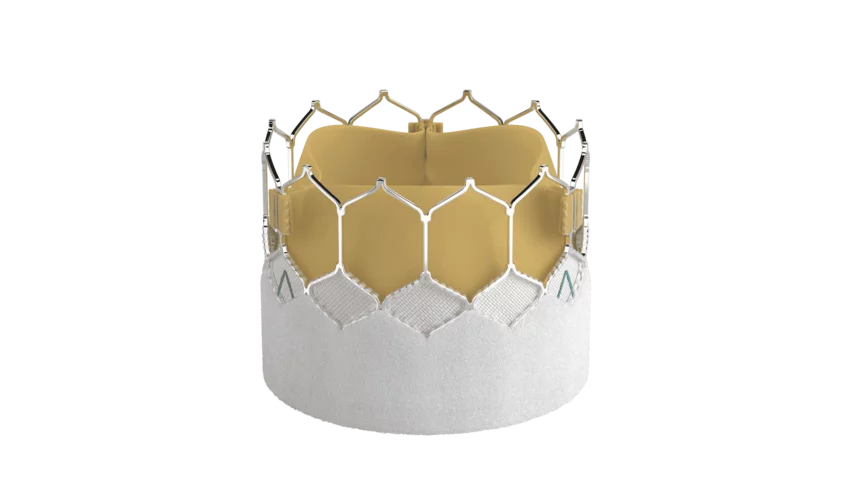
The SAPIEN 3 TAVR platform is associated with full durability data after seven and 10 years, a feat not seen with any other TAVR platform on the market. Even with these positive data in place, however, these valves continue to evolve. In fact, the SAPIEN 3 Ultra RESILIA valve, which the U.S. Food and Drug Administration (FDA) approved in 2022, included significant updates that Morse says made the balloon-expandable, intra-annular devices more dependable than ever.
For instance, the SAPIEN 3 platform has an extra-low profile that allows nearly every TAVR to be performed using transfemoral access. The platform also offers care teams a wider variety of sizes, including a 29-mm frame for patients with larger aortic annuli.
Another big change is the inclusion of a proprietary tissue material designed to limit calcification over time. The RESILIA tissue combines advanced calcium blocking processes with dry storage to support long-term valve performance. Edwards Lifesciences has been using RESILIA tissue in its surgical valves for years now, and those valves were just linked to a strong valve performance after 10 years in the international COMMENCE trial.³
One design feature central to the SAPIEN 3 platform is the taller, textured skirt designed to limit the patient’s risk of paravalvular leak (PVL) after treatment.
“PVL after TAVR can be detrimental,” Morse says. “In the past, it was one problem we would see with TAVR that was less common with surgery. With this skirt, we can minimize PVL and ensure patients receive surgery-like results when they undergo TAVR.”
TAVR with a SAPIEN 3 valve approved for treating asymptomatic patients
Thanks to trusted data and good outcomes, TAVR has quickly evolved into a reliable treatment option for high-, intermediate- and low-risk patients alike. And now for the first time, it is being recommended for the treatment of patients who have severe AS but are not yet experiencing symptoms.
In May 2025, after reviewing positive data from the EARLY TAVR trial, the FDA approved the SAPIEN 3 platform for the treatment of asymptomatic severe AS.⁴ That decision, the first FDA approval of its kind, covers the SAPIEN 3, SAPIEN 3 Ultra and SAPIEN 3 Ultra RESILIA TAVR valves.
Many experts saw this moment as a step forward for the field of interventional cardiology; patients can now be considered for treatment as soon as medical imaging identifies asymptomatic severe AS. No waiting required. Morse notes that approximately half of all patients with asymptomatic severe AS go on to seek care for heart failure, heart rhythm issues or “other profound health setbacks.” By treating that asymptomatic AS right away, clinicians have the opportunity to provide relief before such problems occur.
“The thing that was increasingly recognized with trials like EARLY TAVR is that severe AS puts a patient at risk whether they have symptoms or not,” he says. “If you have severe AS, even if you have no symptoms, you really should be seeing a valve center of excellence to undergo an evaluation. It may be time to consider an early intervention rather than waiting until something happens.”
Excitement about the future
Morse notes that the thriving TAVR program at Ascension Saint Thomas Hospital West has benefited the entire health system. While SAVR patients had to stay in the hospital for four or even five days, the average length of stay after TAVR is just one day. Not only is that good for patient morale, it also creates more room for other patients to come in and receive the care they need.
Ongoing research, he hopes, will continue the momentum he and his colleagues have experienced. New breakthroughs in TAVR care are being announced all of the time. This includes updated device types, novel treatment techniques and even the implementation of advanced artificial intelligence (AI) algorithms that can explore electronic health records and help identify patients who may require additional care.
“I’m really excited about the future,” he says. “TAVR technology is going to keep evolving more and more as time goes on.”
References:
1. Leon et al. Transcatheter or Surgical Aortic-Valve Replacement in Low-Risk Patients at 7 Years. N Engl J Med 2026;394:773-783.
2. Data presented at TCT 2025 in San Francisco.
3. Data presented at the 106th American Association for Thoracic Surgery Annual Meeting in Chicago.
4. Généreux et al. Transcatheter Aortic-Valve Replacement for Asymptomatic Severe Aortic Stenosis. NEJM. Oct. 28, 2024.

Important Safety Information
Edwards SAPIEN 3, Edwards SAPIEN 3 Ultra, and Edwards SAPIEN 3 Ultra RESILIA Transcatheter Heart Valve System
Indications: The Edwards SAPIEN 3, SAPIEN 3 Ultra, and SAPIEN 3 Ultra RESILIA Transcatheter Heart Valve system is indicated to reduce the risks associated with progression from asymptomatic to symptomatic severe native calcific aortic stenosis in patients who are judged by a heart team to be appropriate for transcatheter heart valve replacement therapy.
The Edwards SAPIEN 3, SAPIEN 3 Ultra, and SAPIEN 3 Ultra RESILIA Transcatheter Heart Valve system is indicated for relief of aortic stenosis in patients with symptomatic heart disease due to severe native calcific aortic stenosis who are judged by a Heart Team, including a cardiac surgeon, to be appropriate for the transcatheter heart valve replacement therapy.
The Edwards SAPIEN 3, SAPIEN 3 Ultra, and SAPIEN 3 Ultra RESILIA Transcatheter Heart Valve system is indicated for patients with symptomatic heart disease due to a failing (stenosed, insufficient, or combined) surgical or transcatheter bioprosthetic aortic valve, or a native mitral valve with an annuloplasty ring who are judged by a heart team, including a cardiac surgeon, to be at high or greater risk for open surgical therapy (i.e., predicted risk of surgical mortality ≥ 8% at 30 days, based on the Society of Thoracic Surgeons (STS) risk score and other clinical co-morbidities unmeasured by the STS risk calculator).
The Edwards SAPIEN 3, SAPIEN 3 Ultra, and SAPIEN 3 Ultra RESILIA Transcatheter Heart Valve system is indicated for patients with symptomatic heart disease due to a failing (stenosed, insufficient, or combined) surgical bioprosthetic mitral valve who are judged by a heart team, including a cardiac surgeon, to be at intermediate or greater risk for open surgical therapy (i.e., predicted risk of surgical mortality ≥ 4% at 30 days, based on the Society of Thoracic Surgeons (STS) risk score and other clinical co-morbidities unmeasured by the STS risk calculator).
Contraindications: The valves and delivery systems are contraindicated in patients who cannot tolerate an anticoagulation/antiplatelet regimen or who have active bacterial endocarditis or other active infections, or who have significant annuloplasty ring dehiscence.
Warnings: Observation of the pacing lead throughout the procedure is essential to avoid the potential risk of pacing lead perforation. There may be an increased risk of stroke in transcatheter aortic valve replacement procedures, as compared to balloon aortic valvuloplasty or other standard treatments in high or greater risk patients. The devices are designed, intended, and distributed for single use only. Do not resterilize or reuse the devices. There are no data to support the sterility, nonpyrogenicity, and functionality of the devices after reprocessing. Incorrect sizing of the valve may lead to paravalvular leak, migration, embolization, residual gradient (patient-prosthesis mismatch), and/or annular rupture. Accelerated deterioration of the valve due to calcific degeneration may occur in children, adolescents, or young adults and in patients with an altered calcium metabolism. Prior to delivery, the valve must remain hydrated at all times and cannot be exposed to solutions other than its shipping storage solution and sterile physiologic rinsing solution. Valve leaflets mishandled or damaged during any part of the procedure will require replacement of the valve. Caution should be exercised in implanting a valve in patients with clinically significant coronary artery disease. Patients with pre-existing prostheses should be carefully assessed prior to implantation of the valve to ensure proper valve positioning and deployment. Do not use the valve if the tamper-evident seal is broken or the storage solution does not completely cover the valve (SAPIEN 3 and SAPIEN 3 Ultra only), the temperature indicator has been activated, the valve is damaged, or the expiration date has elapsed. Do not mishandle the delivery system or use it if the packaging or any components are not sterile, have been opened or are damaged (e.g., kinked or stretched), or if the expiration date has elapsed. Use of excessive contrast media may lead to renal failure. Measure the patient’s creatinine level prior to the procedure. Contrast media usage should be monitored. Patient injury could occur if the delivery system is not un-flexed prior to removal. Care should be exercised in patients with hypersensitivities to cobalt, nickel, chromium, molybdenum, titanium, manganese, silicon, and/or polymeric materials. The procedure should be conducted under fluoroscopic guidance. Some fluoroscopically guided procedures are associated with a risk of radiation injury to the skin. These injuries may be painful, disfiguring, and long-lasting. Valve recipients should be maintained on anticoagulant/antiplatelet therapy, except when contraindicated, as determined by their physician. This device has not been tested for use without anticoagulation. Do not add or apply antibiotics to the storage solution (SAPIEN 3 and SAPIEN 3 Ultra only), rinse solution, or to the valve. Balloon valvuloplasty should be avoided in the treatment of failing bioprostheses as this may result in embolization of bioprosthesis material and mechanical disruption of the valve leaflets. Do not perform stand-alone balloon aortic valvuloplasty procedures in the INSPIRIS RESILIA aortic valve for the sizes 19-25 mm. This may expand the valve causing aortic incompetence, coronary embolism or annular rupture. Transcatheter valve replacement in mitral annuloplasty rings is not recommended in cases of partial annuloplasty ring dehiscence due to high risk of PVL. Transcatheter valve replacement in mitral annuloplasty rings is not recommended in cases of partial (incomplete) annuloplasty rings in the absence of annular calcium due to increased risk of valve embolization. Transcatheter valve replacement in mitral annuloplasty rings is not recommended in cases of rigid annuloplasty rings due to increased risk of PVL or THV deformation.
Precautions: Long-term durability has not been established for the valve. Regular medical follow-up is advised to evaluate valve performance. Limited clinical data are available for transcatheter aortic valve replacement in patients with a congenital bicuspid aortic valve who are deemed to be at low surgical risk. Anatomical characteristics should be considered when using the valve in this population. In addition, patient age should be considered as long-term durability of the valve has not been established. Data on TAVR in patients with asymptomatic severe aortic stenosis are based on study of predominantly low surgical risk patients. Limited clinical data to inform benefit-risk considerations are available for TAVR in patients with asymptomatic severe aortic stenosis who are deemed to be at intermediate or greater surgical risk. Glutaraldehyde may cause irritation of the skin, eyes, nose, and throat. Avoid prolonged or repeated exposure to, or breathing of, the solution. Use only with adequate ventilation. If skin contact occurs, immediately flush the affected area with water; in the event of contact with eyes, seek immediate medical attention. For more information about glutaraldehyde exposure, refer to the Safety Data Sheet available from Edwards Lifesciences. If a significant increase in resistance occurs when advancing the catheter through the vasculature, stop advancement and investigate the cause of resistance before proceeding. Do not force passage, as this could increase the risk of vascular complications. As compared to SAPIEN 3, system advancement force may be higher with the use of SAPIEN 3 Ultra/SAPIEN 3 Ultra RESILIA THV in tortuous/challenging vessel anatomies. To maintain proper valve leaflet coaptation, do not overinflate the deployment balloon. Appropriate antibiotic prophylaxis is recommended post-procedure in patients at risk for prosthetic valve infection and endocarditis. Additional precautions for transseptal replacement of a failed mitral valve bioprosthesis include, the presence of devices or thrombus or other abnormalities in the caval vein precluding safe transvenous femoral access for transseptal approach; and the presence of an Atrial Septal Occluder Device or calcium preventing safe transseptal access. Special care must be exercised in mitral valve replacement to avoid entrapment of the subvalvular apparatus. Safety and effectiveness have not been established for patients with the following characteristics/comorbidities: non-calcified aortic annulus; severe ventricular dysfunction with ejection fraction < 20%; congenital unicuspid aortic valve; pre-existing prosthetic ring in the tricuspid position; severe mitral annular calcification (MAC); severe (> 3+) mitral insufficiency, or Gorlin syndrome; blood dyscrasias defined as leukopenia (WBC < 3000 cells/mL), acute anemia (Hb < 9 g/dL), thrombocytopenia (platelet count < 50,000 cells/mL), or history of bleeding diathesis or coagulopathy; hypertrophic cardiomyopathy with or without obstruction (HOCM); echocardiographic evidence of intracardiac mass, thrombus, or vegetation; a known hypersensitivity or contraindication to aspirin, heparin, ticlopidine (Ticlid), or clopidogrel (Plavix), or sensitivity to contrast media, which cannot be adequately premedicated; significant aortic disease, including abdominal aortic or thoracic aneurysm defined as maximal luminal diameter 5 cm or greater, marked tortuosity (hyperacute bend), aortic arch atheroma (especially if thick [> 5 mm], protruding, or ulcerated) or narrowing (especially with calcification and surface irregularities) of the abdominal or thoracic aorta, severe “unfolding” and tortuosity of the thoracic aorta; access characteristics that would preclude safe placement of the Edwards sheath, such as severe obstructive calcification or severe tortuosity; bulky calcified aortic valve leaflets in close proximity to coronary ostia; a concomitant paravalvular leak where the failing prosthesis is not securely fixed in the native annulus or is not structurally intact (e.g., wireform frame fracture, annuloplasty ring dehiscence); or a partially detached leaflet of the failing bioprosthesis that in the aortic position may obstruct a coronary ostium. For Left axillary approach, a left subclavian takeoff angle ~ ≥ 90° from the aortic arch causes sharp angles, which may be responsible for potential sheath kinking, subclavian/axillary dissection and aortic arch damage. For left/right axillary approach, ensure there is flow in Left Internal Mammary Artery (LIMA)/Right Internal Mammary Artery (RIMA) during procedure and monitor pressure in homolateral radial artery. Residual mean gradient may be higher in a “THV-in-failing prosthesis” configuration than that observed following implantation of the valve inside a native aortic annulus using the same size device. Patients with elevated mean gradient post procedure should be carefully followed. It is important that the manufacturer, model and size of the preexisting prosthesis be determined, so that the appropriate valve can be implanted and a prosthesis-patient mismatch be avoided. Additionally, pre-procedure imaging modalities must be employed to make as accurate a determination of the inner diameter as possible.
Potential Adverse Events: Potential risks associated with the overall procedure, including potential access complications associated with standard cardiac catheterization, balloon valvuloplasty, the potential risks of conscious sedation and/or general anesthesia, and the use of angiography: death; stroke/transient ischemic attack, clusters, or neurological deficit; paralysis; permanent disability; respiratory insufficiency or respiratory failure; hemorrhage requiring transfusion or intervention; cardiovascular injury including perforation or dissection of vessels, ventricle, atrium, septum, myocardium, or valvular structures that may require intervention; pericardial effusion or cardiac tamponade; thoracic bleeding; embolization including air, calcific valve material, or thrombus; infection including septicemia and endocarditis; heart failure; myocardial infarction; renal insufficiency or renal failure; conduction system defect which may require a permanent pacemaker; arrhythmia; retroperitoneal bleed; arteriovenous (AV) fistula or pseudoaneurysm; reoperation; ischemia or nerve injury or brachial plexus injury; restenosis; pulmonary edema; pleural effusion; bleeding; anemia; abnormal lab values (including electrolyte imbalance); hypertension or hypotension; allergic reaction to anesthesia, contrast media, or device materials; hematoma; syncope; pain or changes (e.g., wound infection, hematoma, and other wound care complications) at the access site; exercise intolerance or weakness; inflammation; angina; heart murmur; and fever. Additional potential risks associated with the use of the valve, delivery system, and/or accessories include: cardiac arrest; cardiogenic shock; emergency cardiac surgery; cardiac failure or low cardiac output; coronary flow obstruction/transvalvular flow disturbance; device thrombosis requiring intervention; valve thrombosis; device embolization; device migration or malposition requiring intervention; left ventricular outflow tract obstruction; valve deployment in unintended location; valve stenosis; structural valve deterioration (wear, fracture, calcification, leaflet tear/tearing from the stent posts, leaflet retraction, suture line disruption of components of a prosthetic valve, thickening, stenosis); device degeneration; paravalvular or transvalvular leak; valve regurgitation; hemolysis; device explants; nonstructural dysfunction; mechanical failure of delivery system and/or accessories; and non-emergent reoperation.
Edwards Crimper
Indications: The Edwards crimper is indicated for use in preparing the Edwards SAPIEN 3 transcatheter heart valve, Edwards SAPIEN 3 Ultra transcatheter heart valve, and the Edwards SAPIEN 3 Ultra RESILIA transcatheter heart valve for implantation.
Contraindications: There are no known contraindications.
Warnings: The device is designed, intended, and distributed for single use only. Do not resterilize or reuse the device. There are no data to support the sterility, nonpyrogenicity, and functionality of the device after reprocessing. Do not mishandle the device. Do not use the device if the packaging or any components are not sterile, have been opened or are damaged, or the expiration date has elapsed.
Precautions: For special considerations associated with the use of the Edwards crimper prior to THV implantation, refer to the THV Instructions for Use.
Potential Adverse Events: There are no known potential adverse events associated with the Edwards crimper.
CAUTION: Federal (United States) law restricts these devices to sale by or on the order of a physician.
Edwards, Edwards Lifesciences, the stylized E logo, Edwards SAPIEN, Edwards SAPIEN 3, Edwards SAPIEN 3 Ultra, INSPIRIS, INSPIRIS RESILIA, PARTNER, PARTNER II, PARTNER 3, RESILIA, SAPIEN, SAPIEN 3, and SAPIEN 3 Ultra are trademarks or service marks of Edwards Lifesciences Corporation. All other trademarks are the property of their respective owners.
© 2026 Edwards Lifesciences Corporation. All rights reserved. PP--US-12879 v1.0
Edwards Lifesciences • One Edwards Way, Irvine CA 92614 USA • edwards.com

Michael has more than 19 years of experience as a professional writer and editor. He has written at length about cardiology, radiology, artificial intelligence and other key healthcare topics.