
Johnson & Johnson’s PFA platform is both safe and effective, real-world data confirm
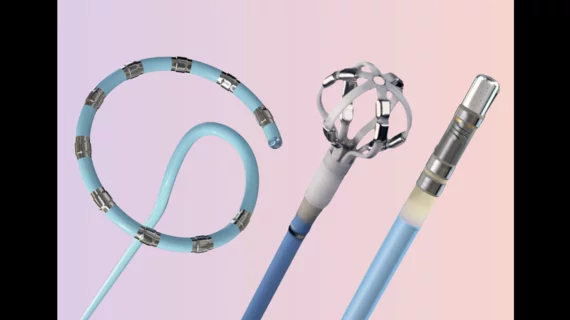
Pulsed field ablation (PFA) with Johnson & Johnson MedTech’s Varipulse platform is safe and effective, according to new real-world data presented at ESC Congress 2025, the annual meeting of the European Society of Cardiology.
Researchers tracked data from nearly 800 patients with atrial fibrillation (AFib) who underwent treatment with the Varipulse PFA platform at one of 20 European facilities. The platform includes the Varipulse catheter and Trupulse generator, and it all integrates with the Carto 3 System for 3D navigation and cardiac mapping.
Overall, the Varipulse PFA platform was linked to a primary adverse event rate of 0.6%, with no strokes reported, and an acute pulmonary vein isolation (PVI) rate of 99.7%.
“These outcomes, observed in nearly 800 patients across varying procedural workflows, demonstrate the platform’s consistent application and adaptability in this study,” presenting author Alexandre Almorad, MD, an electrophysiologist with Brussels University Hospital St. Pierre and the Brussels Heart Rhythm Management Center, said in a statement. “By delivering a 99.7% acute PVI rate alongside seamless integration into diverse procedural workflows, this study reinforces our ability to deliver durable lesion sets, giving electrophysiologists the confidence to adopt PFA widely and safely.”
“Johnson & Johnson MedTech is committed to advancing the real-world evidence base for Varipulse, generating robust clinical data to demonstrate its safety and efficacy across diverse patient populations,” added Jennifer Currin, PhD, vice president of scientific affairs for Johnson & Johnson MedTech’s electrophysiology division. “Through growing registries and collaborative studies with electrophysiologists in everyday practice settings, we’re building the clinical foundation that empowers physicians to optimize patient outcomes and establish a new standard of care in cardiac ablation.”
The Varipulse PFA platform gained U.S. Food and Drug Administration approval in November 2024. The technology gained CE mark approval in February 2024, and it has also gained regulatory approvals in Asia Pacific, Canada and Latin America.

Michael has more than 19 years of experience as a professional writer and editor. He has written at length about cardiology, radiology, artificial intelligence and other key healthcare topics.