
Nuclear imaging groups share new flurpiridaz guideline
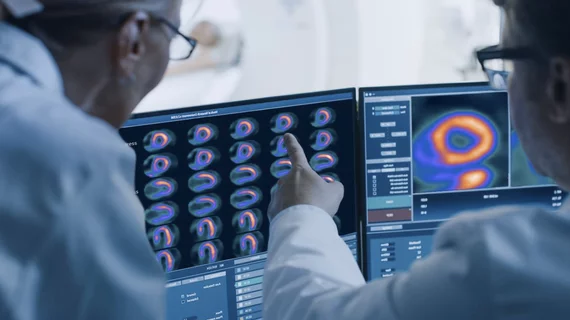
The introduction of the new F-18 flurpiridaz (Flyrcado) PET cardiovascular perfusion tracer was met with a large amount of enthusiasm due to the fact that it will help facilitate wider expansion of cardiac PET. But the new radiotracer has different imaging characteristics from the long-available PET rubidium-82 generators, so new guidelines for flurpiridaz were released this week by the Society of Nuclear Medicine and Molecular Imaging (SNMMI), American Society of Nuclear Cardiology (ASNC), European Association of Nuclear Medicine (EANM) and American College of Nuclear Medicine (ACNM).[1]
The new clinical guideline outlines the use of F-18 flurpiridaz for PET myocardial perfusion imaging (MPI) and blood flow quantitation. It was co-published in both the Journal of Nuclear Medicine and the Journal of Nuclear Cardiology. The societies said this document is intended to assist nuclear cardiology practitioners in the optimal application of flurpiridaz PET for MPI, including recommendations for patient selection, imaging protocols and the interpretation of results.
The new guidance also includes information on clinical indications, contraindications and other considerations. It addresses qualifications and responsibilities of personnel performing cardiac stress testing using flurpiridaz, biodistribution and dosimetry, and the flurpiridaz PET workflow.
"This document is designed to promote high-quality, safe, and effective nuclear medicine practice in the evaluation of CAD," the guideline's authors emphasized. "Our hope is that the guideline enhances clinical decision-making, standardizes clinical practice, improves diagnostic accuracy and optimizes resource utilization to ensure safety and improve patient outcomes."
"Multiple phase II and two phase III clinical trials have further established the utility of 18F-flurpiridaz as a valuable PET radiotracer for the non-invasive evaluation of CAD," lead author René R. Sevag Packard, MD, PhD, associate professor-in-residence in the division of cardiology at UCLA's David Geffen School of Medicine and president elect of the SNMMI Cardiovascular Council, said in a statement. "Owing to its favorable molecular imaging characteristics and extended half-life, 18F-flurpiridaz is poised to become a valuable agent for cardiac stress PET imaging, offering clinicians a robust tool for the evaluation of CAD."
The PET vs. SPECT debate goes on
MPI can be performed with SPECT or PET nuclear imaging systems, but nuclear cardiology is increasing moving toward PET because of improved image quality as labs update their cameras. Flurpiridaz is a novel PET radiotracer that has demonstrated favorable imaging and physiological properties compared to conventional SPECT agents. Clinical studies showed it provides superior image quality, improved diagnostic accuracy and greater sensitivity in detecting clinically significant coronary artery stenosis compared with SPECT. It is particularly valuable in patients where SPECT may be less effective, such as obese patients and those with small left ventricles.
There also has been growing recognition that PET can offer additional clinical insights into microvascular diseases, which produce the same symptoms as heart attacks, but there is no clear coronary obstruction on imaging. PET can measure myocardial blood flow (MBF) quantification, which numerous nuclear cardiology experts say offers significant advantages in interpreting underlying myocardial ischemia.
"While we are supporting the use of the highest quality SPECT imaging, we know that PET perfusion imaging is really our optimal imaging modality for assessing ischemic heart disease. So we are really encouraging and supporting to be able to take the plunge and get a dedicated PET camera. However, we also realize it is a large initial expense, but there are a lot of groups that want to dip their toes into the water and try some cardiac PET studies. There are a lot of PET cameras available in the United States due to their wide use in cancer imaging, so with the new tracer options like flurpiridaz on a unit dosing model, there is opportunity for groups to do more limited PET imaging to get started," ASNC President-elect Jamieson M. Bourque, MD, medical director of nuclear cardiology, echocardiography, and the stress laboratory at UVA Health in Charlottesville, and a professor of medicine and radiology at the University of Virginia, explained in an interview with Cardiovascular Business.
He said the new radiotracer will likely play a big role in expanding cardiac PET over the next couple years.
"We feel very strongly that once they get started in cardiac PET and referring physicians see all of the value of cardiac PET, they are going to ask for a lot more, and medical centers are going to be incentivized to get dedicated cameras," Bourque said.

Dave Fornell has covered healthcare for more than 17 years, with a focus in cardiology and radiology. Fornell is a 5-time winner of a Jesse H. Neal Award, the most prestigious editorial honors in the field of specialized journalism. The wins included best technical content, best use of social media and best COVID-19 coverage. Fornell was also a three-time Neal finalist for best range of work by a single author. He produces more than 100 editorial videos each year, most of them interviews with key opinion leaders in medicine. He also writes technical articles, covers key trends, conducts video hospital site visits, and is very involved with social media. E-mail: [email protected]