
AI helps identify risk in adults with congenital heart disease
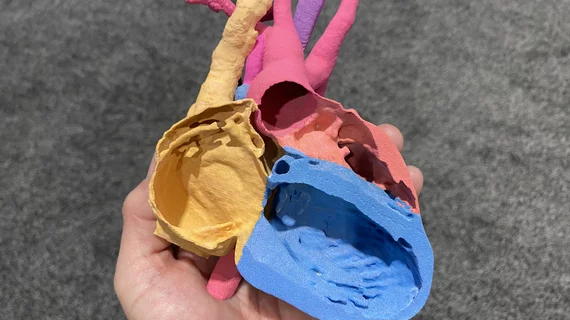
The success of treating congenital heart disease (CHD) with advanced therapies has helped make the long-term survival rate much higher than it was in the past. Now, however, clinicians are left with the challenge of managing the estimated 1.4 million CHD patients who are now surviving into adulthood and may require multiple surgeries later in life.
At the 2026 Society of Thoracic Surgeons (STS) annual meeting, a team from Mayo Clinic presented new research that identified 15 influential factors when working to predict postoperative risk in these patients. Their work could help build standardized way to evaluate risk in these patients.
“Many patients with CHD will need surgery as adults. Our work shows that the overall risk of post-surgical complications is prevalent, but patients need to know their individual risk based on their individual medical circumstances. We are setting the stage to create a reliable resource for this emerging patient population," Elaine Griffeth, MD, a resident in the combined general and thoracic surgery program at Mayo Clinic, said in a statement.
As the number of adults with CHD grows, the number of sessions at cardiology meetings about this complex population has increased as well. These patients were born with structural heart defects and usually undergo surgery or a series of surgeries as neonates and into childhood. Many now require additional procedures as adults, but they present a higher risk because of their prior operations. It can be difficult for surgeons and patients to estimate operative risk using current tools.
The Mayo team looked at CHD patients who underwent more than one surgery in the STS Adult Cardiac Surgery Database (ACSD) between July 2017 through December 2023. They were interested in post-operative mortality as well as a composite outcome of mortality and morbidity. Griffeth said these patients want to know not only their risk of death, but also possibility of complications following surgery. They found an operative mortality of 6.6% in these patients.
The researchers applied a machine-learning analysis and logistic regression to help determine surgical risk. The team previously published on the use of this AI to make risk predictions based on Mayo Clinic electronic medical record data, but hope this work can now bring brought to help at a national level.
They found 16.7% of CHD adults were considered high-risk for operative mortality and serious postoperative complications after redo cardiac surgery. This included the need for mechanical circulatory support, dialysis, and elevated risks for stroke, neurologic injury or cardiac arrest.
“This is a work in progress. We want to have high reliability in the surgeries we are offering, and we are trying to tailor this model with data from past patients. The more informed patients are about their risks for surgery, the better,” Griffeth said.
STS plans on using this work to assist with the development of a new surgical risk calculator for adults with CHD.

Dave Fornell has covered healthcare for more than 17 years, with a focus in cardiology and radiology. Fornell is a 5-time winner of a Jesse H. Neal Award, the most prestigious editorial honors in the field of specialized journalism. The wins included best technical content, best use of social media and best COVID-19 coverage. Fornell was also a three-time Neal finalist for best range of work by a single author. He produces more than 100 editorial videos each year, most of them interviews with key opinion leaders in medicine. He also writes technical articles, covers key trends, conducts video hospital site visits, and is very involved with social media. E-mail: [email protected]