
Surgeons perform world’s first robotic-assisted implant of biventricular assist device
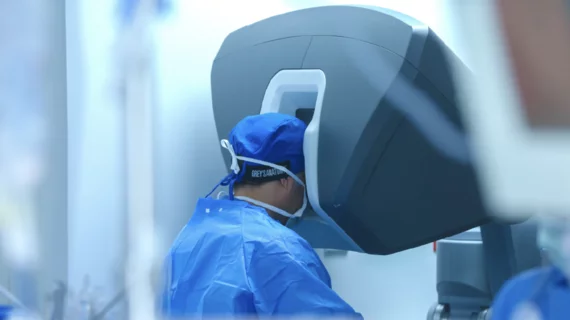
A heart team at King Faisal Specialist Hospital and Research Center (KFSHRC) in Riyadh, Saudi Arabia, has completed the world’s first robotic-assisted implantation of two artificial heart pumps to provide biventricular support.
Cardiac surgeon Feras Khaliel, MD, PhD, led the transplant procedure. His team used remotely controlled robotic arms to implant two Abbott HeartMate 3 ventricular assist devices—this included one for the left ventricle and another for the right ventricle. The first-of-its-kind procedure appears to have been a complete success.
The patient receiving the two devices was 61 years old and had spent the previous two months bedridden due to end-stage heart failure. The patient’s condition was not responsive to medical therapy, and they were not considered a viable candidate for a heart transplant due to multiple comorbidities. The group chose the robotic-assisted approach due to a range of potential benefits, including a lower risk of infection and a faster recovery time.
The cardiac surgery, cardiology, anesthesia, critical care, biomedical engineering and advanced life support teams at KFSHRC all worked together to make this procedure happen. Khaliel and his team hope to share a detailed account of their experience in a medical journal and then present the case at a cardiology conference.
Another historic implant for King Faisal Specialist Hospital and Research Center
KFSHRC previously made headlines in 2024, when its surgeons completed the world’s first fully robotic heart transplant, and in January 2025, when they performed the first robotic-assisted implant of a HeartMate 3 left ventricular assist device. Khaliel led those procedures as well.
When Newsweek published its 2025 World’s Best Hospitals rankings, KFSHRC came in at No. 1 for all of Saudi Arabia.
Michael has more than 19 years of experience as a professional writer and editor. He has written at length about cardiology, radiology, artificial intelligence and other key healthcare topics.