
Algorithm brings early heart failure screening to primary care office visits
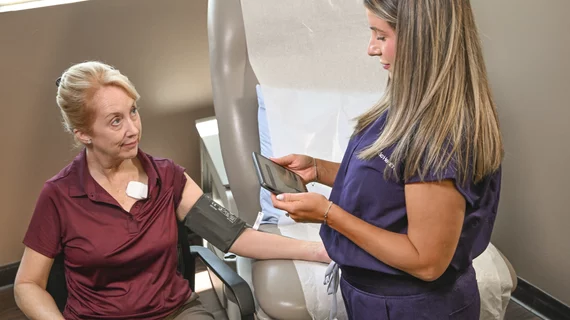
A new algorithm for the early detection of heart failure (HF) in a primary care setting showed it can accurately identify previously undiagnosed HF patients for earlier treatment in a study published in JACC: Advances.[1]
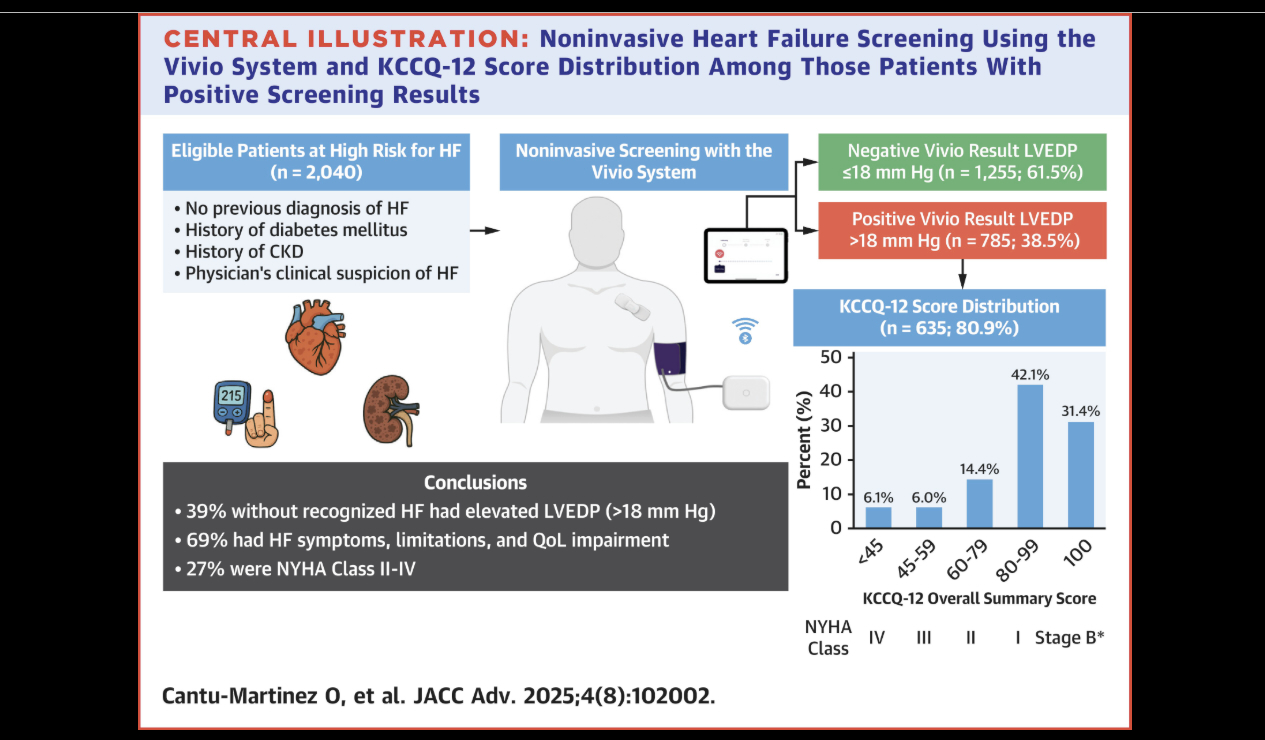
Most patients are first diagnosed with HF in the emergency room or hospital, often with significant symptoms and advanced disease that severely impacts quality of life and is more challenging to treat. The disease is easier to manage if caught earlier, which was the reason for creating the FDA-cleared Vivio System. It screens for elevated left ventricular end-diastolic pressure, or filling pressure (LVEDP), using a fixed physics-based model to calculate LVEDP quickly with a five-minute, noninvasive test that can be performed during a primary care office visit. It uses an advanced algorithm to process LVEDP measures from a proprietary single-lead Bluetooth-enabled ECG and a proprietary blood pressure cuff to provide results to the clinician via a tablet.
LVEDP is the gold standard measure used to diagnose HF, but it has historically been obtained in invasive, in-hospital catheterization procedures, limiting accessibility.
In this study, 2,040 patients were screened for elevated LVEDP. Patients were over the age of 65 and had diabetes or chronic kidney disease (CKD). Overall, 38.5% of patients had elevated LVEDP, and they were then given the the Kansas City Cardiomyopathy Questionnaire (KCCQ-12) to assess their HF symptom burden and quality of life. Almost one-quarter of the patients with elevated LVEDP reported substantial symptoms and impaired health status consistent with NYHA functional class II-IV.
“Combining the KCCQ with noninvasive LVEDP assessment is a promising strategy to identify a significant number of patients who may benefit from further HF evaluation and treatment, potentially improving their health status and reducing clinical events,” the study authors wrote.
A higher proportion of women were identified with newly-diagnosed HF than men. This reinforces previously published research suggesting delayed HF diagnoses in women.
"Despite the development of numerous interventions to improve the outcomes of patients with HF, these therapies cannot be offered to those who are not diagnosed. Given that patients with HF are often elderly and have multiple comorbidities, it can be difficult to recognize HF in patients presenting to primary care," the authors wrote. "Considering the prevalence of HF, its evolving treatment options, and its impact on patients' lives, there is a clear need for novel strategies to improve its diagnosis in primary care."
They adding this study is the first to describe patients' health status at the time of potential HF recognition, showing that less than a third were asymptomatic and over a quarter had NYHA functional class II-IV symptoms.
The Ventric Health Vivio system was cleared by the FDA in October 2023 and more than 15,000 tests have been performed to-date. The company said practices using the system have reported an increase in first-time HF diagnosis at primary care, helping decreased mortality, hospitalization and ER visits, and helped improve patient medication compliance.

Dave Fornell has covered healthcare for more than 17 years, with a focus in cardiology and radiology. Fornell is a 5-time winner of a Jesse H. Neal Award, the most prestigious editorial honors in the field of specialized journalism. The wins included best technical content, best use of social media and best COVID-19 coverage. Fornell was also a three-time Neal finalist for best range of work by a single author. He produces more than 100 editorial videos each year, most of them interviews with key opinion leaders in medicine. He also writes technical articles, covers key trends, conducts video hospital site visits, and is very involved with social media. E-mail: [email protected]