
FDA sees potential in new AI software for monitoring heart failure patients
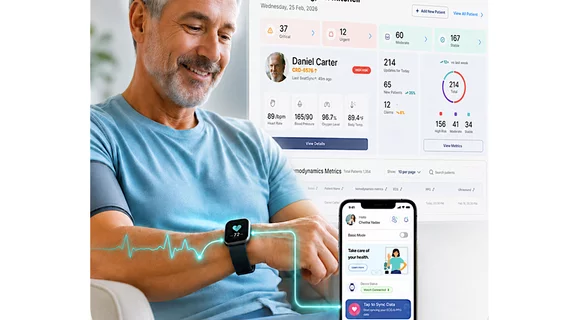
The U.S. Food and Drug Administration (FDA) has granted its breakthrough device designation to Coredio's artificial intelligence (AI) platform that delivers hemodynamic assessments of heart failure patients based on data from consumer-grade smartwatches and blood pressure cuffs. The technology is aimed at reducing readmission rates.
The Cardiac Performance Simulation Engine (CPSE) was also accepted into the FDA's Total Product Life Cycle (TPLC) Advisory Program (TAP) Pilot program, which expedites patient access to innovative medical devices. It is now on an accelerated path toward a full FDA approval.
According to Coredio, the software-only platform provides catheterization-comparable assessments in both clinical and home settings under physician supervision.
“Heart failure management has long been limited by the gap between what we can measure in the hospital and what we can reliably understand once patients return home,” Jagmeet Singh, MD, PhD, founding director of the resynchronization and advanced cardiac therapeutics program at Mass General Brigham, explained in a statement. “Coredio’s approach, using wearable-derived signals and physics-informed AI to estimate hemodynamic status noninvasively, has the potential to give clinicians a more holistic view of patient cardiac function and enable earlier intervention."
The system is the first software-as-a-medical-device platform dedicated to heart failure hemodynamic assessments. It was designed to monitor heart failure patients when they leave the hospital, which is often when they are at their most vulnerable. This is a period when doctors cannot see cardiac decompensation until symptoms become severe enough to trigger another emergency department visit or hospital readmission.
Measures tracked by the system include left ventricular end-diastolic pressure (LVEDP), central venous pressure (CVP), systemic vascular resistance (SVR) and cardiac index (CI). According to Coredio, this enables a holistic view of both left- and right-sided heart failure. The platform's machine learning then uses this data to create a personalized cardiovascular digital twin. This can identify abnormalities that prompt early interventions prior to the patient needing hospital care.
“At White Plains Hospital, our transitional care program focuses on the critical weeks after discharge, when heart failure patients are most vulnerable and least connected to their care team. What drew us to Coredio is its potential to bring hemodynamic-level data into that gap, without requiring invasive devices or additional clinical visits,” explained Farrukh Jafri, MD, medical director of White Plains Hospital Cares, a clinical outreach program for discharged patients that uses virtual home monitoring, in the same statement.

Dave Fornell has covered healthcare for more than 17 years, with a focus in cardiology and radiology. Fornell is a 5-time winner of a Jesse H. Neal Award, the most prestigious editorial honors in the field of specialized journalism. The wins included best technical content, best use of social media and best COVID-19 coverage. Fornell was also a three-time Neal finalist for best range of work by a single author. He produces more than 100 editorial videos each year, most of them interviews with key opinion leaders in medicine. He also writes technical articles, covers key trends, conducts video hospital site visits, and is very involved with social media. E-mail: [email protected]