
FDA approves smallest defibrillation lead of its kind for LBBA placement
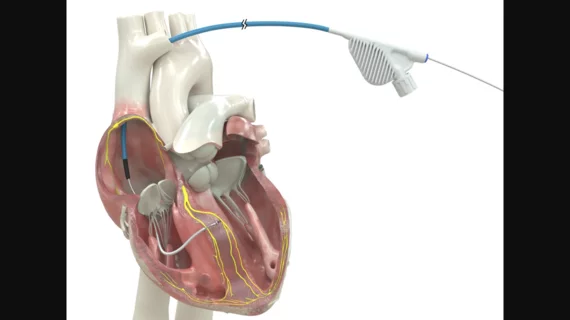
Medtronic has received an expanded U.S. Food and Drug Administration (FDA) approval for its OmniaSecure defibrillation lead.
The lead was originally approved for placement in the right ventricle in April 2025. This expanded indication covers the left bundle branch (LBB) area, meaning it can now be used for conduction system pacing and even LBB optimized cardiac resynchronization therapy (LOT-CRT). This is the first time the FDA has approved a defibrillation lead for placement in the LBB area.
“Conduction system pacing is a rapidly growing therapy for patients who need a pacemaker,” Trevor Cook, vice president and general manager of Medtronic’s defibrillation solutions business, said in a statement. “Now, patients who require a defibrillator and pacing have an option that can safely deliver life-saving defibrillation therapy and activate the heart's natural electrical system to enable a more synchronous, physiologic pattern. This approval underscores the versatility of the OmniaSecure defibrillation lead and supports its use across a variety of implant approaches to best serve a broad range of patients.”
The OmniaSecure defibrillation lead is connected to an implantable cardioverter-defibrillator or cardiac resynchronization therapy defibrillator to treat ventricular tachyarrhythmias, ventricular fibrillation and bradyarrhythmias. According to Medtronic, the size of the OmniaSecure—4.7 French, or 1.6 mm—makes it the smallest defibrillation lead with no lumen in the world.
At Heart Rhythm 2025, the Heart Rhythm Society’s annual meeting, researchers shared early data on placing the OmniaSecure in the LBB area. That analysis, later published in Heart Rhythm, included more than 300 patients with a mean age of nearly 65 years old.[1] Overall, LBB area pacing with the OmniaSecure lead was associated with a successful implant rate of 95.4%, and 97.9% of patients were free of major device-related complications after three months. In addition, there were no lead fractures or oversensing adverse events.
“The robust body of clinical evidence from the LEADR LBBAP study supports the OmniaSecure defibrillation lead as a safe and effective way to activate physiologic pacing through the left bundle branch area or in applications like LOT-CRT, while also demonstrating reliable defibrillation success,” Pugazhendhi Vijayaraman, MD, a cardiac electrophysiologist at Geisinger Wyoming Valley Medical Center and principal investigator of LEADR LBBAP, explained in the same statement.
The OmniaSecure defibrillation lead has been commercially available in the United States since January.

Michael has more than 19 years of experience as a professional writer and editor. He has written at length about cardiology, radiology, artificial intelligence and other key healthcare topics.