
Field Medical’s PFA system for ventricular tachycardia shows early potential
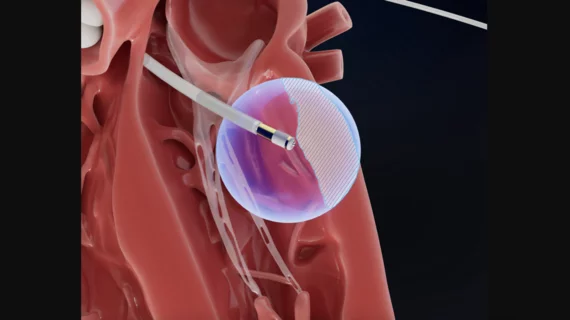
Field Medical’s pulsed field ablation (PFA) technology may represent a significant step forward in the treatment of scar-related ventricular tachycardia (VT), according to a new first-in-human clinical trial published in Circulation.[1]
Field Medical is a PFA startup started in 2022 by industry pioneer Steven Mickelsen, MD, who previously founded Farapulse. This analysis included early data from 26 patients who underwent VT ablation with Field Medical’s FieldForce Ablation System at one of two facilities.
“Unlike ablation of the relatively thin atrial tissue, the thickness of ventricular tissue has been an impediment to successful VT ablation,” wrote first author Vivek Reddy, MD, director of cardiac arrhythmia service with Mount Sinai Fuster Heart Hospital in New York City, and colleagues. “Beyond the introduction of saline irrigation to radiofrequency ablation catheters almost 3 decades ago, there has been little advancement in the tools for ventricular ablation. Indeed, the main limitation to VT ablation success has arguably been the inability to generate deep myocardial, ideally transmural, ablation lesions. To this point, the advent of PFA provides new opportunities for ventricular ablation.”
The mean patient age was 66 years old, 96% of patients were men and the mean left ventricular ejection fraction was 32%.
Overall, procedural success was seen in 92% of patients and freedom from recurrent VT or ventricular fibrillation was seen in 81.8% of patients. There were no therapy-related complications.
“In a first-in-human study, high-voltage PFA therapy proved able to efficiently deliver transmural ventricular lesions to treat scar-related VT,” the Reddy et al. concluded. “The potential for this novel therapy to improve ablation outcomes should be studied in future randomized clinical trials.”
In a statement highlighting the data, Mickelsen shared his excitement with the results.
“It is rare for initial feasibility data to be published in Circulation, and this underscores both the rigor and the significance of the work,” he said. “Our mission has always been to unite scientific credibility with innovation. These findings mark an important milestone as we continue to evaluate PFA for its potential to improve outcomes for patients with ventricular arrhythmias.”
Click here for the full study.

Michael has more than 19 years of experience as a professional writer and editor. He has written at length about cardiology, radiology, artificial intelligence and other key healthcare topics.