
Medtronic recalls heart tech for managing pacemaker patients—software update fixes issue

Medtronic is recalling its CareLink SmartSync device manager due to a risk of inaccurate longevity estimates being displayed for the Micra AV2 leadless pacemaker or Micra VR2 leadless pacemaker. Unlike many recalls, no devices need to be returned to the manufacturer. Instead, customers can download a software update to resolve the issue going forward.
The U.S. Food and Drug Administration (FDA) has ruled this a Class II recall, which means using the technology without a software update could cause “temporary or medically reversible adverse health consequences.” No adverse events have been reported at this time.
Click here for additional details from the FDA.
What is included in this recall?
The CareLink SmartSync device manager is a tablet-based system that helps clinicians program and interrogate compatible Medtronic devices. It may be used when pacemaker are first implanted or during follow-up clinic appointments. The system includes a tablet, a tablet base and a patient connector.
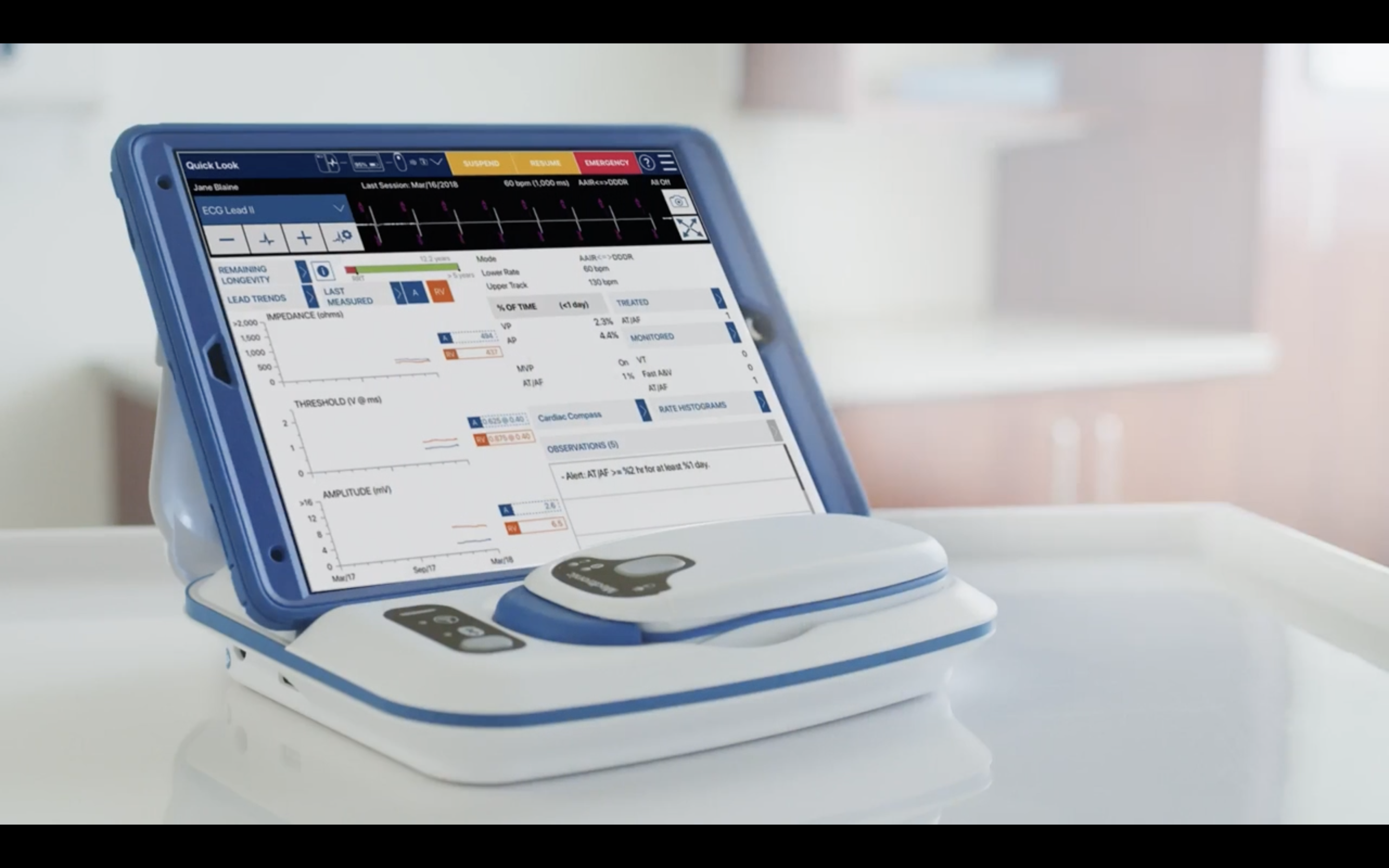
Image courtesy of Medtronic.
This Class II recall covers:
- The CareLink SmartSync Programmer – Model 24970A – 11,238 units
- The CareLink SmartSync Device Manager App – Model M01A02– 38,115 units
- The CareLink SmartSync, RF Head Patient Connector – Model 24967– 11,741 units
No Micra leadless pacemakers, or any other pacemakers, are part of this recall. Patients who have received these devices do not need to do anything at this time.
Medtronic shares a statement
“Medtronic recently began informing customers about the availability of a CareLink SmartSync device manager software update to eliminate the potential for an inaccurate displayed longevity estimate on Micra AV2 and/or Micra VR2 software screens,” a company spokesperson told Cardiovascular Business. “Updating to SmartSync version 4.13.2 or higher resolves the potential for this inaccurate display estimate to occur. After the update, the longevity estimate display will be accurate. Medtronic has not received any reports of adverse events related to this issue.”

Michael has more than 19 years of experience as a professional writer and editor. He has written at length about cardiology, radiology, artificial intelligence and other key healthcare topics.