
New Apple Watch Ultra 3 makes early hypertension detection a priority
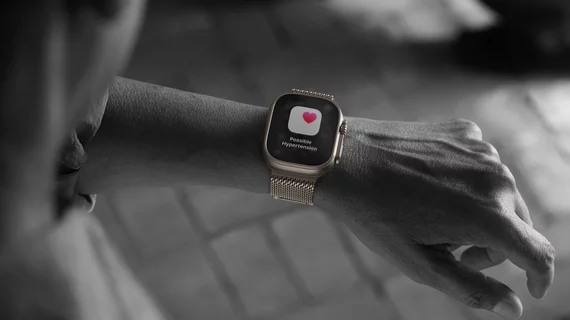
Apple has officially introduced the Apple Watch Ultra 3, which will provide notifications when it detects signs of chronic high blood pressure once the technology is cleared by the U.S. Food and Drug Administration (FDA).
The groundbreaking notifications will tell users if signs of hypertension are detected using data from the phone's optical heart sensor. An advanced algorithm works passively in the background, reviewing data over 30-day periods, and will notify users if it detects consistent signs of hypertension.
The hypertension detection technology underwent rigorous scientific validation. The feature was developed with advanced machine learning and training data from multiple studies, totaling more than 100,000 participants. Its performance was then validated in a clinical study of over 2,000 participants. While hypertension notifications will not detect all instances of hypertension, the company predicts the feature will notify over 1 million people with undiagnosed hypertension within the first year. The technology is currently pending FDA review.
"The company says they expect FDA approval this fall," Ami B. Bhatt MD, chief innovation officer of the American College of Cardiology (ACC) and chair of the FDA Digital Health Advisory Committee, said in an interview with Cardiovascular Business. "This tool empowers patients and clinicians to work together, putting prevention at the center of care. By incorporating real-world data into clinic visits, clinicians can have a more holistic understanding of a patient's cardiovascular risk. What we really want to do is create patient agency and reach as many people as we can for earlier detection of high blood pressure."
Bhatt has already been involved with the development of ACC tools to help guide clinicians as the number of Apple Watches with FDA-cleared cardiac technologies continue to expand, and patient are asking their physicians about their watch alerts and other health data more and more. The ACC Apple Watch Clinician and Patient Tool was launched in May 2025 to help answer many of these questions and help physicians integrate this health data into shared decision making with the patient in their own care.
"As wearables evolve, they will not replace clinical care. Instead, they can serve as connective tissue, linking individuals, clinicians and communities in pursuit of better cardiovascular outcomes for all," Bhatt explains.
She said the new hypertension data can be used by patients to decide if they need to pay more attention to their blood pressure and consider getting a blood pressure cuff to take more detailed, daily measurements. Alerts could also prompt patient-initiated discussions with doctors about lifestyle changes that can prevent or control hypertension.
Apple said if users receive a hypertension notification, it is recommended that they log their blood pressure for seven days using a third-party blood pressure cuff and share the results with their provider at their next visit. The company said this is consistent with the latest American Heart Association guidelines for the diagnosis and management of hypertension.
While the Apple Watch technology is good at giving an overall assessment of a patient's hypertension risk to help raise red flags, Bhatt stressed it is not a replacement for a blood pressure cuff, and is not a remote monitor for a patient's blood pressure levels.
"I am seeing this as a tool for prevention to allow patients to work with their physicians on their health," she said.
Once the FDA clears the hypertension notifications, the feature will be available on Apple Watch Series 9 and later, and Apple Watch Ultra 2 and later, with watchOS 26.
ACC created an Apple Watch guidance tool
Bhatt said the ACC Apple Watch Clinician and Patient Tool is deigned to help answer patient questions and determine when it is best for a patient to come in for an office or urgent care visit.
Apple Watch has several heart-health features that that have already been FDA-cleared for adults 22 and older. These include an ECG feature, which can record a heartbeat and rhythm using an electrical heart sensor. The Irregular Rhythm Notification (IRN) feature analyzes pulse rate data to identify irregular heart rhythms suggestive of atrial fibrillation (AFib). The AFib History feature, for users already diagnosed with AFib, estimates AFib burden by analyzing pulse rate data and offering weekly summaries. The newest version of the Apple Watch will now offer data tracking for hypertension. The watch also offers several wellness features help monitor a heart healthy lifestyle, including activity tracking, mindfulness experiences, sleep tracking and cardiorespiratory fitness (VO2 Max)
"The ACC embraces technologies that encourage patients and clinicians to work together. This tool will guide clinicians on using Apple Watch's heart health regulated features in clinical practice and help clinicians advise their patients on how to incorporate Apple Watch features into longitudinal heart health management," Bhatt said in a statement when the Apple Watch tool was unveiled.
CDC views hypertension as a major threat to public health
The U.S. Centers for Disease Control and Prevention (CDC) has viewed hypertension as a major issue impacting U.S. healthcare and has said more needs to be done to catch patients with a blood pressure issue earlier when it is easier to treat. The CDC says nearly half of U.S. adults have hypertension, and only about 1 in 4 have their hypertension under control. In 2023, the CDC said high blood pressure was a primary or contributing cause of 664,470 deaths in the United States, and that hypertension-related health issues costs the United States about $131 billion each year.
But Bhatt said the standard of care screenings at one point in time each year during an annual doctor visit is not ideal and does not offer a lot of sensitivity. But, she said the new Apple Watch technology can offer valuable data, with more frequent monitoring and an algorithm that is refined for specificity.
“The ACC supports technologies that strengthen the collaboration between patients and clinicians. I am proud of the specificity Apple went after," Bhatt explained. This included an ethnically diverse population of various ages.
She said the real-world data these new watches will provide when available to the public will open a new window into hypertension population health. Her only concern is wider access to the watch technology, which tends to come at a higher price point.
The new Apple Watch also features a sleep score to help users understand the quality of their sleep, built-in satellite communications, emergency SOS via satellite, 5G cellular capabilities, more accurate GPS, the largest display in an Apple Watch and a 42-hour battery life.

Dave Fornell has covered healthcare for more than 17 years, with a focus in cardiology and radiology. Fornell is a 5-time winner of a Jesse H. Neal Award, the most prestigious editorial honors in the field of specialized journalism. The wins included best technical content, best use of social media and best COVID-19 coverage. Fornell was also a three-time Neal finalist for best range of work by a single author. He produces more than 100 editorial videos each year, most of them interviews with key opinion leaders in medicine. He also writes technical articles, covers key trends, conducts video hospital site visits, and is very involved with social media. E-mail: [email protected]