
Mavacamten gains FDA approval for symptomatic obstructive HCM in pediatric and adult patients
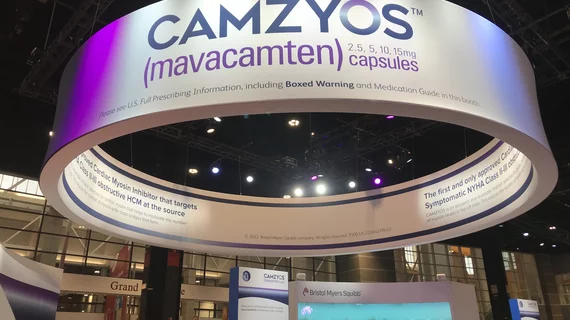
The U.S. Food and Drug Administration (FDA) expanded the indication for Bristol Myers Squibb’s mavacamten (Camzyos) to improve functional capacity and symptoms in obstructive hypertrophic cardiomyopathy (oHCM) in both adult and pediatric patients.
The company said this expanded indication offers a new treatment option for patients with a significant unmet need. Mavacamten first gained FDA clearance in April 2022 for adults with symptomatic NYHA class II-III oHCM heart failure, but the new indication will broaden the patient populations that can be treated. The indication also allows earlier interventions, rather than waiting for patient conditions to worsen over time.
The drug is now the only FDA-approved therapy for the treatment of oHCM in a pediatric population. The FDA indication for children is for use in patients weighing 30 kg (66 lbs) or more.
“Today’s approval marks an important milestone for young patients and families who are facing a serious cardiovascular disease with significant unmet medical need,” Al Reba, senior vice president, immunology and cardiovascular commercialization, Bristol Myers Squibb, said in a statement. “For young patients living with this disease, the burden on daily life can be substantial during a critical stage of development, and we are proud to help bring an innovative new treatment option to this community."
The FDA approval was based on positive data from the Phase 3 SCOUT-HCM trial, which was presented as a late-breaking study at the American College of Cardiology (ACC) 2026 meeting and published in The New England Journal of Medicine.[1] In adolescent patients with oHCM, the reduction in left ventricular outflow tract obstruction was significantly greater with mavacamten than with placebo over a 28-week period.
No patients in the SCOUT-HCM study experienced a left ventricular ejection fraction (LVEF) below 50%, and no adverse events led to treatment discontinuation. No new adverse reactions were identified beyond the safety profile observed in adults.
The trial used the Valsalva maneuver during echocardiograms to unmask or worsen left ventricular outflow tract (LVOT) obstruction in HCM. Enrolled patients had LVEF equal to or greater than 60%, a Valsalva LVOT peak gradient 30 mmHg or higher, and a maximal gradient 50 mmHg or more at rest or with provocation. The data demonstrated a statistically significant reduction in Valsalva LVOT gradient at week 28 compared with placebo.

Dave Fornell has covered healthcare for more than 17 years, with a focus in cardiology and radiology. Fornell is a 5-time winner of a Jesse H. Neal Award, the most prestigious editorial honors in the field of specialized journalism. The wins included best technical content, best use of social media and best COVID-19 coverage. Fornell was also a three-time Neal finalist for best range of work by a single author. He produces more than 100 editorial videos each year, most of them interviews with key opinion leaders in medicine. He also writes technical articles, covers key trends, conducts video hospital site visits, and is very involved with social media. E-mail: [email protected]